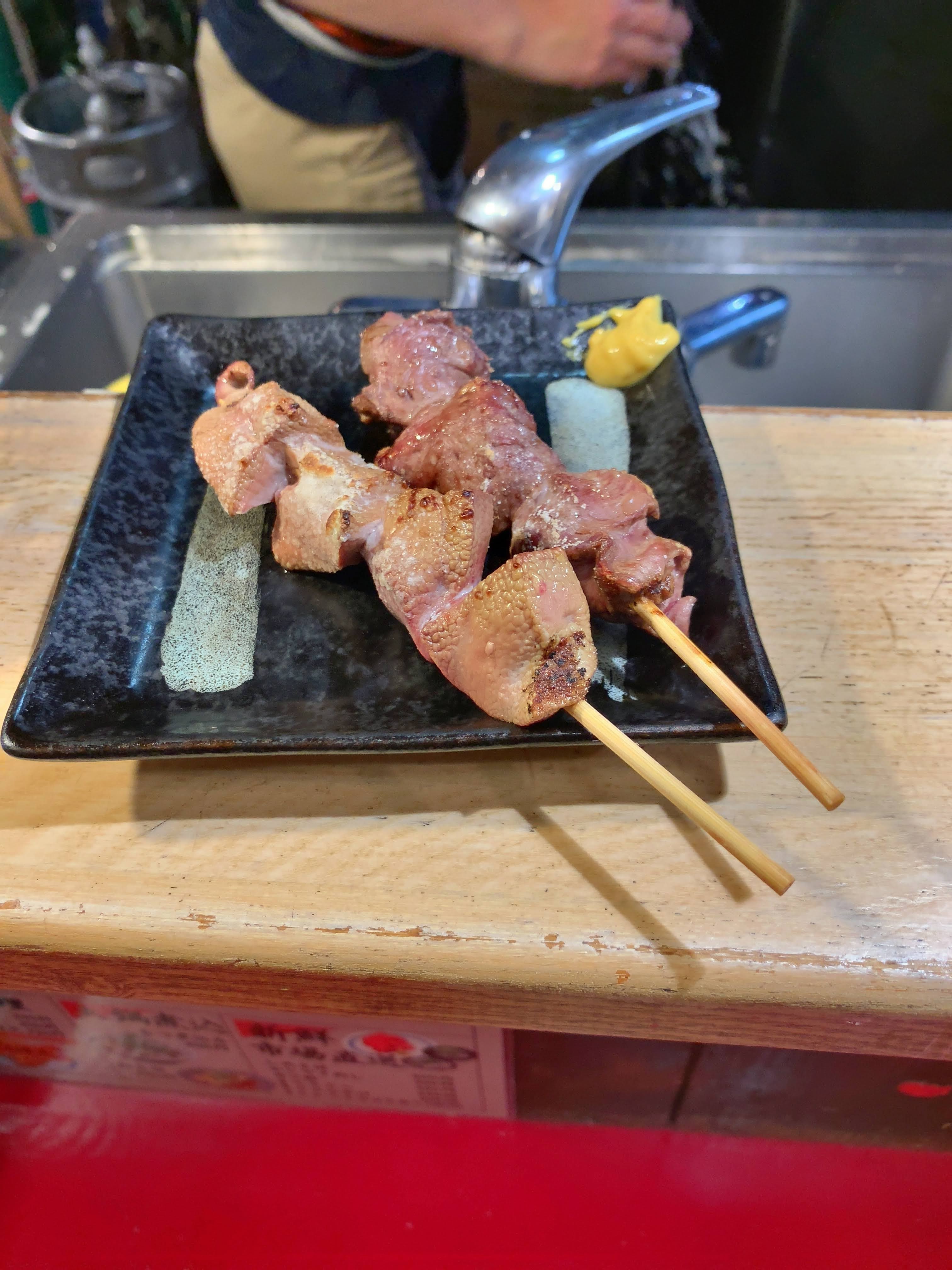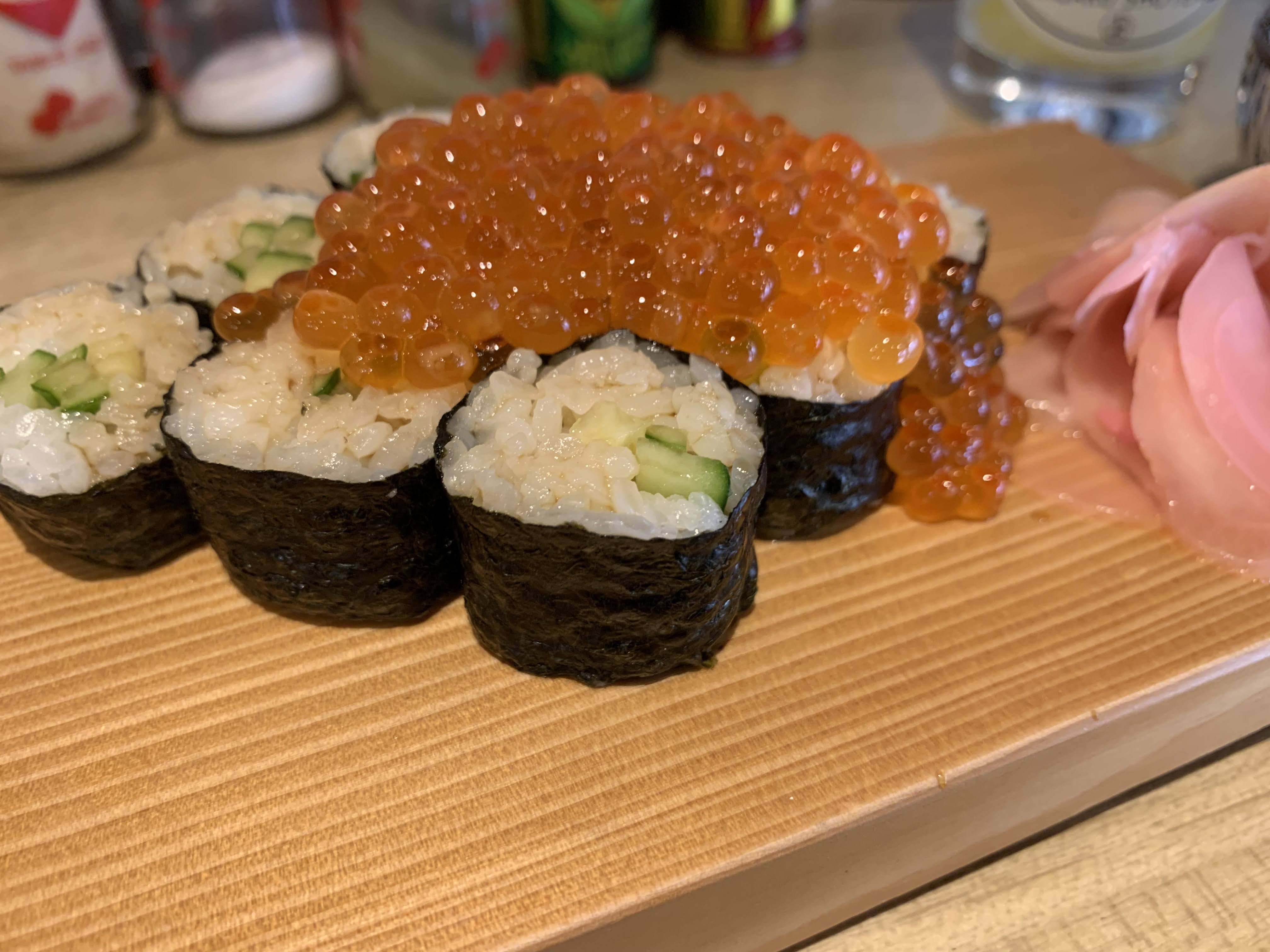
Quick sushi bar at Shinagawa Station, where many people transfer in Japan.

Sushi is fast food in Japanese history. Shinagawa’s fish market, Japan’s No. 1, is the very embodiment of this. Located inside a train station, it attracts a wide variety of customers, allowing you to experience the everyday life of Japan.

  1. Uo Gashi Nippon Ichi, Shinagawa Station
  2. Store interior
  3. Menu

Restaurants exist inside train stations in Japan. Shinagawa Station is served by the Shinkansen bullet train, and it is said that a linear motor car will soon arrive there. Shinagawa Station is one of the few large stations in Tokyo where many businessmen come and go. Among the various restaurants is the best fish restaurant in Japan.

Uo Gashi Nippon Ichi, Shinagawa Station

Uo Gashi Nippon Ichi, Shinagawa Station

Store interior

This restaurant is a standing sushi bar. The Japanese style of eating while standing without sitting down. There are many businessmen here.

I couldn’t even take my time to take pictures. There are two counters. I was led to the counter in the back. Plates and seasonings at hand.

Not being in a mood to eat slowly, I ordered in a hurry.

Sushi is served from the counter at high speed.

Seafood miso soup is the first to be served.

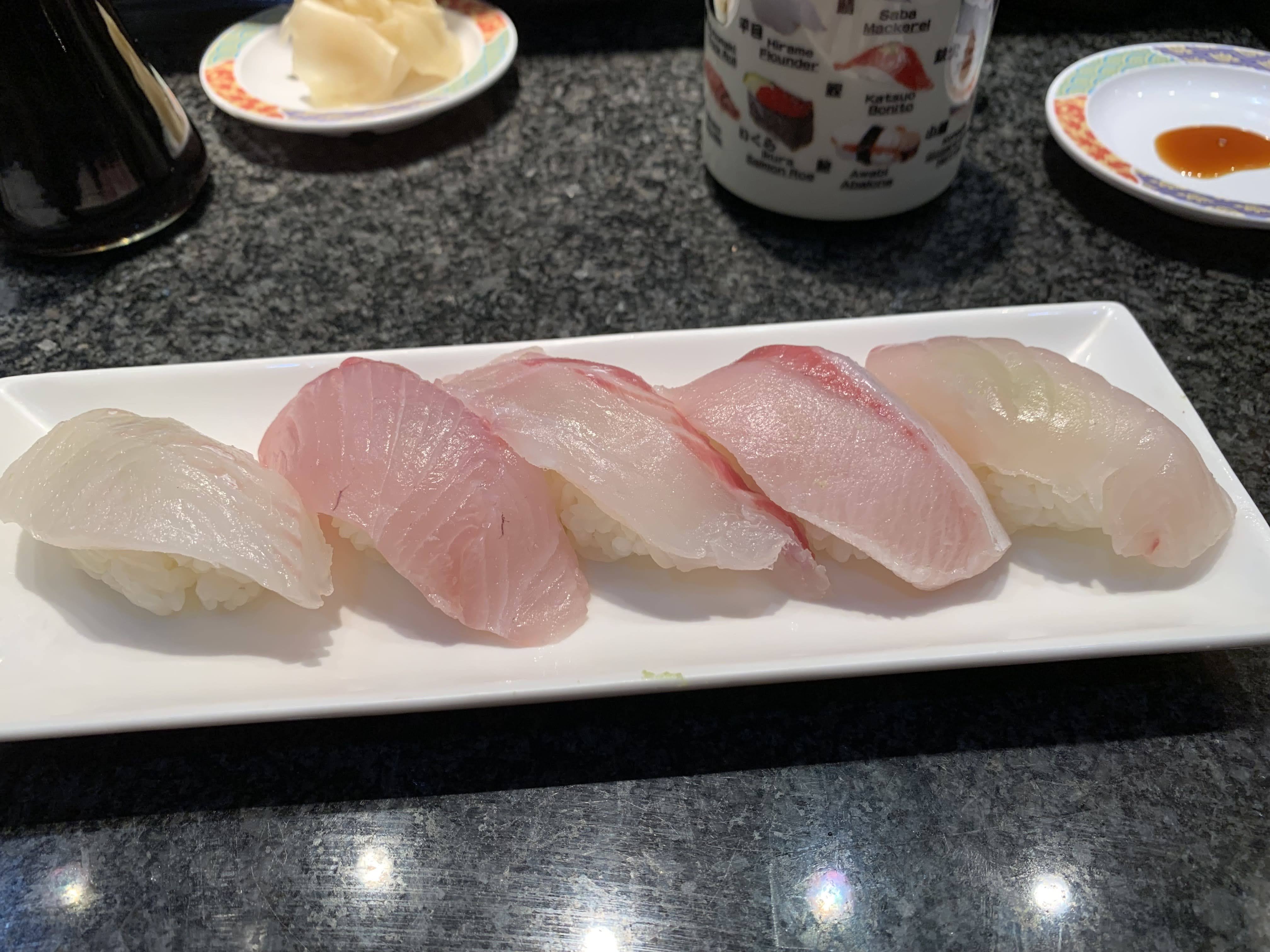
Roughly 8 pieces for $1,000. Not bad, but the fish could be cut a little larger. You can also take it home, so it would be better to eat it slowly when you go far away by train for leisure.

  1. porntude's avatar
  2. click here's avatar

Sushi bar popular overseas opens in Japan”Kinka”

I went to Kinka Sushi. A sushi bar from Canada has opened a store in Japan.

  1. Kinka Roppongi
  2. Kinka Shibuya
  3. Store Location

Other Sushi Articles

So a Japanese went there to evaluate it.
The restaurants are located in Roppongi and Shibuya.
Roppongi is a town for older Japanese.
Shibuya is a town where young people gather.

Kinka Roppongi

kinkasushi
kinkasushi Roppongi

Roppongi is for lunch.
Shibuya was for dinner.
The restaurant’s most popular item is mosaic sushi.

restaurant
kinkasushi Roppongi

Lunch is not that expensive, but dinner may have more atmosphere. The restaurant is located in a place where there are many older customers, such as businessmen.
The taste is not particularly good, but not bad either. The atmosphere of the restaurant is very nice, not like a traditional Japanese sushi bar, but more like a modern sushi bar that has evolved into a modern sushi bar

kinkasushi Shibuya

This sushi is not served for lunch, but we visited the Roppongi restaurant.
Lunch is not so expensive. However, to be honest, the taste is not that great. It is not bad, but the taste is not special.

For mosaic sushi, we went to dinner in Shibuya. Reservations are required here. Make a reservation. We came back to the restaurant. This restaurant is full of young people.

kinkasushi Shibuya

We were led to the counter. Finally, we ordered mosaic sushi. I also ordered the Aburi-zushi set.While we were waiting for our order, two sets of Westerners came next to us.

kinkasushi Shibuya
kinkashibuyasushi2
kinkasushi Shibuya

kinkasushi Shibuya

Well, we had it. Sushi from Canada, after all. It is made differently from the sushi I know.

Japanese sushi is made by seasoning raw fish and making the most of the ingredients, such as vinegar or soy sauce marinade.

However, because of the different food culture, sushi from other countries is closer to meat dishes, and fish is seasoned in the same way.

After all, seared sushi and mosaic sushi do not taste vinegary or salty, but rather heavy
It’s like eating sushi, but with about as much fat as eating a pizza. The sense of satisfaction is amazing.

The colors are more artistic than sushi.
The appearance of the colors also has a foreign look. In Japan, real sushi has a lot of wild colors. It is rare to find Japanese food that uses sauces as art.

KINKA Sushi Bar Izakaya Roopngi

📍〒106-0032 Hexart Roppongi 2F 7-6-20 Roppongi, Minato-ku, Tokyo

KINKA Sushi Bar Izakaya Shibuya

📍〒150-0042 2F, 3-10 Udagawacho, Shibuya-ku, Tokyo

  1. porntude's avatar
  2. click here's avatar

Sushi bar with a long line in Shibuya, Tokyo

Sushi bars are everywhere in Japan. Is it good or bad? If it is expensive, is it good? You will never know until you try it.

There are not many sushi bars with lines. High-end sushi bars are usually by reservation only. Reasonably priced sushi bars have a lot of space, so they can accommodate a lot of customers. During the New Year’s season, people line up. That’s about the only time of the year. However, the restaurant I am about to introduce, Midori Sushi, has a line out the door all year round. An amazing restaurant.

It is not a chain restaurant with reasonable prices and 100 yen per plate, but it is not an upscale restaurant either. Why on earth would people wait in line?

Midori-sushi

Midorisushi
Address
4F Mark City East, 1-12-3 Dogenzaka, Shibuya-ku, Tokyo

It is essentially always a waiting list. However, since it was late in the evening, there were only a few people waiting in line.

It’s a ticketing turnstile system.

The restaurant is not very spacious.

The lunch menu is very reasonable!

The regular menu is moderately priced

Salad and steamed egg custard are automatically served first.

The store even has its own original soy sauce!

Here we are. Vivid colors. Oh, there is a mysterious grass.

What is it? I’ve never eaten grass before either.
I looked it up: green onion. It is a kind of green onion.

The fish was thick and well seasoned, and the rice was made by a craftsman, so it was not too hard and did not lose its shape, but had just the right softness and sweetness. If you can eat this for as little as $10, there is no wonder it is so popular and people line up to get it.

In Japan, you can get this “Chawanmushi” at any proper Japanese-style sushi bar. You can eat it any time of the day, but it is usually eaten at the end of the meal. By the way, it is made of egg.

For this price, Midori-zushi is worth a visit if you prefer more traditional sushi.

Thank you for reading to the end. Please don’t forget to bookmark this page.

  1. porntude's avatar
  2. click here's avatar

Fiery stinky ramen in Akihabara

Japanese ramen has many flavors of soup. They can be broadly classified into “soy sauce,” “miso,” and “tonkotsu (pork bone). Soy sauce is mainly flavored in the Kanto area, miso in Hokkaido, and tonkotsu (pork bone) in Kyushu. There is also a fierce ramen area in Tokyo. These are mainly downtown areas, but famous areas include Ikebukuro, Shinjuku, Shibuya, Akihabara, and Shinbashi in Tokyo, where many restaurants are located side by side. The main types of ramen are soy sauce and tonkotsu (pork bone) flavored ramen, with miso (fermented soybean paste) being the least popular of the three. Pork bone ramen has the strongest flavor. However, because the broth is made from pork cartilage, it has a strong fishy smell. Because of its strong flavor, it is very popular among men.

Official saite→Here
They have also opened stores in Singapore and Korea.

  1. Ramen_Waizu
  2. Akihabara Streetscape
  3. Discover delicious ramen place
  4. Ramen noodle making

For other delicious Ramen

ramen
Ramen_Waizu

Akihabara Streetscape

Discover delicious ramen place

I wandered around Akihabara’s battleground district in search of the best ramen.
Smell, smell. It smells fishy. It is, after all, pork bone ramen.

Tonkotsu Ramen
Tonkotsu Ramen

More than 90% of Japan has a system of buying meal tickets from vending machines. I assume it is the same in other countries.
This is to enable cooks to concentrate only on cooking and to keep labor costs down.

The system is the same in other countries, so I won’t bore you with the details, but it involves putting in money and pushing a button.

According to one Japanese ramen lover. there is a rule that the most popular ramen is usually the one on the top left of the machine.

Basic store style
Basic store style
Basic store style

Basic store style of Japanese ramen shops

Don’t forget that in Japan, water is free in restaurants.

water

Most ramen shops have a system where you fill up your own water, so go fill it up as soon as you enter the store.

Many ramen shops display instructions on how to enjoy the delicious food.

It’s a big deal but a method that should be tried at least once.

The sign above is Tsukemen Ryugi

  1. Eat with the flavors as they are
  2. After eating about half, sprinkle black shichimi (seven spices) on the noodles and eat.
  3. After finishing the noodle, divide the broth of your own ramen with the original broth. Drink it.
    Ask the staff for the soup.

Left sign description.
A delicious way to eat ramen.
Please eat it as it is first.
After you eat about half of it. Add a clove of fresh garlic and a pinch of pepper.
It tastes even better.

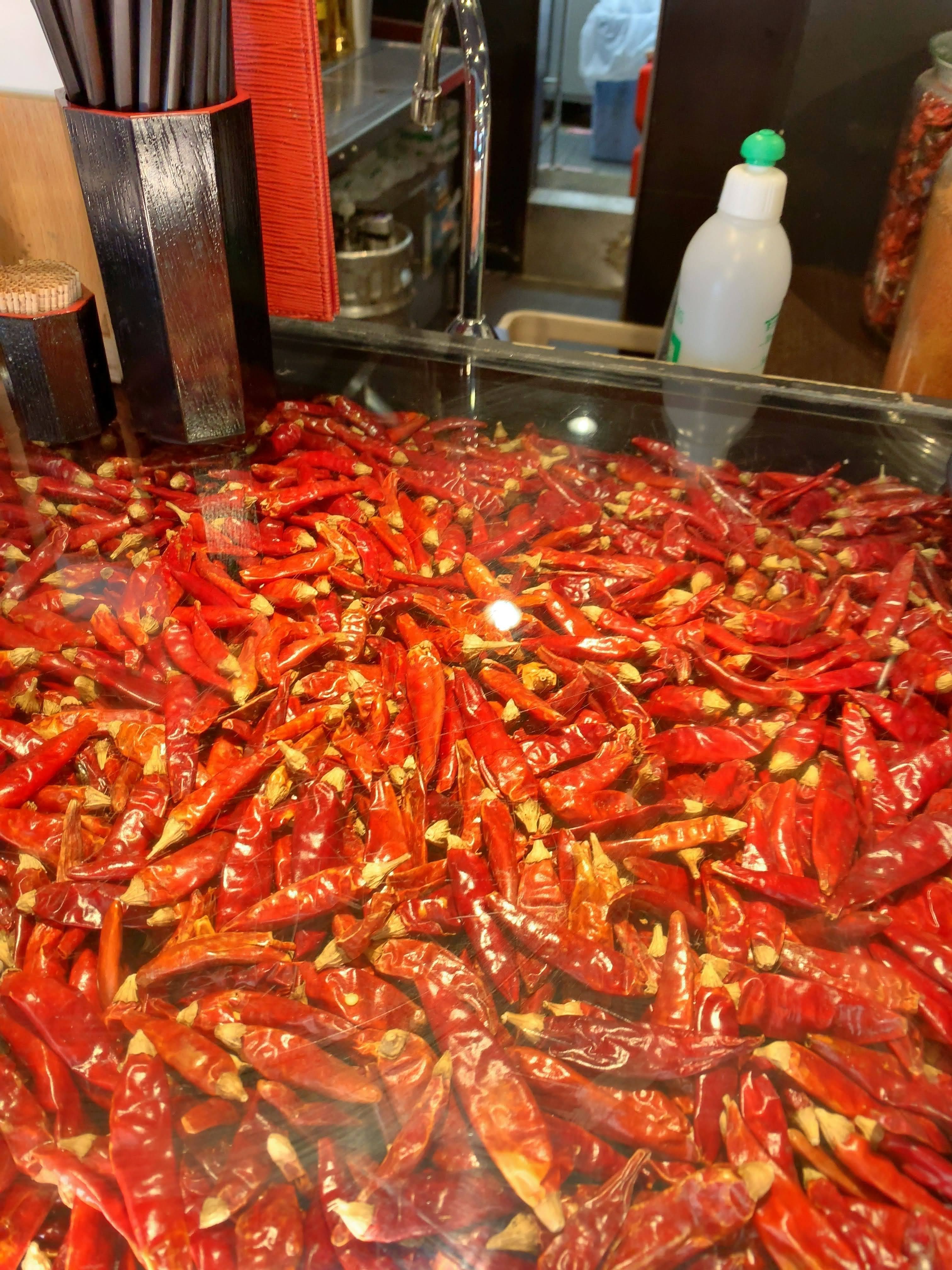
Pepper, garlic, vinegar, spicy seasonings.

This set of seasonings is also usually found at all ramen shops. Pepper, garlic, vinegar, spicy seasonings.

Ramen noodle making

ramen

Tonkotsu ramen soup is always cooked over low heat to remove the lye. The broth from the bones is simmered over low heat to release its flavor.
Therefore, the soup is mixed well and seasoned before serving to customers.

Tonkotsu Ramen

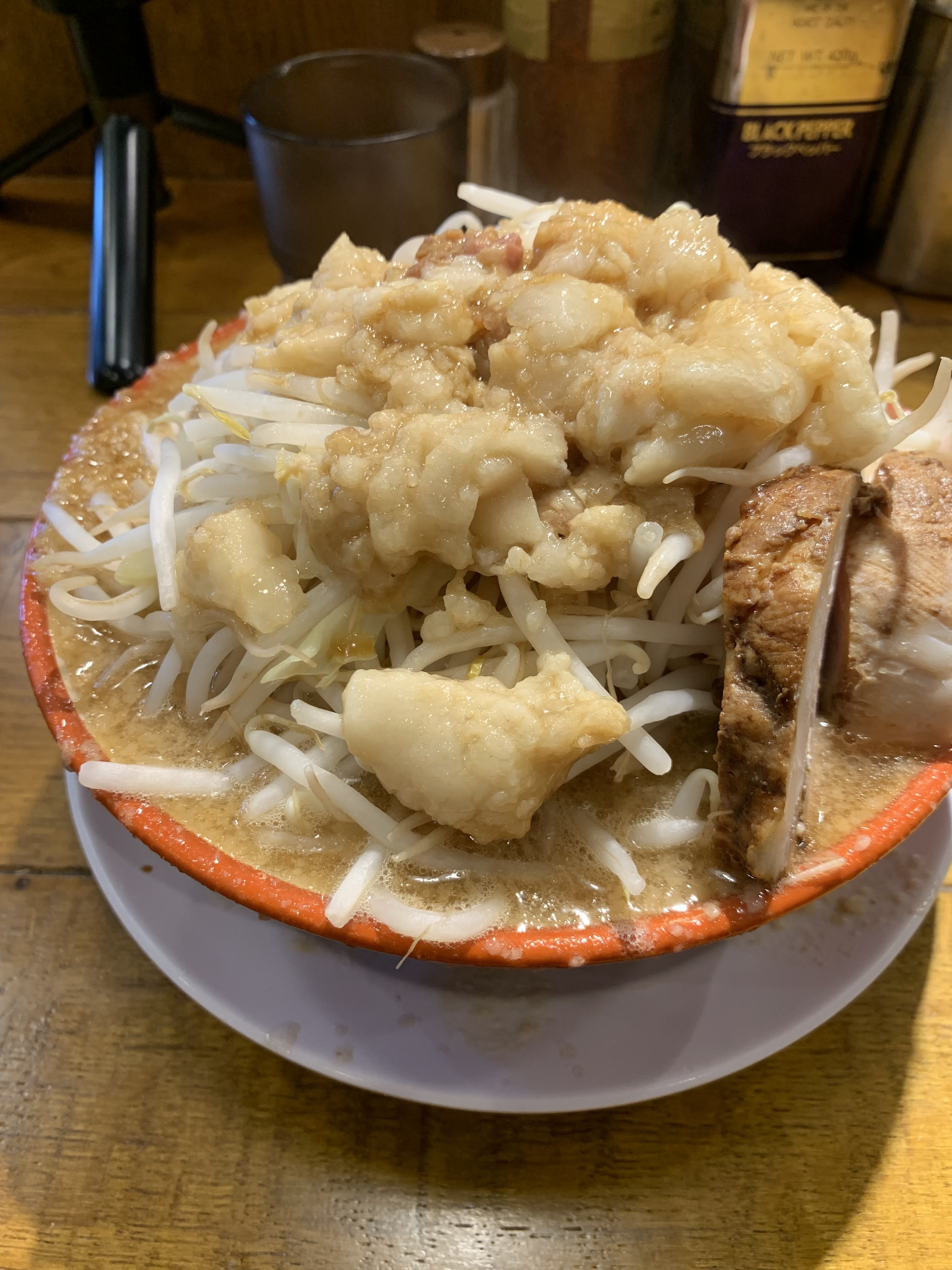
A mountain of male popularity.

ramen

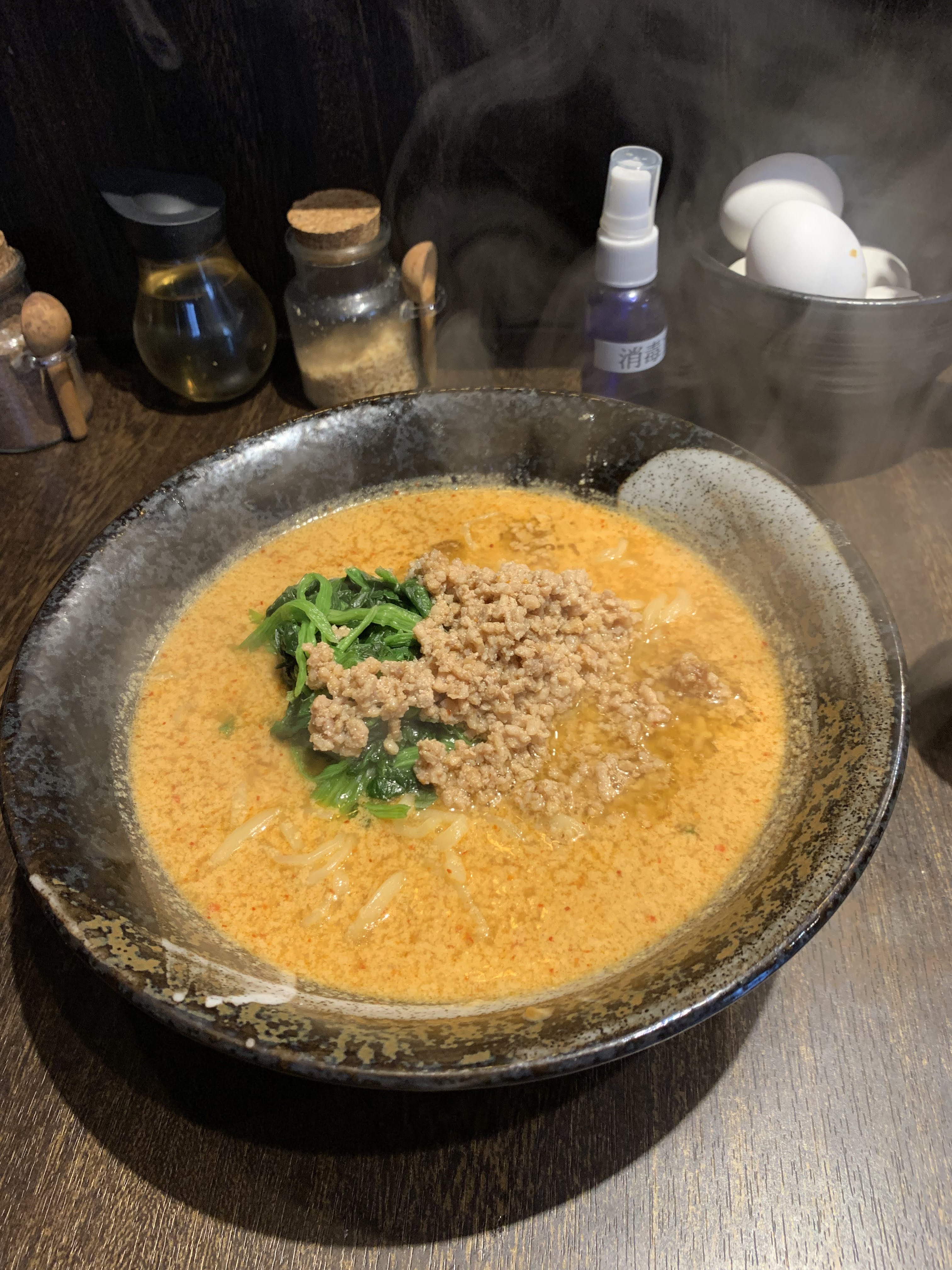
The noodles are medium thick and the soup is cloudy brown. Mainstream tonkotsu ramen is cloudy white. However, this restaurant is brown.

Yum!

Tonkotsu Ramen
Tonkotsu Ramen
Tonkotsu Ramen

Ingredients are grilled pork, bean sprouts, onions, garlic, and cabbage.
The soup is thick and very juicy with back fat. The noodles are medium in size, filling the stomach and satisfying. The unique flavor of the pork bones is in the soup and is sure to satisfy.

I added plenty of garlic as instructed.

📍3-7-9 Sotokanda, Chiyoda-ku, Tokyo

Also, in Japan, tissue paper is basically used instead of napkins. Here, surprisingly, it was tucked away on the top shelf. If you like Tonkotsu Ramen, I recommend it. It was delicious.

Thank you for reading to the end. Please don’t forget to bookmark this page.

  1. porntude's avatar
  2. click here's avatar

Fine sushi restaurants at reasonable prices.

Tokyo Ginza Sushi in Japan is one of the most exclusive areas in Japan. As a fanatic, I immediately headed to Omotesando, Tokyo, to find a sushi bar where I could eat it at a reasonable price.In case you’re wondering, it’s a starred restaurant in the Michelin Restaurant Guide.

Sushi Onodera→Here

  1. Sushi bar Onodera
  2. Standing or revolving sushi
  3. Standing Sushi
  4. Red rice
  5. This is what the atmosphere
  6. Introduction to the yummy sushi
  7. Accounting method

Appearance sushi bar Onodera

There are two entrances.
The entrance on the left is the conveyor belt sushi. The entrance on the right is for standing style food.
The difference is that the one on the left has a lot of customers and is a conveyor belt sushi style. This is the same system as the Sushiro, Kura-zushi, and Hamazushi restaurants that I mentioned before.
The difference is that the one on the left has a large number of customers and is in the revolving sushi style. There are no chairs, and you eat standing up. It is a counter bar style.

Standing or revolving

Standing
the conveyor belt sushi

conveyor belt sushi is best for large groups like this.

I have already introduced the revolving sushi system before, so I will now introduce Japanese style standing food.

The best way is to eat standing up. The chef told me that in the conveyor belt sushi area, the sushi is made by part-time workers. By all means, choose the standing food area.

the menu

On the left, the menu for standing sushi is on paper.

Inside the restaurant

Standing Sushi

Disposable chopsticks, hand towel, teacup

Waribashi (disposable chopsticks), Shibori (hand towel), teacups, and this is the general preparation for Japanese style sushi.

onodera_sushi

At the counter, the chef prepares the food right in front of you. At this restaurant, the seating is limited to about 10 people because the chef cooks everything by himself.

red rice

red vinegar

Another feature of this restaurant is that the rice is red. It is normally white.
Why is it red?
This is because they use red vinegar instead of the usual rice vinegar.

Red vinegar is made from sake lees and has a reddish color.
Rice vinegar, a common type of vinegar, is made from sake and other ingredients are different.

Red rice made with red vinegar is still used in high-end Edomae Sushi restaurants because it goes well with the traditional Edomae Sushi ingredients such as tuna, flatfish, and sea eel.

Red vinegar is mildly acidic, fragrant, and has an elegant taste.
Red vinegar is made in a traditional way and requires a long time to be made.

This is what the atmosphere looks like. The chef works alone.
onodera_sushi
onodera_sushi
Introduction to the yummy sushi

Orders are taken one at a time. The most expensive one is about $10 per serving. Compared to conveyor-belt sushi, the price is completely different, but not too expensive for a real sushi experience. You can definitely tell the difference in taste compared to sushi from chain restaurants. However, if you want to fill up on the quantity, be prepared to pay well.

onodera_sushi
onodera_sushi
onodera_sushi
onodera_sushi
onodera_sushi
onodera_sushi
onodera_sushi
onodera_sushi
beer
wine
sake

This restaurant also has a good selection of alcoholic beverages: beer, wine, sake, whiskey, shochu, and good quality.

zaku

I’ve already done a taste evaluation of the sake called “Zaku“, so please check that out as well. In Japan, it is part of the culture to have the other person pour the sake for you. Nowadays, though, people are less particular.
Pouring the sake yourself is called “hand pouring”.

  1. porntude's avatar
  2. click here's avatar

Special menu only at Ueno branch. Misakikou

In Japan, sushi is cheap and easy to find anywhere.
Today I visited a place where you can get this unique sushi for $1.

So far, I have been to “Kura-zushi“, “Sushiro“, and other famous conveyor belt sushi restaurants all over Japan.

This time, I visited a famous local restaurant. Although it claims to be a conveyor belt sushi restaurant, it is a restaurant where the chef makes the sushi.

  1. Miura Misakikou
  2. How to order
  3. First of all, the highlight of the menu; I ordered the $1 tuna platter.
  4. Finally, the Arashio soup.

Miura Misakikou

Tuna Wholesaler “Miura Misakikou” is mainly located in Kanagawa Prefecture, next to Tokyo. They also have a branch in Singapore. I went to the Ueno branch in Tokyo.

Ueno has been home to many wholesalers since ancient times and has a shopping district famous in Tokyo for its restaurants, clothing stores, dry goods, etc. Many people come here to enjoy shopping, eating and drinking. There are also a lot of sushi restaurants, and Miura Misakikou, a tuna wholesaler, had a lot of customers even after lunch time.

sushi misura misakikou
sushi misura misakikou order

The spinning plate is probably an advertisement. I’m not sure either.

How to order

Ordering is done in the traditional style of writing on a piece of paper. If you can’t write Japanese, it’s not easy. To be honest, this style is a bit troublesome even for Japanese. Tabbed is easy and good. When you have decided on your order, write it down on a piece of paper and hand it to the cook or waitress.

There is a small plate for soy sauce, so use it only for soy sauce, unlike the old conveyor belt sushi.

The price is a little higher than conveyor belt sushi. It’s not the same price all the time. There are some unusual ingredients. This is the difference from chain restaurants.

First of all, the highlight of the menu; I ordered the $1 tuna platter.

A huge bowl of tuna

Let’s break it down and eat it. You can’t eat it in one bite. It’s almost like sashimi. It tastes healthy because it’s not fatty. One of the features of this Ueno restaurant is this large roll. They also have a variety of other dishes such as a large prawn dish.

Salmon Mix

Salmon with cheese. Seared salmon, regular salmon.
Unlike conveyor-belt sushi, the sushi is made by hand, so the rice is firm and the ingredients are on top, making the sushi better than chain restaurants.

Gari (ginger)

Gari (ginger) I eat gari to refresh my palate, so if your palate gets greasy, eat it to refresh yourself.

https://creator.expediagroup.com/products/banners/assets/eg-affiliate-banners.js

Hand Delivery

Hand Delivery
Unagi Sushi
Raw shirasu

Today’s top choice, “Unagi Sushi,” is sweet and delicious.
Raw shirasu. Do you understand shirasu? It is a small fish eaten whole. All Japanese people eat it.

Finally, the Arashio soup.
Ara soup

And finally, ara soup. In this kind of sushi restaurant, I recommend the sushi restaurant’s miso soup.
Arashiru is a miso soup made from the bones of the fish.
Arashi refers to the head and bones of the fish, which cannot be made into sushi.
The meat around the bones is very tasty, and the meat of the head and cheeks is also very tasty, though only a little.

The ara soup (miso soup) is more delicious at sushi restaurants with well-trained craftsmen than at conveyor-belt sushi chains. The soup is made by extracting the broth from the bones of the fish, which are filled with the flavor of the fish that cannot be produced by amateurs. It is not easy to make at home.

https://creator.expediagroup.com/products/banners/assets/eg-affiliate-banners.js

📍6-12-14 Ueno, Taito-ku, Tokyo