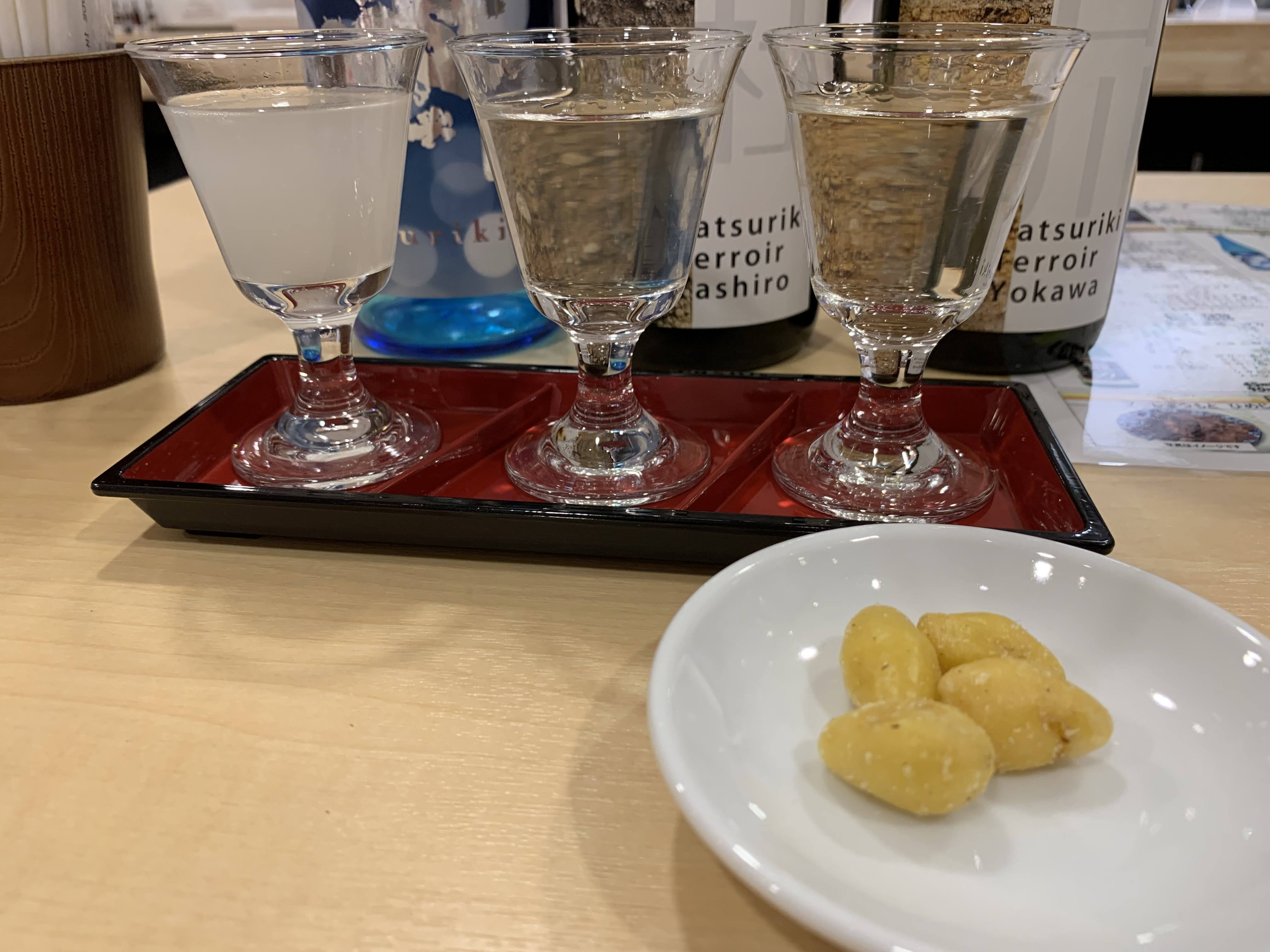
Sake is becoming more and more popular among young Japanese these days. Originally, Japanese izakaya restaurants were usually seated at tables. However, standing bar style restaurants where people can drink easily are gradually increasing in number.
Few restaurants claim to specialize in sake, but we will tell you about their atmosphere.
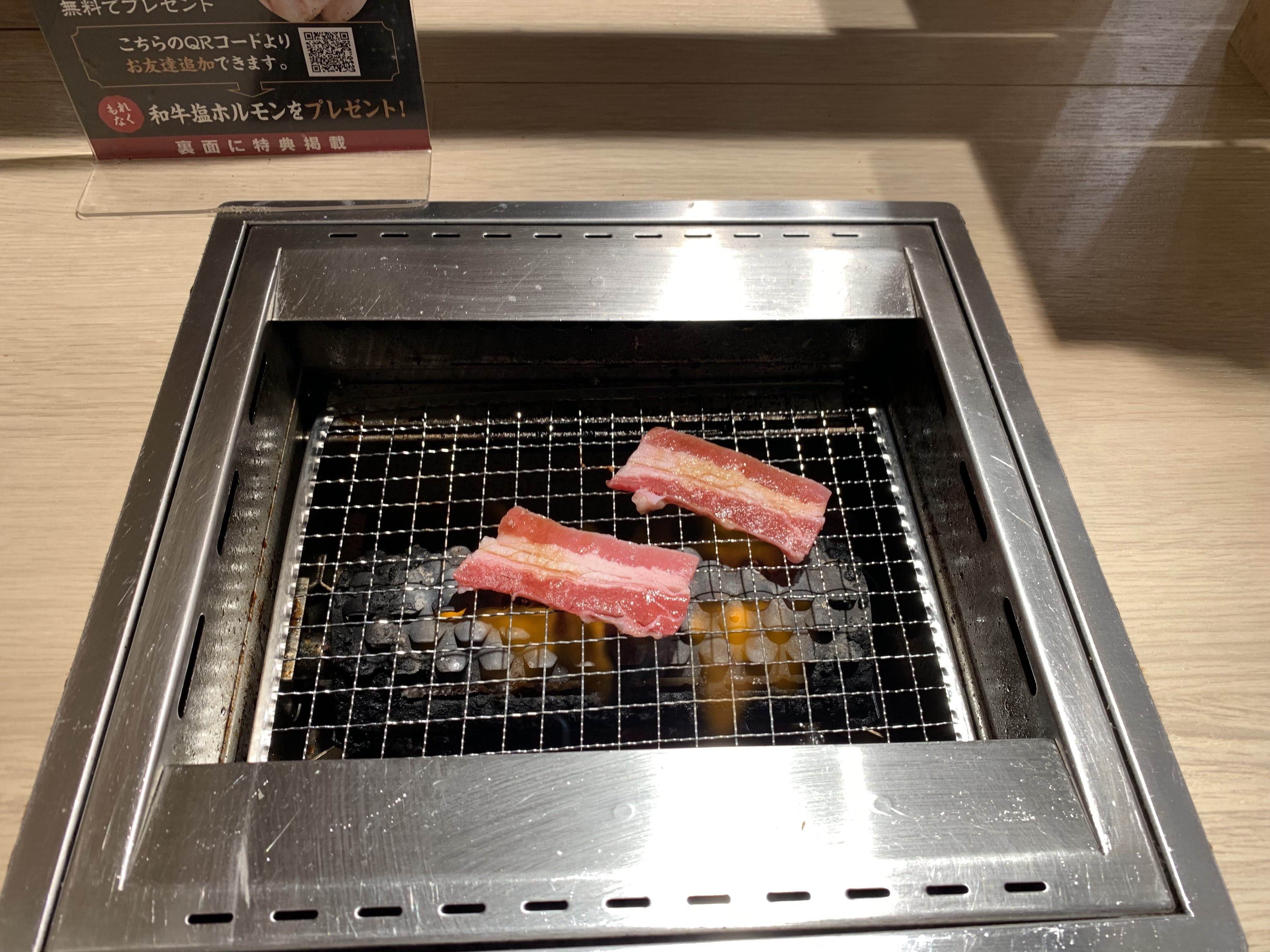
One-person yakiniku is all the rage in Japan these days. We teach you how to do it!
Foreign meats are delicious, but so is Wagyu beef.
Store interiorStore interior
The restaurant is partitioned so that one can eat alone. The image is that of Ichiran ramen.
A QR code that is increasingly being used to place orders by reading a QR code with a smartphone.
QR code
There are menus printed on paper, but the same menus can also be viewed on cell phones.
menus
After ordering, light the fire.
switch
Press and hold the a and b buttons simultaneously to ignite the fire.
It takes some time and effort to prevent dangerous movement.
iron plate
Like ninjas, these days, hand towels and other items are hidden in drawers. At another yakiniku restaurant, chopsticks and other items are also hidden in a drawer.
wet towel
These days you can get a great deal on a large size highball.
Whiskey with soda
Fumbling with the menu until the food arrives.
There is a set meal for one person, so I ordered it this time.
BBQ
BBQ meal set
The meat alone is delicious, but the way to eat grilled meat with rice with sauce drizzled on top is a very Japanese way of eating it.
All in all, the current rate is $9.00.
Thank you for reading to the end. Please don’t forget to bookmark this page.
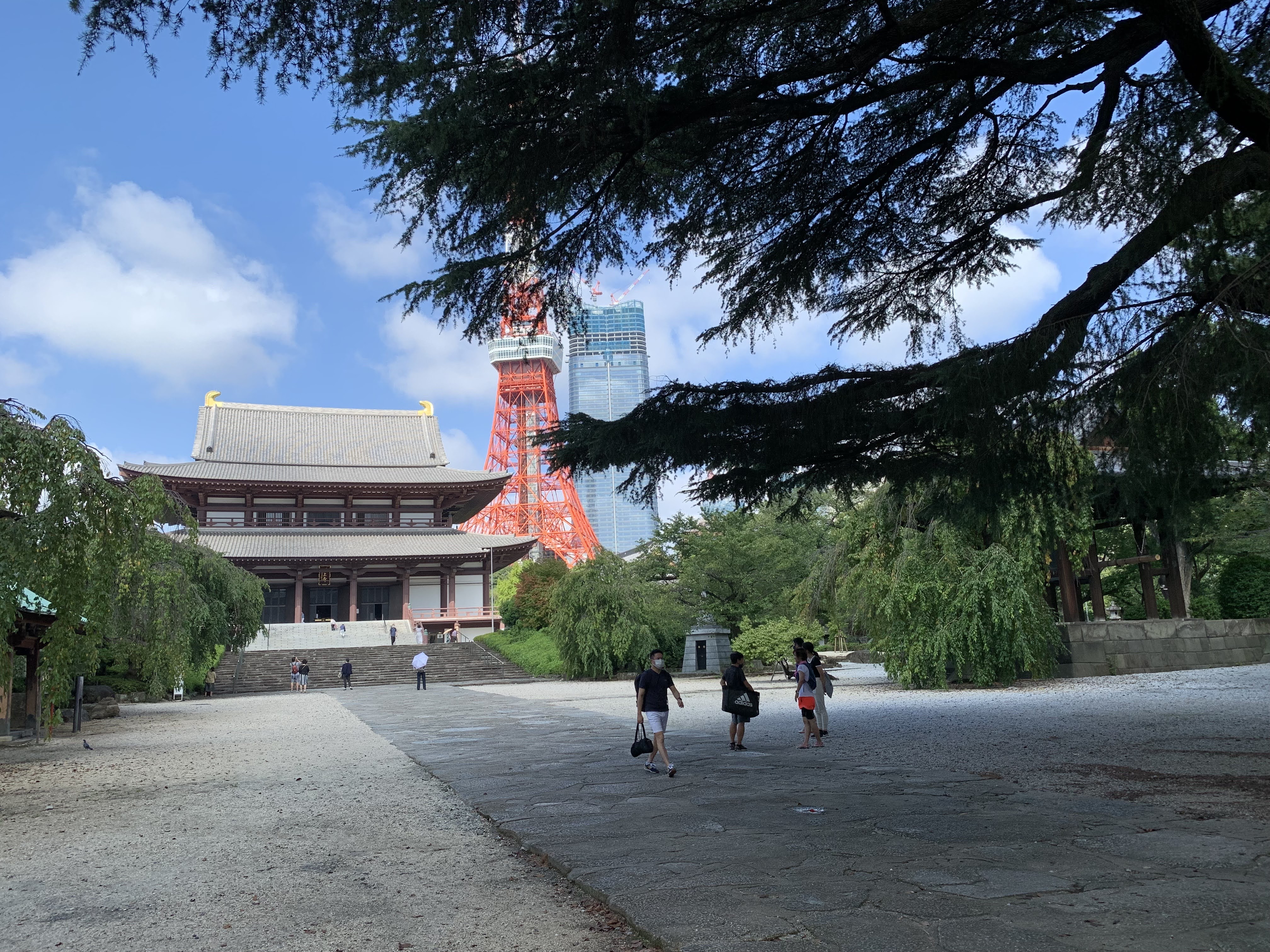
Temple = “Buddhism” A place to worship the principal image (mainly Buddhist statues)
Shrine = “Shinto A place to worship mirrors and other sacred objects (objects in which deities are believed to reside)
The Japanese, who believed in natural objects, began to build temporary places of worship in sacred places where deities were enthroned.
Gods enshrined in shrines
shrine
Buildings were constructed for such purposes as sheltering from wind and rain, and, influenced by Chinese temple architecture, the architectural structure of shrines was arranged to provide a place to worship the spirit of the gods (mittama). There are six other names for shrines: Jingu, Miya, Daijingu, Taisha, and Sha, which are distinguished by size and rank. The highest rank is “Jingu,” as represented by the Ise Jingu Shrine. Shinto has no founder, but Buddhism is a religion with Buddha as its founder, born in ancient India. Temples in Japan began as places of prayer for the protection of the nation when Buddhism was introduced to Japan.
Gods enshrined in temples
temple
Temples in Japan began with the introduction of Buddhism to Japan and started as places of prayer for the protection of the nation.
Temples are places where Buddhist priests study and practice Buddhist doctrine, and shrines are places where deities reside.
Therefore, the purpose of worship and the content of wishes at temples and shrines are different.
At shrines, people express their gratitude to the gods and pray for happiness in this life, whereas in Buddhism, along with happiness in this life, people can also wish for a place in the Pure Land of Ultimate Bliss after death.
The manner of praying is also different.
Upon entering the shrine grounds, worshippers first purify themselves and their minds at the hand-watering basin.
After that, they offer money at the hall of worship or the main shrine.
The method of worship up to this point is the same for both temples and shrines.
The major difference between temple and shrine visitation is whether or not clapping is used. The major difference between temple and shrine worship is whether or not clapping is done.
shrinetemple
How to visit a shrine
shrine
The shrine is to be clapped twice (kashi-wade). Procedure for visiting shrines
(1) Place your money in the money box.
2) If there is a bell, ring it, then fold your state deeply 90 degrees and thank twice.
3) Calmly clap your hands twice and pray with your hands clasped together
④Tell your wishes and the happiness of others, and finally bow deeply and retire.
Some people believe that the clapping of hands is to make the gods notice you.
Please note that some shrines have different numbers of clapping and bowing.
How to visit a temples
temple
The proper way to worship at a temple is simply to clasp your palms together in front of your chest and bow lightly. Be careful not to do Kashiwa-Te by mistake.
Order of visitation at temples
(1) Put your money in the donation box.
(2) If there is a crocodile entrance, ring it and pray with your palms together in front of your chest without clapping your hands.
(3) Finally, bow and leave the temple.
The gesture of ” clasping hands” originated in India, and is said to express the wish for Buddhahood by joining the right hand (in the Buddhist world) and the left hand (in this world) to unite the world of Buddha and this world.
How to instantly distinguish between a temple and a shrine
The best way to distinguish between a shrine and a temple is to look at the roof.
Shrine Features
templeshrine
About Shrines
Shrines use natural materials such as thatch, hiwada (cypress), and kokera (persimmon) for roofs, and the influence of these materials remains strong even today.
Because of the Japanese belief in wood, wood is basically used for everything except roofs.
Chigi and katsuogi are characteristic parts of shrine roofs.
The main shrine building, where the sacred object is enshrined, is often located behind the hall of worship.
On both sides of the approach are the shrine office, a kaguraden, a water closet, and komainu (guardian dogs).
About temples
Since Buddhism is a religion that came via China, tiles, which also came from the continent, are used for roofs.
After the Middle Ages, architectural styles of temples became more diverse, and building materials other than wood were also used. As large temples began to house large numbers of ascetic monks, they needed a dining hall and other buildings to serve as living quarters, and so they began to be equipped with a number of buildings called “Shichido Gyan”.
Differences in entrances
For shrines and temples separated from the secular world, the entrance serves as a boundary.
shrinetemple
Shrines are “Torii”
The Torii gate is the symbol of the shrine and is also used as a map symbol.
It is located at the beginning of the approach to the shrine, and beyond this point is the sacred area where the gods descend.
The basic form of the Torii consists of two pillars topped by a Kasagi, and a Nuki (a piece of wood) below the Kasagi connects the pillars.
The temple is the “Mountain gate”
The Yamamon is the formal entrance to the temple, beyond which is considered to be the land of the Buddha.
By passing through the temple gate and purifying the mind, one faces the Buddha with a beautiful mind.
The name ” Sanmon” is said to derive from the fact that most temples were built on mountains.
Komainu (guardian dogs) stand by the approach from the Torii gate to the hall of worship and are responsible for driving away evil spirits.
Since ancient times, komainu have been regarded as spiritual beasts and have served to ward off evil spirits from entering the shrine.
Depending on the shrine, a fox (Inari Shrine), a deer (Kasuga Shrine), or some other animal may take the place of the Komainu.
Other shrines and temples have a long history and various historical properties. If you take a walk all over the area, you will encounter things of historical value.
chimetemplenaturally protected treenaturally protected treenaturally protected treeGoddess of Mercytemple
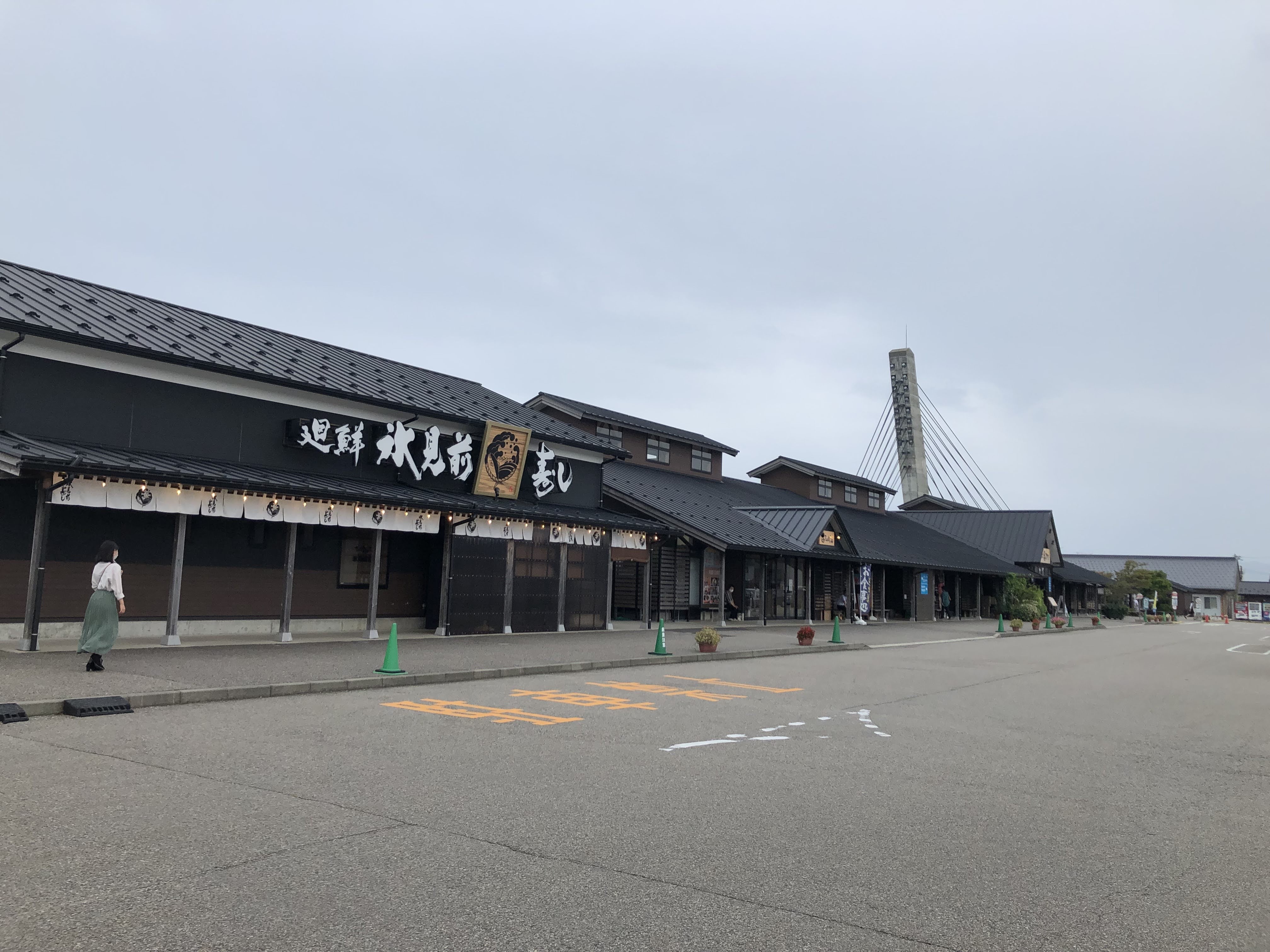
Toyama Bay is said to be a natural fish tank, a bay that is rich in food for fish due to the easy generation of prakuton.
Even at a typical conveyor-belt sushi restaurant in Toyama, the freshness of the fish and rare fish can be different from those in Tokyo.
Among them, Michi-no-Eki (roadside stations) are built for sightseeing and are equipped with facilities that allow visitors to enjoy a variety of seafood from Toyama.
Even a dusty, solitary drink. The weather has been strange. It rains guerrilla style, but at the same time, it’s extremely hot, over 30 degrees Celsius. I wandered to the liquor store to meet someone, but the weather was too bad for me to make it to the top of the ladder. I went to a local supermarket. It’s been a while since I’ve had a bottle of Showa sake.
The name has changed, but it is still “Tokusen. Now it is called “Ginjo,” “Daiginjo,” etc., but it used to be called “Tokusen,” “Kamisen,” or “Kasen. The expressions “Tokusen,” “Kami-Sen,” and “Kasen” are sometimes seen on sake labels. In fact, there is no clear standard for these terms. So how did this grading system come about? It has to do with the history of sake. In the past, sake was classified as special, first, or second grade by the National Taxation Bureau, and a tax rate was imposed for each category. A sake council made up of experts and others conducted a sensory evaluation of sake and classified it into special, first, and second class categories in descending order of quality based on alcohol content and sake quality. In recent years, sake brewing methods have become more diverse and do not correspond to actual quality, so the law was revised in 1992 and these designations were abolished. Many consumers were puzzled by the change, so the names Tokusen, Kamisen, and Kasen were adopted to correspond to the existing Tokkyu, Ikkyu, and Nikkyu. The term “Tokusen,” “Kami-Sen,” and “Kasen” are used by each brewer according to its own standards. These are so-called “our company’s ranks” based on the variety and milling ratio of the rice used to make the sake.
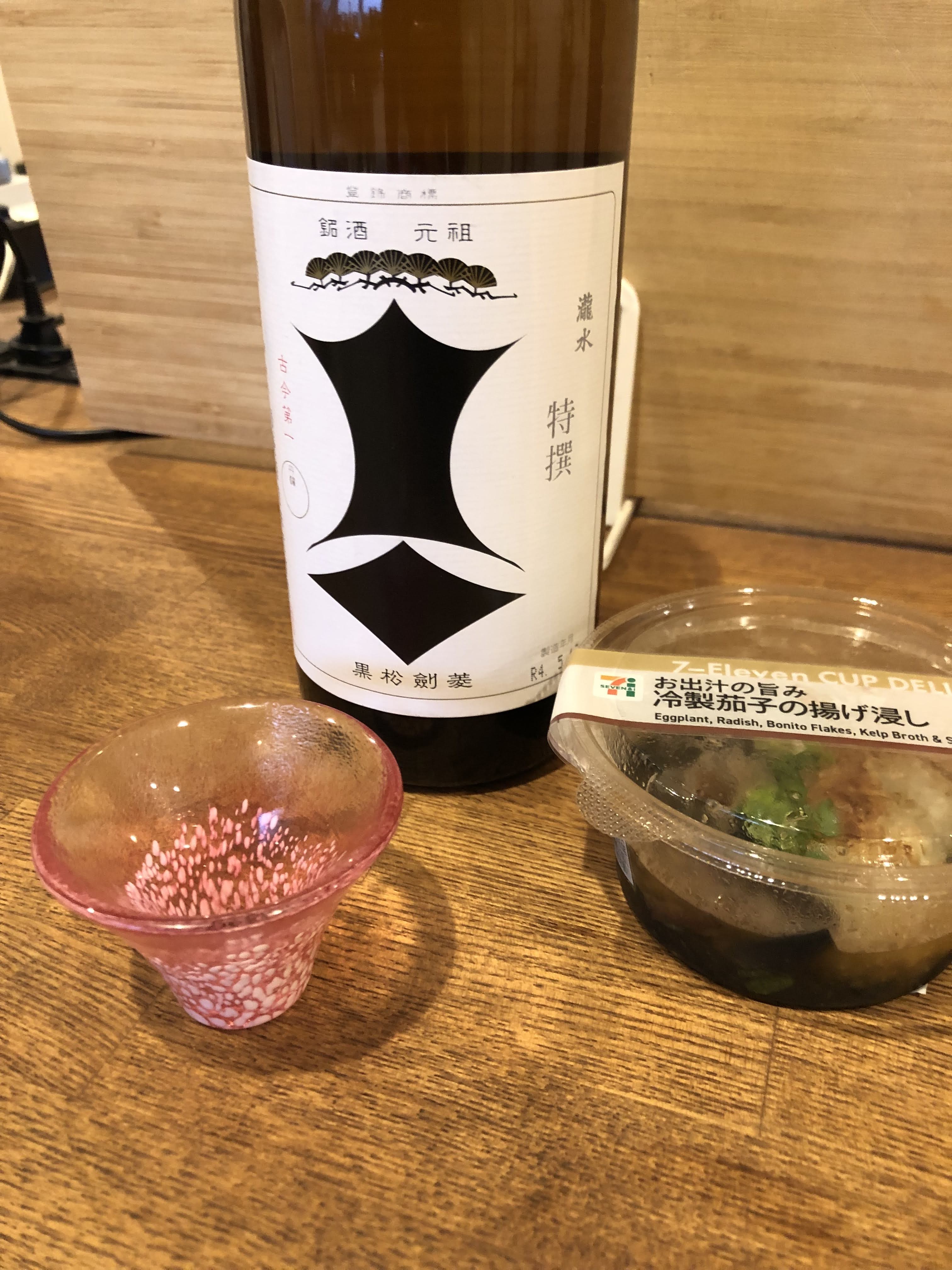
Kenbishi has such a long history that it appears in textbooks for sake connoisseurs. As stated on its official website, it is one of the top oldest breweries with a history of 500 years.
Kenbishi was designated as a gozenzake by the 8th shogun, Tokugawa Yoshimune
official Kenbishi website
The history of Kembishi is not new, but it has been brewed for over 500 years and is one of the oldest breweries in Japan. It is not new, but you will remember it if you drink it. It has been a long time since I bought it.
What is the mysterious logo from the family crest? Is it a sword and a rhombus?
It is an old cap, so don’t cut your hand.
Open the bottle
As soon as I opened the bottle, it came. The unique sourness of Showa-era sake.
I wonder if I will feel the difference when I drink it as I get older. When I was a student, I used to think this smell was sweet sake. Various memories.
Gulp!
Japanese ranking 279th Hyogo Prefecture Ranking 9th
Comment: A Sake is rich, dry, and robust. It has a strong umami of rice and a strong sense of maturity. At room temperature, it is dry but has a strong sweetness from the rice, and when heated, the balance of acidity, umami, sweetness, and dryness improves. Best served with nabe (hot pot) in the cold of winter!
Comment: B It was robust and had a habitual, strong alcoholic smell. I drank it cold this time, but I thought it would be more to my liking if it were heated up, so I finished it at one gou….
Taste Evaluation
Kuromatsu Kenbishi
As the smell suggests, sourness from the first sip. The sweetness and mellowness after that. This is an old-fashioned taste that is perfect for sake lovers, not beginners. Vinegared dishes, miso-based dishes, pickles, and other traditional flavors are perfect for sake. The flavor also changes depending on the food with which it is paired. The finish is complex, so those who are not accustomed to drinking sake may find it a little difficult to stick to. As a whole, it is mellow and very tasty as a food sake. Best at room temperature.
Today’s snack
Since I had a general idea of what I wanted to taste today, I chose some snacks in advance that would go well with the sake. Chilled deep-fried and soaked eggplant from 7-Eleven. There is no doubt about it. This pairing. It was another good day.
Many Japanese people have no experience with soba noodle making. Hence, we went to make it and tried making soba. Nowadays, with the convenience of the Internet, reservations can be made immediately.
We can eat soba anywhere in Japan. However, making Soba is not a rare opportunity.
Mix
I only vaguely know the process of making them.
Japanese sobaJapanese sobaJapanese sobaJapanese soba
Only soba noodles are ground to a powder using a stone mortar. Then put wheat flour and soba flour in a vessel in a certain quantity. The amount of water is determined according to the climate of the day. The water and flour are mixed together.
Extend
Japanese soba
Well kneaded. Combine into a single mass, just like bread.
Japanese sobaJapanese sobaJapanese soba
Sprinkle buckwheat flour and gradually stretch the dough with a rolling pin. This is one technique.
Japanese soba
Japanese soba
When the dough becomes round, it is dusted with buckwheat flour again and stretched into a square shape.
Japanese sobaJapanese sobaJapanese sobaJapanese soba
Arrange
Now we will fold it to cut it.
Japanese sobaJapanese sobaJapanese sobaJapanese soba
Finally, we cut them with a special knife.
Japanese sobaJapanese sobaJapanese sobaJapanese sobaJapanese sobaJapanese sobaJapanese soba
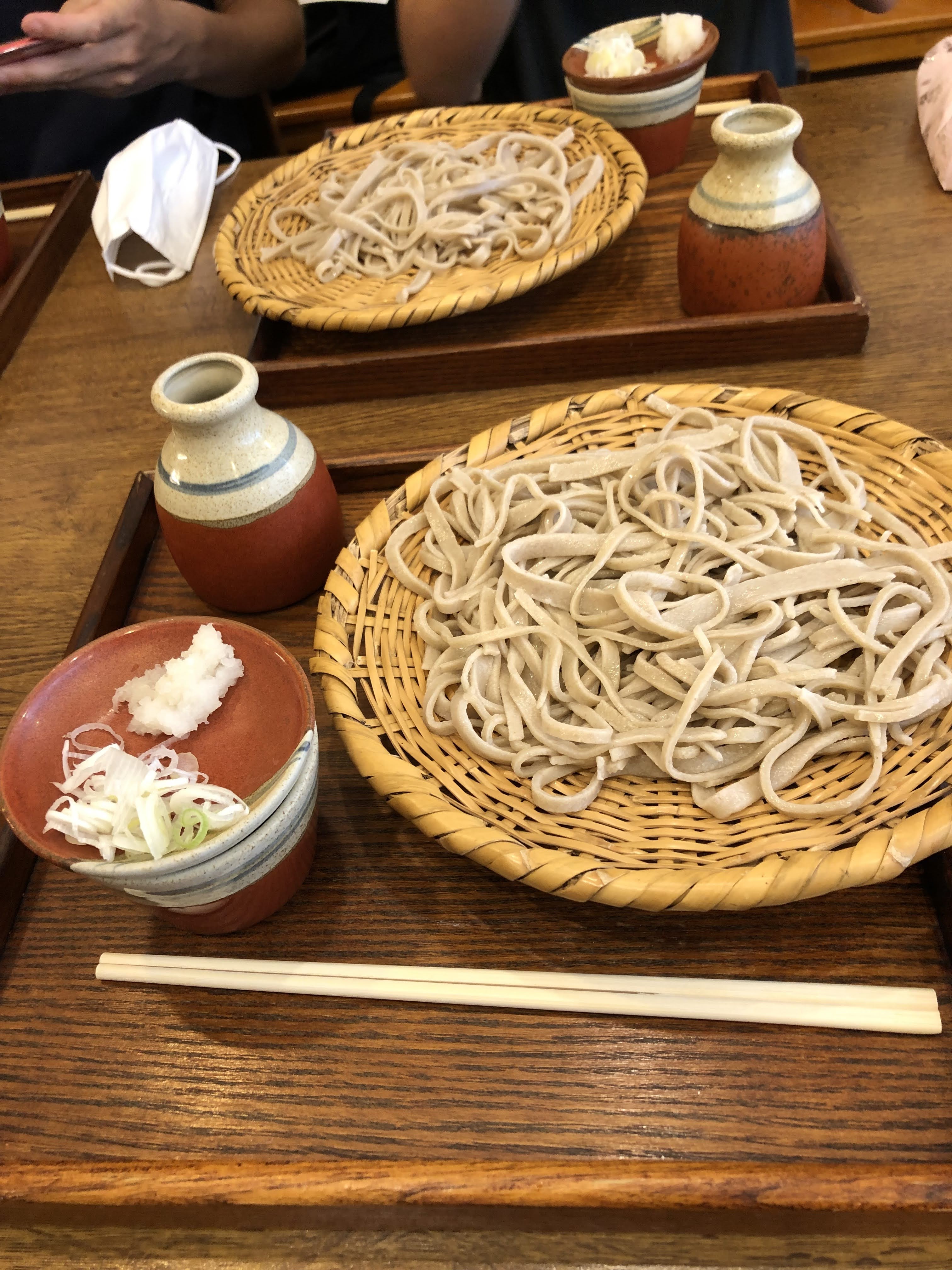
Now soba noodles are ready. Each person boils it and takes it home to eat.
Boil
Japanese soba
Japanese soba
Sampling food
Japanese soba
Owner Mixes and Boils Everyone’s Soba in a Soba Making Experience He will print out how it will be boiled after completion.
I went home and boiled them, but it takes a few tries to get the hang of boiling them. But it is an interesting and good experience.













wish you all the best