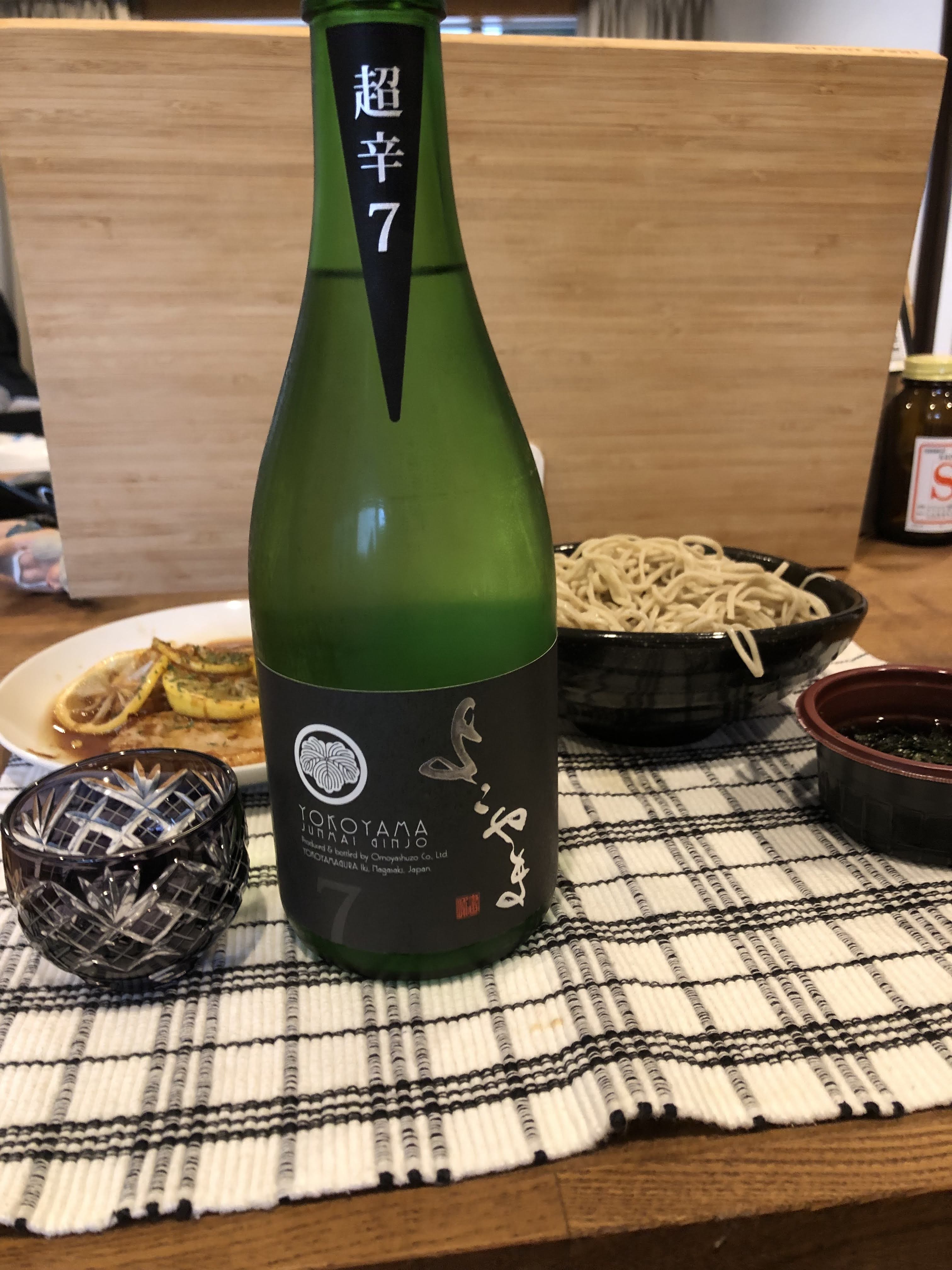
A sake that I personally thought was quite tasty.

Dry” does not mean spicy, but rather sharp. It has a sharpness, which means that there is no harsh taste when it passes down the throat, and it passes down the throat before you know it.

The expression “spicy” is not always easy to describe. Many sake drinkers say “light and dry” as if under a spell. I am one such person.

I was lined up at a liquor store, as if to say, “Try it. So, of course, I picked it up.

  1. Yokoyama Dry
  2. What is hi-ire?
  3. Evaluation
  4. Today Snacks

Yokoyama Dry

Yokoyama Dry
Yokoyama Dry

It’s hi-ire, isn’t it?

What is hi-ire?

Hi-ire is the opposite of raw sake. It is the process that preserves the flavor the longest. If the bottle is not opened and kept at 10 degrees Celsius in the refrigerator, it will keep its freshness for up to one month. In case you are wondering, raw sake tends to run fast.

More than that, I was surprised that the brewery is on “Iki Island. I was surprised that sake is also made on Sadogashima, but I didn’t expect it to be from Ikijima.

Iki/Tsushima/Goto: The Story of Japanese Heritage Recognition] Located halfway between mainland Japan and the continent, the islands of Nagasaki Prefecture have been a strategic point of maritime traffic and a hub of trade and exchange connecting them since ancient times. In particular, the relationship with the Korean Peninsula is deep. Iki prospered as a branch state in maritime trade during the Yayoi period, and Tsushima has a history of monopolizing trade and diplomatic affairs with the Korean dynasty since the Middle Ages, flourishing as a base for relay trade and a guest site. Although its role as a transit point has diminished with the development of the economy and transportation system, ancient historical sites, castle ruins, and gardens tell the story of its prosperity, and traces of Japan-Korea exchange can be seen in local products such as shochu and noodles, as well as in folk customs and events. These border islands, which have experienced repeated reconciliation and conflict, but have also maintained continuous exchange, have been recognized as a Japan Heritage site because they are a rare area where one can feel the deep bonds between countries and peoples. This castle was built by Toyotomi Hideyoshi during his invasion of Korea (during the Japanese Invasion of Korea in 1592) and is designated as a national historic site. The castle was built on a castle mountain in Katsumoto-ura, located at the northernmost tip of Iki Island, mainly by Shigenobu Matsuura (Hirado), with the cooperation of lords such as Harunobu Arima (Shimabara), Kimae Omura (Omura), and Jungen Goto (Goto). Katsumoto Castle served as a military base to supply and repair food and weapons for soldiers traveling to the Korean Peninsula.

Iki Sightseeing Navigation

It’s a historically important island. I had no idea that there was a local brewery here as well.

My interest was piqued, so I looked it up.

Founded in 1924. Iki is said to be the birthplace of barley shochu. For a while, they gave up making sake and mainly made shochu. They resumed making sake along the way. The story is that they have come to the present day. If you are interested, please visit the official Omoie Shuzo website.

Yokoyama Dry
Yokoyama Dry

Screw cap.

Open the bottle.

Yokoyama Dry
Yokoyama Dry

Slightly sweet aroma.

Sip it!

Japan Ranking 143rd
Nagasaki Prefecture Ranking 1st

Comment: A
The flavor comes on quickly, but it seems to flow quickly and smoothly.
The sweetness is not that apparent. It seems very smooth, and I drank it like water. I have never had the normal 7, but I heard that it is fruity, so I wonder if this is a symmetrical flavor.
I would like to compare them.

Comment: B
It is firm and dry, with a hint of acidity, but a gentle sweetness lingers in the aftertaste.
I think it is easy to match with fish and other dishes as a mealtime sake.

Tast Evaluation

Yokoyama DryEvaluation
Yokoyama Dry Evaluation

My first impression is that it is easy to drink. It is light and has a nice sharpness after finishing. The lactic acidity and sweetness are well controlled, and the taste is never boring. It has a nice fruity aroma that remains after the drink is over. The alcohol is not too strong and well balanced. The balance is perfect for drinkers. This is my favorite.

Today Snacks

lemon steak Soba
lemon steak Soba
lemon steak
lemon steak

Accidentally, today we had soba noodles and pork with lemon steak!

It was a very good combination with Sake. Soba and sake are still the best combination.

It was a very good day.

Click here for other West Japan →Here

Thank you for reading to the end. Please don’t forget to bookmark this page.

  1. porntude's avatar
  2. click here's avatar

I drank the most popular Aramasa in Japan now.

Today, too, I’m drinking alone in the dust. Finally. I’d love to have a drink during my usual routine stroll around the liquor store,
But I found a bottle of “Aramasa” that I couldn’t find anywhere.

I quickly get it to my hand so that no one will know.

  1. Aramasa Viridian Junmai
  2. What is 6-yeast?
  3. Taste evaluation
  4. Snacks

Aramasa Viridian Junmai

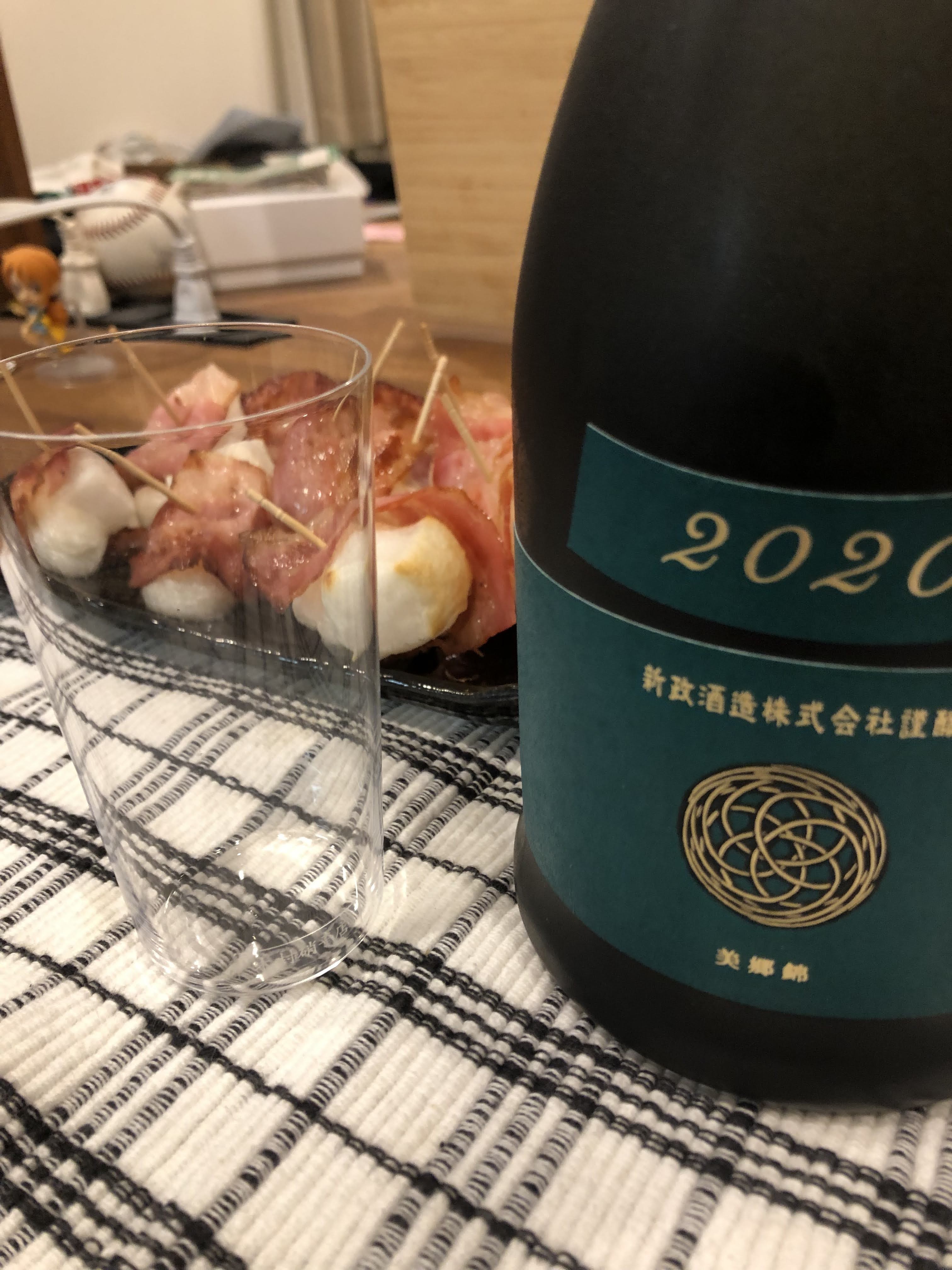
Aramasa Viridian
Aramasa Viridian

When I was a student working part-time at an izakaya, I used to spill a lot of Aramasa into a cup of sake, but now I feel it would be a waste if I spilled it, and I’ve suddenly risen in the ranks. You never know.

The design is very different from the old vertical Aramasa.
Who can read “Viridian” with these Kanjis?

What is 6-yeast?


Kyokai No. 6 yeast was isolated by Koana and others around 1935 at Aramasa Sake Brewery in Akita Prefecture. It produces a gentle, clear aroma, with a fruity aroma before and after fermentation. The TTC staining is red and the pantothenic acid requirement is positive. It consumes sugar well and has many top-fermentative characteristics. It is the oldest church yeast still distributed by the Japan Brewers Association.

Aramasa Viridian

6-yeast is said to have a gorgeous Ginjo aroma. Also known as Shinsei yeast, it is what Association yeast is in the first place. For more information, Wikipedia has the characteristics of each No. What is Association Yeast?

Aramasa Viridian

It’s an old cap, isn’t it? It’s a shame to open it. But it is just sake.
Open the bottle.

Aramasa Viridian

A faint scent of ginjo

Sip it!

Japanese Ranking #1
Akita Prefecture Ranking #1

Comment: A
100% Misato Nishiki, 50% polished rice, 13% alcohol by volume. The label says it has a fragrance reminiscent of ripe kiwi, yuzu, and mint, but I have no idea what it is I guess I have a stupid tongue… The acidity is low for Shinsei, and the clarity is clear? It’s a thick sake with a refreshing umami flavor Savory! Thank you for the food.

Comment: B
At a modern French restaurant a glass of wine was poured into the glass.
A glass of wine poured into the glass appeared I was taken aback.
Burgundy wine appeared with it. Green labels. I’m not exaggerating.
I was stunned! I was so excited to meet Mr. Niimasa I was not prepared for this.
I was not prepared to meet Mr. Shinsei. I was just wrapped up in the fragrance without a care in the world. The fragrance of fruit that seemed to boil. The scent of a glamorous, gorgeous, successful person.
I don’t know about that I’m maxed out on excitement, but obviously it’s early days .

Taste evaluation

Aramasa Viridian Taste evaluation

The Sake is “Soushu”. It’s juicy, but it’s fruity, or more like juice. It has a carbonated taste and is almost like a cocktail. If I were a Showa father, I would have said, “This is not sake. It destroys the preconceived notion of sake. It would be better to call it a cocktail, but there is little difference between the two. I can see why it is so popular. The overall alcohol content is light, but the aroma is not too strong and the taste is sharp, with some acidity, but not enough to be bothersome. It is certainly delicious.

Snacks

rice cake bacon.

Since I was in the mood for a snack, I made my favorite snack, rice cake bacon.

Click here for other Tohoku→Here

Thank you for reading to the end. Please don’t forget to bookmark this page.

  1. porntude's avatar
  2. click here's avatar

Good sake with a frog symbol.

Today, I’m enjoying sake by myself.

Lately I have been experimenting with sake pairings other than Japanese food. Something inside me told me,

“I want taco tacos. As usual, I wandered to several liquor stores as if on my way to work

  1. What is melon 3.33?
  2. Niida natural melon 3.33
  3. This is this frog series
  4. What’s Kimoto
  5. Taste Evaluation
  6. Today’s snack “Tacos”

I don’t always buy something with a specific purpose, but rather I just think, “I’ve seen this before…” and I think, “What’s this?

What is melon 3.33?

That’s why I bought it. I am always interested in melon.

Actually, a certain character is the main character in this Niida series, but he is not in this sake. I often see him, the characteristic guy.

Niida natural melon 3.33

This is this frog series.

I checked out the brewery, which has been around for 300 years. He is now in their 18th generation.

I searched the Internet and found other titles like this one.

The sudden death of the brewer, the fire, and the earthquake, but the sake brewing that kept on keeping on

Sake is usually brewed in a three-stage process, but “Shizen Shu” is brewed using the brewery’s unique “kumidashi four-stage” method, which is unique to the brewery, and is characterized by the sweetness and flavor of the rice. The amount of steamed rice used in the fourth stage of brewing is reduced to 1/3 of the normal amount, making it less sweet than the standard Shizen Shyu, which is called “Melon 3.33. The expression “3.33” was chosen because it has three steps + 1/3 (= 0.33) steps. It has a fresh ginjo aroma like a fully ripe melon created by changing the brewing formula, and has an excellent balance of sweetness and acidity.

Niida brewery official website

I see that “three times” and “one-third” are numerical expressions.

What’s Kimoto

Think of “kimoto” as the opposite of “sokujyo,” or “fast brewing. Quick brewing is, to put it simply, doping. It artificially speeds up the fermentation process and makes it quicker. The opposite is true for Kimoto, which waits for natural fermentation to grow and bring it closer to perfection. The sake I have tasted so far seems to have a full-bodied flavor, while the sake that claims to be “fast brewing” has a yogurt or lactic acid taste. Namo yeast requires a lot of time and effort. Therefore, although it is not indicated on the label, most of the world’s sake is made using the fast brewing method. On the other hand, those made with the “Namo yeast” method are indicated on the label. It is a good idea to show off the time and effort that has gone into making it.

Old cap.

Hidden frog

Open the bottle

Taste Evaluation

Gulp

Japanese ranking 131st
Fukushima Prefecture Ranking 11th

Cooment: A
Sweet aroma, strong sweetness, lingering finish

Comment: B
Kimotokimoto 3.33 Unadulterated, unfiltered, raw sake with no yeast additives.
Very strong aroma of banana and melon sweetness, with aromas of raw rice, marshmallow sweetness, and dairy products such as cream and cheese.
The first half of the flavor is moderately soft and sweet, with some acidity.
The mid-palate changes to bright lactic acidity.
The finish is light with aromas of raw materials similar to marshmallow and cheese.
The lingering finish on the tongue is very pronounced

It is a sake yeast, but it has a lactic acid taste. It has a complex flavor, as it is commonly called. Is it a sake to be enjoyed with a pleasant aroma? It is similar to Kid, a popular ginjo-shu among the sake I have had so far. It is suitable as an aperitif. It seems to go well with sashimi and raw fish. It is also suitable as a mouthwash to refresh the fresh smell. Melon” is probably a ginjo aroma. It’s a popular type of aroma right now.

Today’s snack “Tacos”

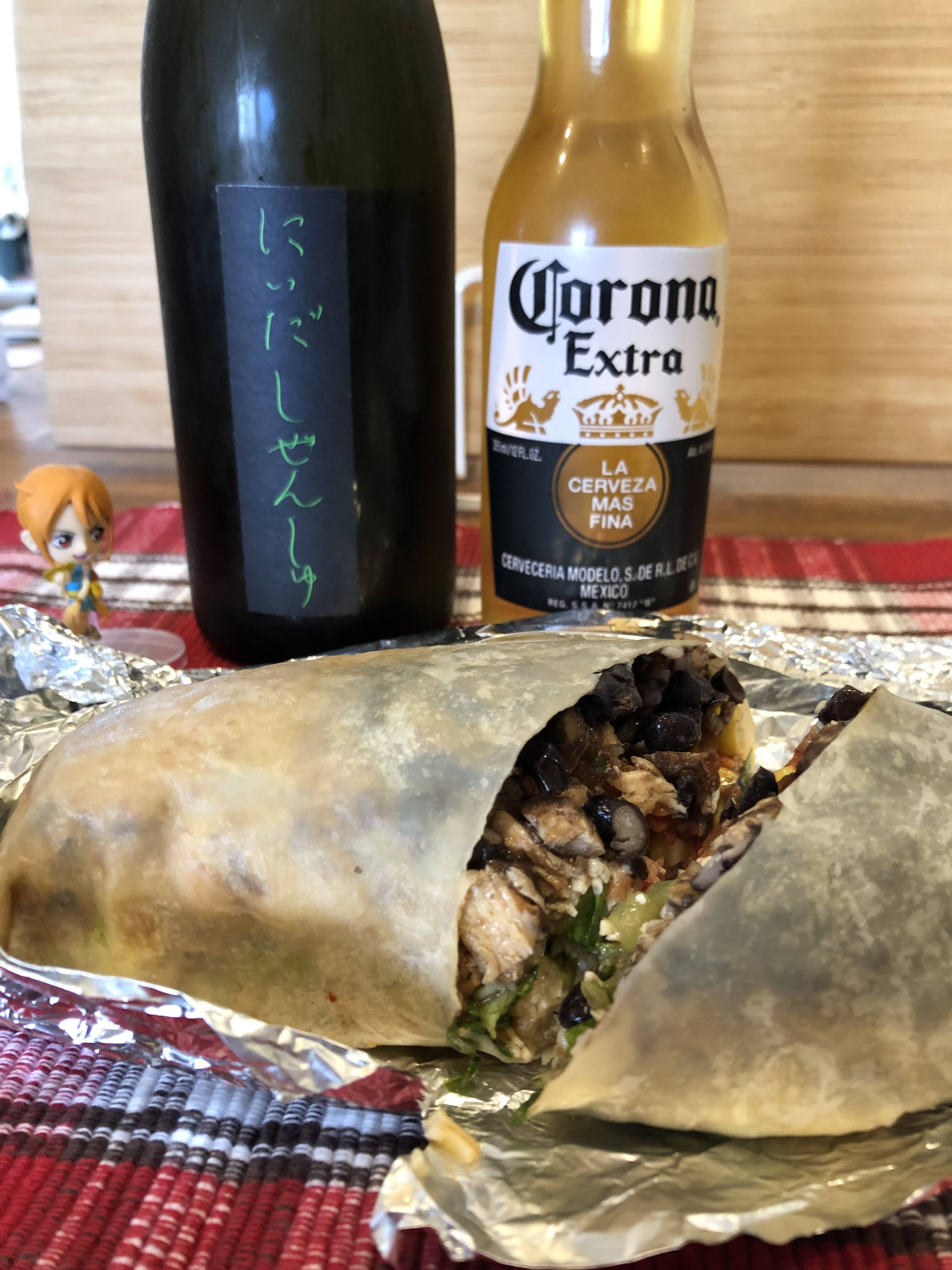
I wanted to eat tacos, so I bought this on my way home. Lots of ingredients.

Speaking of tacos, it must be Corona. I tried sake and Corona to see which goes better with tacos.

Unfortunately, the Corona won. Sake is no slouch either, but this time it was not the right portion. It’s packed with a lot of contents.

Click here for other Tohoku→Here

Thank you for reading to the end. Please don’t forget to bookmark this page.

  1. porntude's avatar
  2. click here's avatar

Delicious sake that is incredibly popular in Japan.

I like to drink alone sometimes.

I’m still going around to liquor stores as usual.

I sometimes feel like drinking “Kaze no Mori” on a regular basis.

“Kaze no Mori” which I drank before

  1. Kaze no Mori alpha8
  2. Kaze no Mori Unfiltered

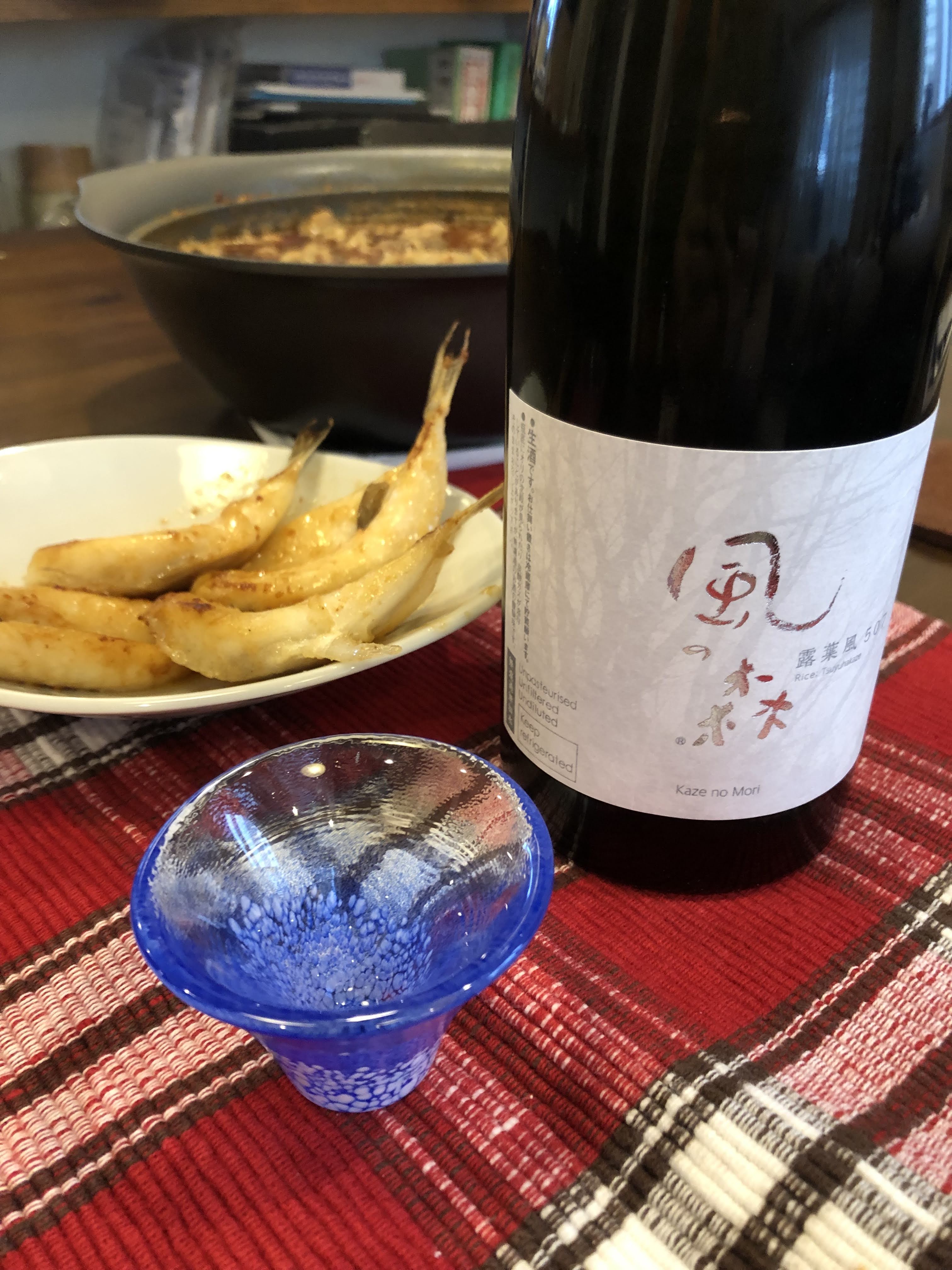
Kaze no Mori Tsuyu Hakaze 507

Kaze no Mori Tsuyu Hakaze 507

Characteristics of Kaze no Mori

Tsuyu Hakaze is a type of rice. It is different from the rice we usually eat. It is called “Shinpaku” (heart white), which is located in the center of the brown rice and is composed of protein, a very important element in sake brewing. As a side note, the ratio of milled rice indicates how much of the core white rice is left.
It was cultivated at the Aichi Prefectural Agricultural Experiment Station in 1953. Its cultivation temporarily ceased, but it was revived after being cultivated in Nara Prefecture. It is a crossbreed between Hakutsuyu and early Futaba.

from Kotobank

Kaze no Mori is characterized by the use of local rice from Nara Prefecture, such as Akitsuho, to make its sake.

In the Kaze no Mori series, specified name sake such as “junmai” or “junmai ginjo” has been abolished, and all are labeled “junmai Nara sake”. The last digit of the three-digit number indicates the yeast used (No. 7 yeast), and the first two digits indicate the rice polishing ratio. The “50” in “507” means a 50% milling ratio, and the “7” indicates Yeast No. 7.

from Kagiya

I did not know this.

Kaze no Mori Tsuyu Hakaze 507

This time it’s 507, so it’s a 50% milling ratio and No. 7 Masumi yeast, a yeast with high fermentation power and a strong aroma.

It says “carbonation caution”.

Kaze no Mori Tsuyu Hakaze 507 Cap

It is a screw cap.

Every time I think about it, I feel the beauty of Japanese people who pay attention to details like family crests.

The bottle is open! A pop of gas came out. 

Kaze no Mori Tsuyu Hakaze 507

Later, when I drove to my classmate’s sushi bar to give it to him, the wind forest broke out on the way and transformed the car into a car that smelled of alcohol. When I was in Akabu, I was on the train so I didn’t spill it right away, but it backfired and turned into a catastrophe when I was lying down in the car…

Kaze no Mori Tsuyu Hakaze 507

It smells more like ginjo aroma than junmai rice aroma.

Gulp.

Japanese Ranking 2nd
Nara Prefecture Ranking #1

Comment: A
Slightly carbonated. Food sake. Refreshing sake. A trendy genre nowadays. It can be served as an aperitif like champagne.

Comment: B
Although I had had it at an izakaya before, when I discovered Kaze no Mori at a sake brewery, I decided to buy it immediately.
Of course, or perhaps it should be obvious, it must be delicious. Slightly effervescent.
When I opened the sake lid, I was blown away.
If I had peeked into the bottle and opened it, it would have been dangerous~(-_-;)

Taste Evaluation

Kaze no Mori Tsuyu Hakaze 507

I’ve had other Kaze no Mori series, but this one has a unique sweetness that immediately identifies it as Kaze no Mori. The aroma is also restrained. The sourness is stronger than the sweetness, and the citrus sweetness gives it a gaseous taste that refreshes the inside of the mouth. After the last sip, the citrus sweetness changes to melon-like melon sweetness. It is a sake with a pleasant aroma. We feel it is best drunk cold. It has a robust aroma, so it seems to go well as an aperitif or with lightly seasoned dishes such as refreshing chilled tofu.

Here is a link to a table of the Kaze no Mori series’ flavor classifications. Table of the Kaze no Mori series’ flavor classifications

風の森シリーズの味分類分けの表

snack to have with a drink

A Chinese resident brought me some Chinese cooking ingredients, and my friend cooked them.

I put freshwater fish in the dish. He asked me where he could get carp, but it is impossible in a general supermarket, so I substituted meat. And why not cook puffer fish?

Pufferfish sauteed in butterand hot pot of hot spices

Pufferfish sauteed in butter

Sweat from my scalp. It was so spicy that my tongue went numb. Wind Forest and spicy food do not go together.

Kaze no Mori Tsuyu Hakaze 507

It was happy time again today.

Click here for other West Jpan→Here

Thank you for reading to the end. Please don’t forget to bookmark this page.

  1. porntude's avatar
  2. click here's avatar

What’s about BY Explanation of Sake Terms

Today, too, I am drinking sake alone in the dust. No, it’s not that. A friend from China is temporarily staying at my house for a while to study abroad in Japan. It would normally take a few hours to fly to Japan, but since he was coming from mainland China via Hong Kong, it would take more than a day to get to Japan. I had to go all the way to Narita to pick him up. A few days later, I asked him to accompany me on a wandering tour of the liquor stores, which also included sightseeing in Tokyo.

Since we were there, we took him to a modern liquor store and browsed as usual.

  1. Yanma Nakadori Raw rice wine
  2. What’s about BY
  3. Yanma Nakadori Raw rice wine
  4. Side Dish Hot pot

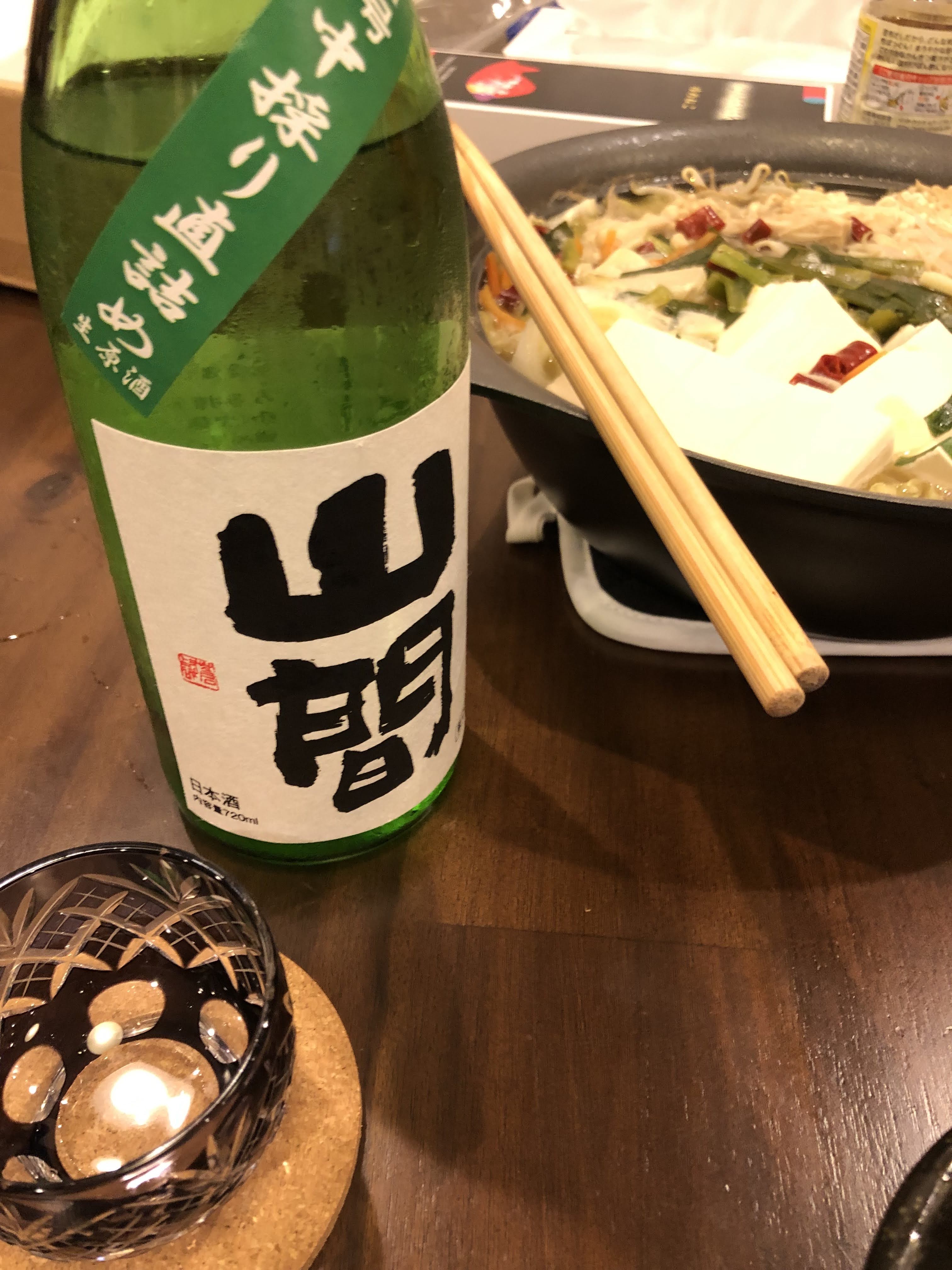
Yanma Nakadori Raw rice wine

Yanma Nakadori Raw sake

I always have a good talk with the old man here. See you later. I’m a man who likes limited editions.

Yanma Nakadori Raw rice wine

The title is very informative.

Junmai Ginjo is related to the rice polishing ratio. Nakadori(中採り) relates to whether the supernatant or the lower part was taken. Unfiltered raw sake is related to whether it is filtered and penetrated to what extent, as the kanji indicates, or whether it is wild and raw as it is. Chokuzume(直詰め) is the method and process of bottling on the spot. Shikomi(仕込み) No. 9 is an indication of how many vessels were used to make it.

What’s about BY

BY stands for brewery year, not for expiration date. 28BY = brewed in the year 2008. The 28BY = brewed in the year 2008, which is the second year of the 20th year of the 20th century. The sake brewing year begins on July 1 of the year and ends on June 30 of the following year.

There are many other ways to taste sake, but knowing each of them will give you an idea of the direction of the flavor. However, please understand that taste varies from person to person, so this is not always the case. To begin with, spicy, light, etc. are subjective to each individual, so some people may find it sweeter than others, so it is best to use your own sensibilities and not be stubborn.

It is a great item to talk about your knowledge. I have been mounting a Chinese resident by showing off my knowledge.
It’s like a bill, isn’t it? Like a seal to be unsealed.

Yanma Nakadori Raw rice wine

Old caps. Don’t cut your hand.

Speaking of Yanma, the Japanese League soccer team. Is it a generation gap that I can only think of Yanmar Diesel, the predecessor of the present Cerezo Osaka, in its industrial days?

Yanma Nakadori Raw rice wine

Opening Cap
Oh, it’s shwashy. Evidence of active bacteria.

The aroma is fruity and subdued. You can also see a sense of gas.

Gulp!

Yanma Nakadori Raw rice wine

Yanma Nakadori Raw rice wine evaluation


The overall balance is good, and the ginjo aroma is not too strong and restrained, so the aroma is not too strong. It has a sharp finish and seems to go well with all kinds of food. It is a refreshing and food-friendly sake. The slight gasiness of the sake keeps the sweetness down and makes it refreshing to drink. It’s a good, understated sake.

I did a little research.

The “YANMA” sake, which was started on a trial basis in the 2006 brewing year, is brewed with sake rice grown in the local mountains to realize the “ultimate taste” ideal of Yoshinori Takeda, the fourth generation of the family. Only the “Nakadori” type of sake, brewed directly from the kamekuchi, is released under the name “YANMA”. After eight years of secret trial brewing, the sake was finally born in a satisfactory form, and quickly became a popular brand that is difficult to obtain.
The main brand name is “Yanma”, a sake made by “direct-filling” the best quality “Nakadori” portion, and “Koshi-no-Shiratori”, a blend of “Arabashiri”, the first pressing of the unrefined sake, and “Hitoshi”, the last pressing.

From the official website of Niigata Daiichi Shuzo

Ah! The father of the liquor store where I bought it said. He said that the sake brewery changes the brand name of the sake depending on whether it is top-quality or middle-quality, or whether it is tailings. He also said that it is always limited and “no year-round product”. Nothing in Yamama/Koshi-no-Shiratori stays the same all year long.” He said there are no regular products.

Side Dish

Japanese hot pot
Japanese hot pot

I tried the first time to make a nabe (hot pot) with sake, but the quantity was so large that it would affect the next day…
It was a good day, too!

Click here for other Hokkuriku→Here

Thank you for reading to the end. Please don’t forget to bookmark this page.

  1. porntude's avatar
  2. click here's avatar

Sushi bar with a long line in Shibuya, Tokyo

Sushi bars are everywhere in Japan. Is it good or bad? If it is expensive, is it good? You will never know until you try it.

There are not many sushi bars with lines. High-end sushi bars are usually by reservation only. Reasonably priced sushi bars have a lot of space, so they can accommodate a lot of customers. During the New Year’s season, people line up. That’s about the only time of the year. However, the restaurant I am about to introduce, Midori Sushi, has a line out the door all year round. An amazing restaurant.

It is not a chain restaurant with reasonable prices and 100 yen per plate, but it is not an upscale restaurant either. Why on earth would people wait in line?

Midori-sushi

Midorisushi
Address
4F Mark City East, 1-12-3 Dogenzaka, Shibuya-ku, Tokyo

It is essentially always a waiting list. However, since it was late in the evening, there were only a few people waiting in line.

It’s a ticketing turnstile system.

The restaurant is not very spacious.

The lunch menu is very reasonable!

The regular menu is moderately priced

Salad and steamed egg custard are automatically served first.

The store even has its own original soy sauce!

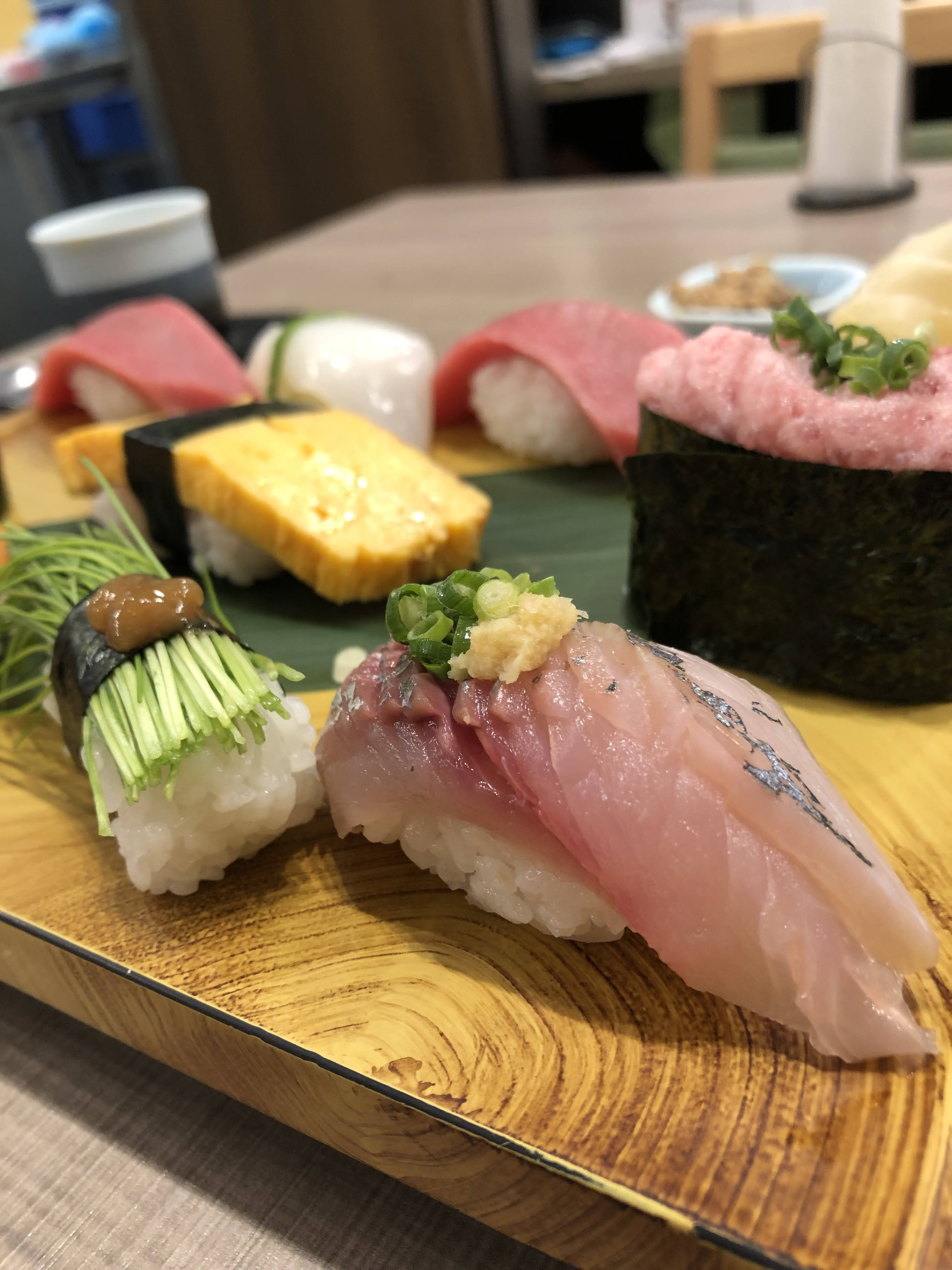
Here we are. Vivid colors. Oh, there is a mysterious grass.

What is it? I’ve never eaten grass before either.
I looked it up: green onion. It is a kind of green onion.

The fish was thick and well seasoned, and the rice was made by a craftsman, so it was not too hard and did not lose its shape, but had just the right softness and sweetness. If you can eat this for as little as $10, there is no wonder it is so popular and people line up to get it.

In Japan, you can get this “Chawanmushi” at any proper Japanese-style sushi bar. You can eat it any time of the day, but it is usually eaten at the end of the meal. By the way, it is made of egg.

For this price, Midori-zushi is worth a visit if you prefer more traditional sushi.

Thank you for reading to the end. Please don’t forget to bookmark this page.

  1. porntude's avatar
  2. click here's avatar