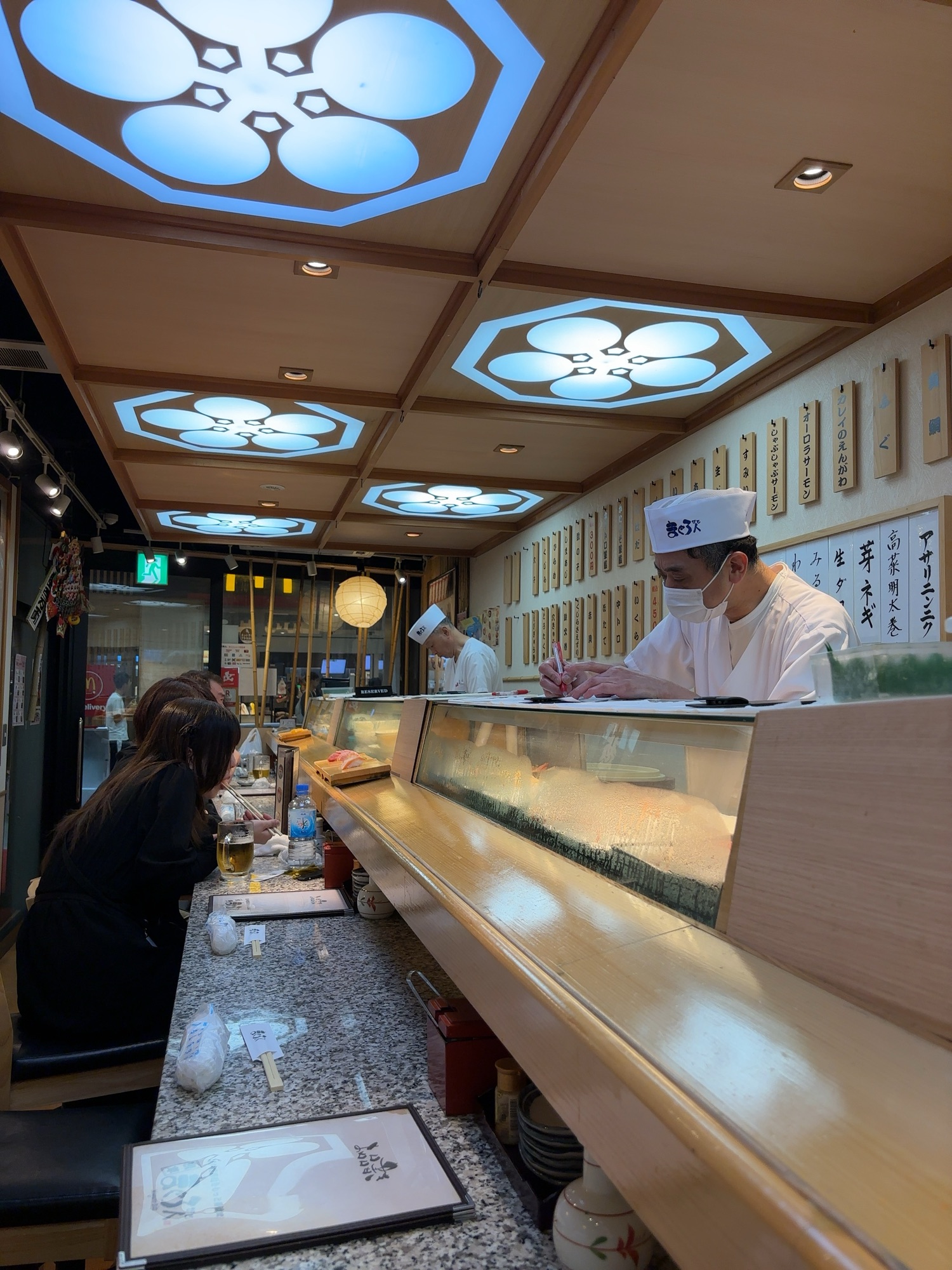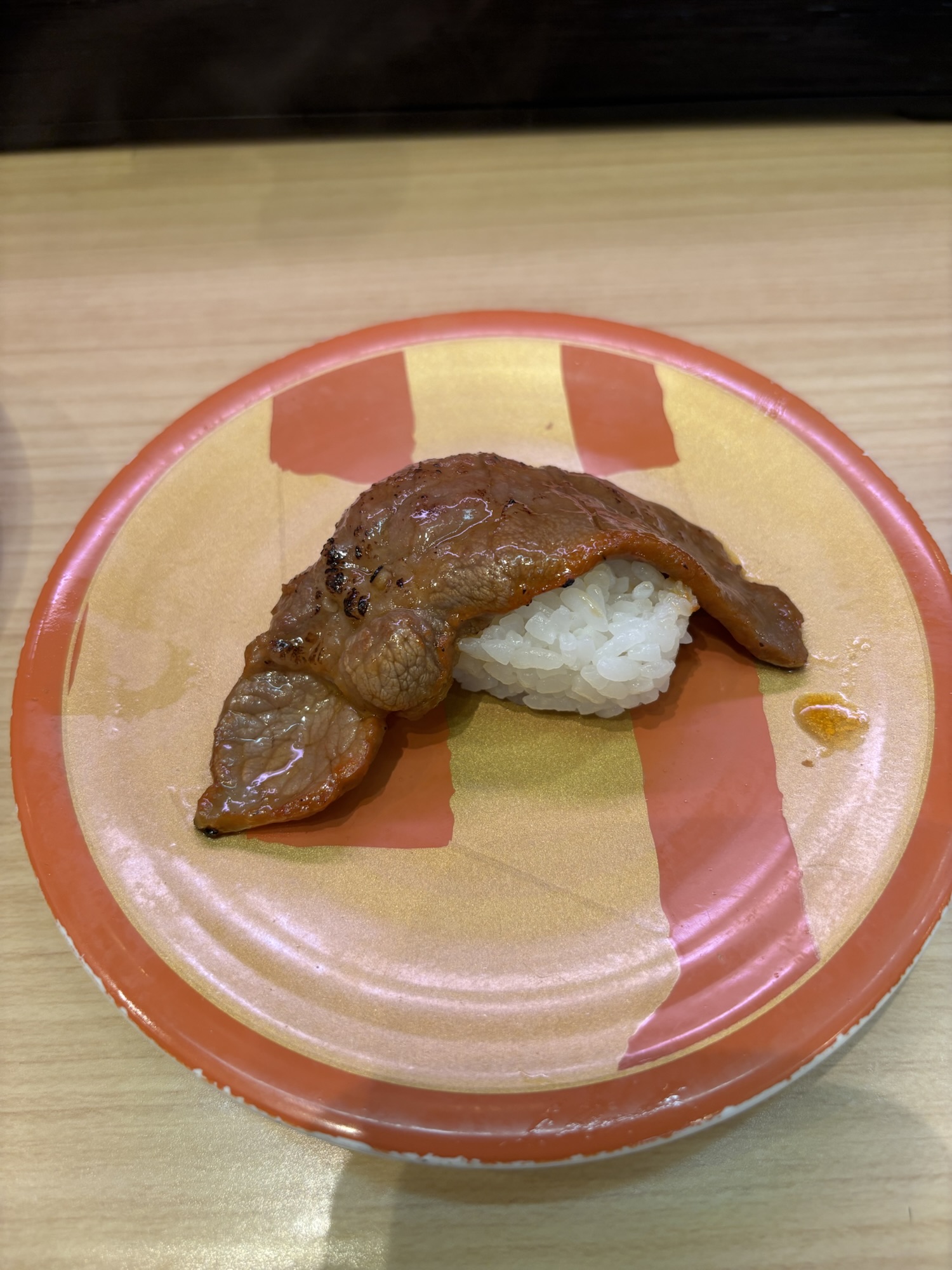
The fish fillets are huge. The name of this restaurant “Nemuro” is the name of a region in Hokkaido. Therefore, there is a particular focus on fish. Fish from a chain restaurant.
Even from a Japanese point of view, this restaurant is highly recommended. Here is a link to the official website. There is also salmon roe that overflows when I leave.
salmon roe
Thank you for reading to the end. Please don’t forget to bookmark this page.
There was a time in history when Toyama Prefecture was famous as a medicine seller.
The reason was that during the Edo period, feudal lords had to stay in the Edo shogunate (present-day Tokyo) for a certain period of time. The reason for this was that during the Edo period, feudal lords were required to stay in Edo Shogunate (present-day Tokyo) for a certain period of time. During their stay in Edo, they gave medicines to another lord who was injured, which led to a rumor that medicines from Toyama Prefecture were effective, and people from all over the country began to buy them. From there, medicine developed as a local industry in Toyama Prefecture. This is the history of this castle.
White shrimp
white shrimp
The most famous product in Toyama is “shiroebi” (white shrimp). White shrimp can be caught in Toyama Bay, but their freshness is short and they cannot be distributed to distant places. It is only available in the Toyama area, so we hope you will try it when you visit Toyama.
tempura soba
The photo shows “white shrimp” tempura soba. A local buckwheat noodle shop in front of the station.
Address
1-227, Meiwa-machi, Toyama City, Toyama Prefecture, Japan JR Toyama Station
tempura sobatempura soba
Sushi
sushi
Fresh fish from the calm Toyama Bay is also famous. Sushi is the most popular.
Toyama BayToyama BayToyama BayToyama Bay
Black ramen
black ramen
Black ramen” is a type of ramen made with black soy sauce. The peppery, chewy noodles are exquisitely delicious.
Address:Patio Sakura 2F, 1-4-20 Sakura-machi, Toyama City, Toyama Prefecture Restaurant Name :Gatsuri-Ebisuko
black ramenblack ramenblack ramen
Toyama Station at night
Toyama station at night. Unlike Tokyo, there are not many people, and time passes leisurely.
Temple = “Buddhism” A place to worship the principal image (mainly Buddhist statues)
Shrine = “Shinto A place to worship mirrors and other sacred objects (objects in which deities are believed to reside)
The Japanese, who believed in natural objects, began to build temporary places of worship in sacred places where deities were enthroned.
Gods enshrined in shrines
shrine
Buildings were constructed for such purposes as sheltering from wind and rain, and, influenced by Chinese temple architecture, the architectural structure of shrines was arranged to provide a place to worship the spirit of the gods (mittama). There are six other names for shrines: Jingu, Miya, Daijingu, Taisha, and Sha, which are distinguished by size and rank. The highest rank is “Jingu,” as represented by the Ise Jingu Shrine. Shinto has no founder, but Buddhism is a religion with Buddha as its founder, born in ancient India. Temples in Japan began as places of prayer for the protection of the nation when Buddhism was introduced to Japan.
Gods enshrined in temples
temple
Temples in Japan began with the introduction of Buddhism to Japan and started as places of prayer for the protection of the nation.
Temples are places where Buddhist priests study and practice Buddhist doctrine, and shrines are places where deities reside.
Therefore, the purpose of worship and the content of wishes at temples and shrines are different.
At shrines, people express their gratitude to the gods and pray for happiness in this life, whereas in Buddhism, along with happiness in this life, people can also wish for a place in the Pure Land of Ultimate Bliss after death.
The manner of praying is also different.
Upon entering the shrine grounds, worshippers first purify themselves and their minds at the hand-watering basin.
After that, they offer money at the hall of worship or the main shrine.
The method of worship up to this point is the same for both temples and shrines.
The major difference between temple and shrine visitation is whether or not clapping is used. The major difference between temple and shrine worship is whether or not clapping is done.
shrinetemple
How to visit a shrine
shrine
The shrine is to be clapped twice (kashi-wade). Procedure for visiting shrines
(1) Place your money in the money box.
2) If there is a bell, ring it, then fold your state deeply 90 degrees and thank twice.
3) Calmly clap your hands twice and pray with your hands clasped together
④Tell your wishes and the happiness of others, and finally bow deeply and retire.
Some people believe that the clapping of hands is to make the gods notice you.
Please note that some shrines have different numbers of clapping and bowing.
How to visit a temples
temple
The proper way to worship at a temple is simply to clasp your palms together in front of your chest and bow lightly. Be careful not to do Kashiwa-Te by mistake.
Order of visitation at temples
(1) Put your money in the donation box.
(2) If there is a crocodile entrance, ring it and pray with your palms together in front of your chest without clapping your hands.
(3) Finally, bow and leave the temple.
The gesture of ” clasping hands” originated in India, and is said to express the wish for Buddhahood by joining the right hand (in the Buddhist world) and the left hand (in this world) to unite the world of Buddha and this world.
How to instantly distinguish between a temple and a shrine
The best way to distinguish between a shrine and a temple is to look at the roof.
Shrine Features
templeshrine
About Shrines
Shrines use natural materials such as thatch, hiwada (cypress), and kokera (persimmon) for roofs, and the influence of these materials remains strong even today.
Because of the Japanese belief in wood, wood is basically used for everything except roofs.
Chigi and katsuogi are characteristic parts of shrine roofs.
The main shrine building, where the sacred object is enshrined, is often located behind the hall of worship.
On both sides of the approach are the shrine office, a kaguraden, a water closet, and komainu (guardian dogs).
About temples
Since Buddhism is a religion that came via China, tiles, which also came from the continent, are used for roofs.
After the Middle Ages, architectural styles of temples became more diverse, and building materials other than wood were also used. As large temples began to house large numbers of ascetic monks, they needed a dining hall and other buildings to serve as living quarters, and so they began to be equipped with a number of buildings called “Shichido Gyan”.
Differences in entrances
For shrines and temples separated from the secular world, the entrance serves as a boundary.
shrinetemple
Shrines are “Torii”
The Torii gate is the symbol of the shrine and is also used as a map symbol.
It is located at the beginning of the approach to the shrine, and beyond this point is the sacred area where the gods descend.
The basic form of the Torii consists of two pillars topped by a Kasagi, and a Nuki (a piece of wood) below the Kasagi connects the pillars.
The temple is the “Mountain gate”
The Yamamon is the formal entrance to the temple, beyond which is considered to be the land of the Buddha.
By passing through the temple gate and purifying the mind, one faces the Buddha with a beautiful mind.
The name ” Sanmon” is said to derive from the fact that most temples were built on mountains.
Komainu (guardian dogs) stand by the approach from the Torii gate to the hall of worship and are responsible for driving away evil spirits.
Since ancient times, komainu have been regarded as spiritual beasts and have served to ward off evil spirits from entering the shrine.
Depending on the shrine, a fox (Inari Shrine), a deer (Kasuga Shrine), or some other animal may take the place of the Komainu.
Other shrines and temples have a long history and various historical properties. If you take a walk all over the area, you will encounter things of historical value.
chimetemplenaturally protected treenaturally protected treenaturally protected treeGoddess of Mercytemple
Toyama Bay is said to be a natural fish tank, a bay that is rich in food for fish due to the easy generation of prakuton.
Even at a typical conveyor-belt sushi restaurant in Toyama, the freshness of the fish and rare fish can be different from those in Tokyo.
Among them, Michi-no-Eki (roadside stations) are built for sightseeing and are equipped with facilities that allow visitors to enjoy a variety of seafood from Toyama.
Sushi mania is alive and well today. A sacred place for sushi chefs since the Edo period. Tokyo Kanda.I went there for the best sushi at a reasonable price.
There are people drinking from noon and this price is cheap.
Why a long-established sushi bar in the Kanda area of Tokyo?
Kanda is a town that developed during the Edo period. During the Edo period, the Tokugawa established the Five Routes and designated Nihonbashi, next to Kanda, as the starting point of the Five Routes. The Five Routes brought a variety of goods and services to Edo, and at the same time, cultures were exchanged, the economy developed, and Edo, the forerunner of the giant city of Tokyo, was formed. Many laborers gathered in Edo. Kanda was the starting point for the food supply for these workers. Fish from Tokyo Bay (Edo Bay) were supplied to the fish market in Uchi-Kanda, and produce brought from the northern Kanto region was gathered at the produce market in Kanda-Tamachi. Although the fish market later moved to Tsukiji and the produce market to Oi, Kanda was the starting point. In this way, Kanda developed along with the flow of the Edo period. One of the fast foods that emerged during this period was fast-food yatai sushi, a quick and easy way to fill the bellies of impatient Edo people and busy laborers. Fast food was not the same as today’s sushi, which is made from frozen ingredients of unknown origin and served with various modifications. In an era without even refrigerators, sushi was made by simply preparing and serving freshly caught, seasonal ingredients while they were still fresh. Wasabi was originally used to prevent spoilage and add flavor. Sushi, a bold white rice topped with a thick slice of sashimi, was valued as an inexpensive and quick way to fill the stomach. From the Meiji era onward, Kanda was reshaped as a town of artisans and students. Soon after the war, in 1947, Kanda and Kojimachi wards merged to form Chiyoda Ward. At that time, all the town names in Kanda Ward remained with Kanda as their eponyms. Kanda Tsukasa-machi, Kanda Kaji-cho, and Kanda Nishiki-cho…… are the names of many of these towns that remain today. Perhaps that is why there are still many areas in Kanda where one can feel a sense of emotion. Among them, the Kanda-Sudacho and Kanda-Awajicho neighborhoods are known as areas overflowing with a culinary atmosphere. <from openers>
Kanda is an area that has developed along with its history and is the town that inspired more people to eat sushi.
Menu
EDO kids sushi
EDO kids sushi
EDO kids sushi
Most sushi bars have automated ordering. Foreign languages are also available.
There are also some unusual sushi items that are unique to long-established sushi bars that are not available at major conveyor-belt sushi restaurants. For example, whale. Other seasonal fish are also available at the time of the season. Many of them are announced on posters on the wall.
Beer
miso soup with nori seaweed
First, drink a very cheap beer.
This time I ordered a lunch set. Very reasonable. Comes with seaweed miso soup.
A moderately rare source of tea is bottled.
Lunchi set
EDO kids sushi
I had a lunch set. If you go to a major conveyor belt sushi restaurant, this restaurant is better. The price is cheap too. When you come to Japan, I would like you to enjoy the atmosphere of a sushi bar in a downtown area.
wish you all the best