A famous sake that is hard to find in Japan.

Sometimes, I drink alone in the dust. No, not alone this time. We held a sake drinking party. So we offered a lineup of “Ganki”, “Hiroki”, and “Masumi”.

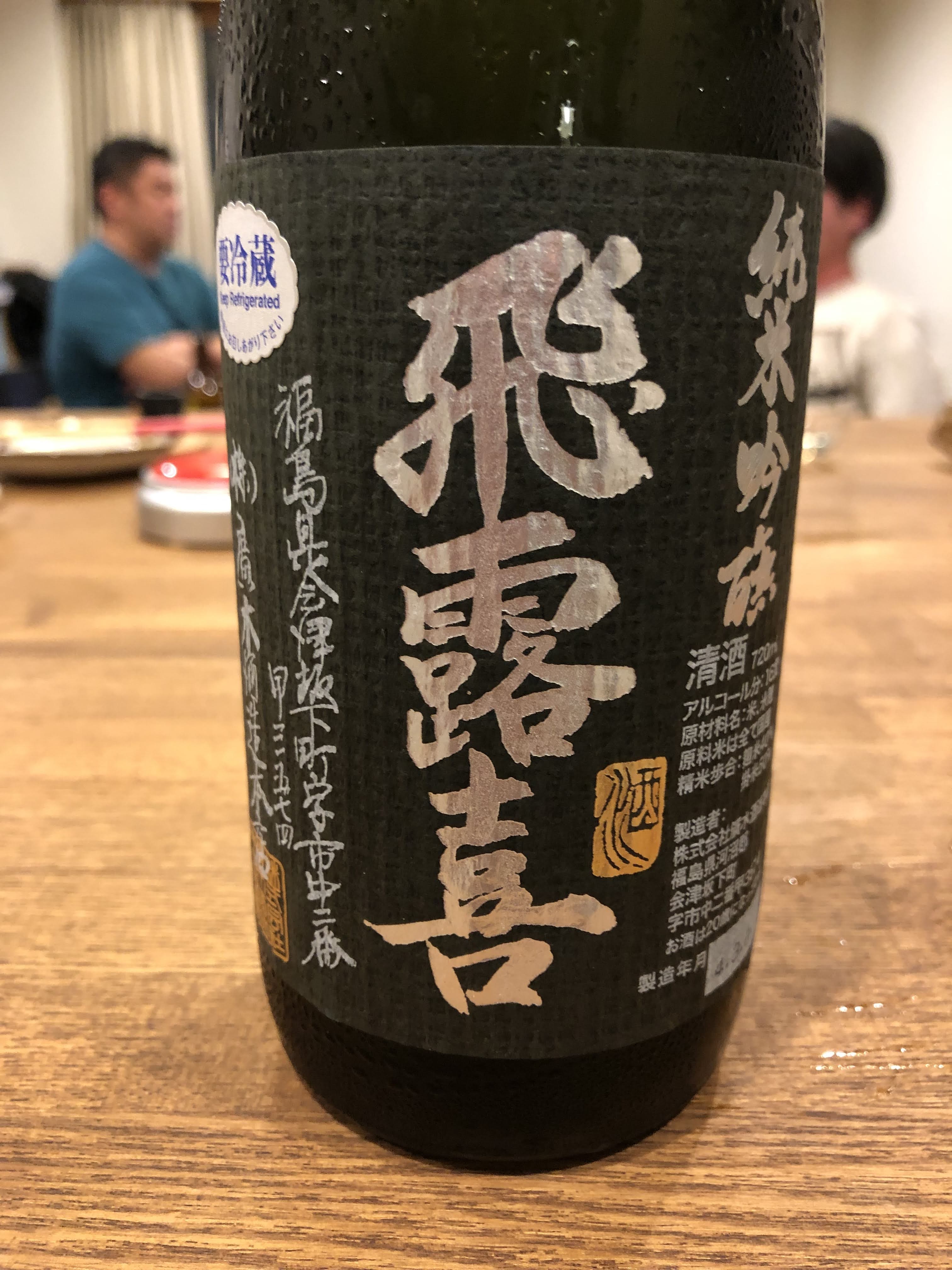
  1. Hiroki Junmai Ginjyo
  2. What is Nama-zume?
  3. Hiroki Junmai Ginjyo Evaluation
  4. Japanese Food Party

Hiroki Junmai Ginjyo

Hiroki Junmai Ginjyo

Hiroki was another chance encounter,

Hiroki Junmai Ginjyo

and unlike the last time, it was Junmai Ginjo!
Last time it was packed fresh.

What is Nama-zume?

To put it simply, by putting fire into the bottle, the fermentation process using koji is controlled and preserved.

Most of the sake generally distributed in Japan undergoes a heat treatment called hi-ire twice before shipping. The hi-ire process is performed twice: once before pressing the unrefined sake and storing it, and once before bottling it for shipment. Nama-zake is sake that has undergone only the first hi-ire and not the second; if only the second hi-ire is performed, it is called “nama-zouzake,” and if no hi-ire is performed at all, it is called “nama-zake.

saketimes

The saccharified state is called “nama-shu”. It is then filtered and bottled, but of course fermentation is still taking place inside. The process is to sterilize the bacteria by adding fire (heat) and to suppress the sweetness of the sake. Therefore, sake labeled as “undiluted” must be drunk as soon as possible or the taste will change. This means that the taste will change if the sake is not drunk as soon as possible. The recommended drinking period for sake in its original state is the day it is opened or within two days.

As usual, the family crest of Hiro is a deformed version of a farming operation.

Hiroki Junmai Ginjyo

Opening of the bottle

Hiroki Junmai Ginjyo

Gulp it down!

Hiroki Junmai Ginjyo Evaluation

Hiroki Junmai Ginjyo evaluation

It is very sharp and dry. It has a little bit of the feel of sake from the olden days. I think it is a good match with food. It seems to go better with grilled chicken, ponzu, shellfish, and other peculiar foods than with sashimi. It may be suitable as an aperitif due to its somewhat strong aroma.

When we asked some of our members who rarely drink sake to join us, we found that it was not popular among beginners due to its strong aroma. It is true that sake is hard to find, but it does not seem to be suitable for beginners. The most popular sake was Masumi, which has a low alcohol content and a light flavor. It seems that likes and dislikes are not based on name recognition.

Japanese Food Party

Japanese foods sashimi

Today, my classmate’s sister, who runs a sushi bar, treated us to a meal.

He made sushi at our house. The preparation time was about 3 hours. There were two guests. This was our first sake party, so we asked two of our collaborators to come as guests on a trial basis.

It was a good day.

Click here for other Tohoku region→Here

Thank you for reading to the end. Please don’t forget to bookmark this page.

  1. porntude's avatar
  2. click here's avatar

A popular sake representing Shizuoka Prefecture that has won numerous awards.

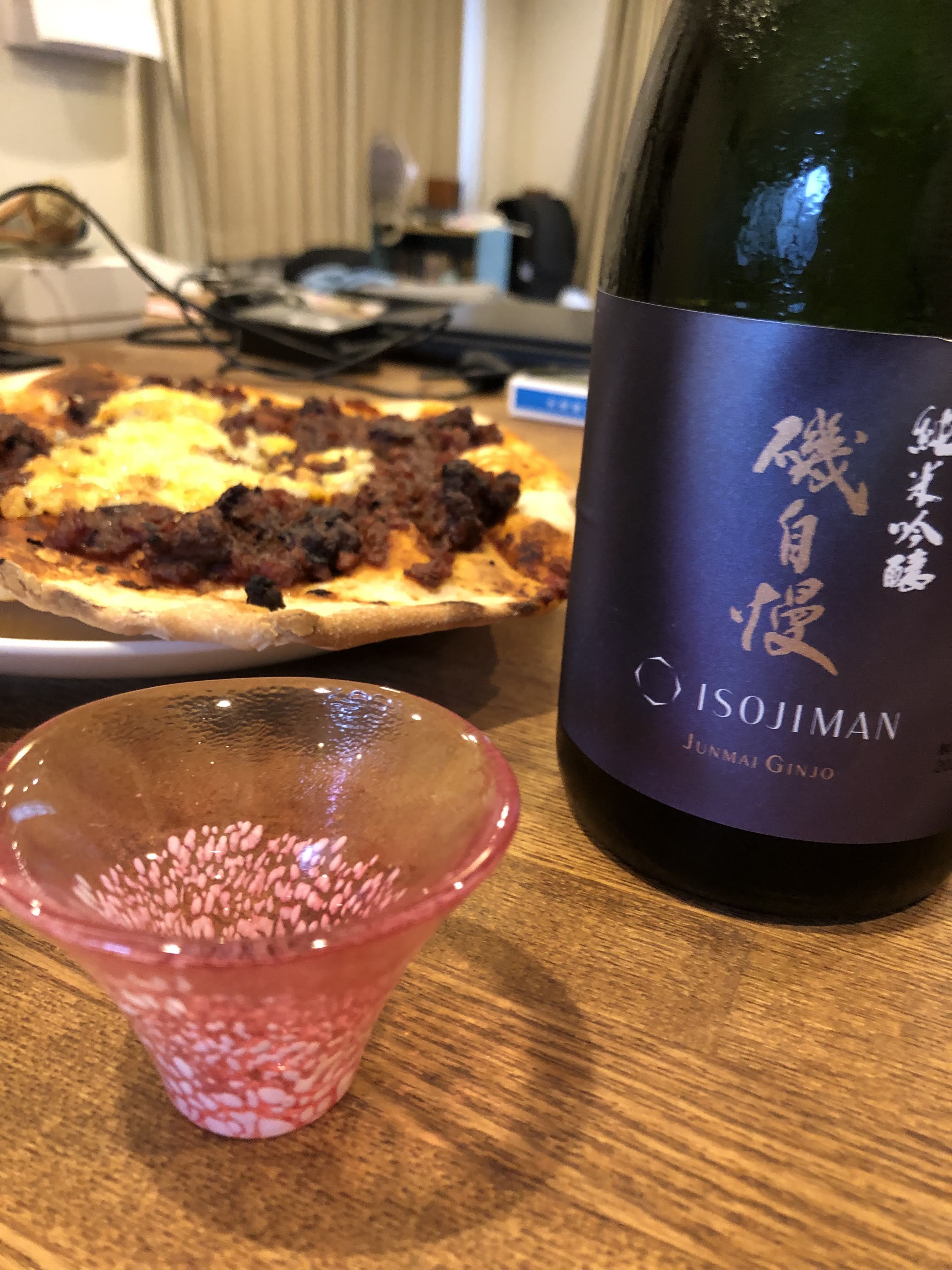
Famous, isn’t it? This Iso jiman. I have been interested in it for a long time. But, however, even if I thought it was available, when I wanted to buy it, I could not find it.

So today is a good day.

  1. Iso jiman Jyunmai Ginjyo
  2. What is Sake Rice for Sake?
  3. Evaluation of Isobojimi Taste
  4. snack

Iso jiman Jyunmai Ginjyo

Iso jiman Jyunmai Ginjyo sake
Iso jiman Jyunmai Ginjyo

What is Sake Rice for Sake?

Iso jiman Jyunmai Ginjyo

It is 100% Yamada-Nishiki, and it is from Hyogo Prefecture’s special A district.

I looked up the Hyogo Prefecture Special A District.

It is a land suitable for producing sake rice. Then, why?

It has long been said, “If you want to buy sake rice, look at the land. It is not only the variety of rice, but also the location where the rice is grown that is important. The special A districts in Hyogo Prefecture are located in Miki City (Yoshikawa and Kuchiyoshikawa) and Kato-shi (Tojo Town and the eastern part of Sha Town) in the western part of Mt. Rokko, where the daily temperature range in summer is 10°C or more, and clay terraced rice fields spread in the valley.

Institute of Sake Culture

One good condition for sake rice is cold nights and warm days.

The rice is nourished during the day and stored during the cold nights, resulting in better sake rice.

The other factor is water. Hard or soft water is one thing, but the minerals in the water are another. After all, plants grow by absorbing water. Water is important.

You have to know which strata the rain runs through to become spring water. It’s all about water, isn’t it? It’s too complicated to talk about mining supplies, so just remember which filtration system the water goes through to get good quality water. It’s about the same as what you would expect to learn.

This is how the terraced rice paddies grow. The western part of Mt. Rokko in Hyogo Prefecture provides such conditions, and a certain baseball team sings “Rokko Oroshi,” which is a meteorological term for the downdraft near Mt. It is said to be a cold wind blowing in the Hanshin area.

It must be cold at night.

Historically, Osaka is close by, and in the Edo period (1603-1867), when ships started to come and go between Edo and Kobe, the economic conditions were favorable and the area was named the Hyogo Prefecture Special A District.

But what about the taste? But it is a good information to talk about the background of the area.

Iso jiman Jyunmai Ginjyo

It is an Old Cap, isn’t it? Cork open!

Iso jiman Jyunmai Ginjyo

The ginjo aroma is restrained.

Gulp!

Japan Ranking 33rd
Shizuoka Prefecture Ranking #1

Comment: A
I really wanted to drink the daiginjo, but I think it was good too.

Comment: B
It is easy to drink like water and has a nice sharpness. It has a refined taste with no habits.

Evaluation of Iso jiman Taste

Iso jiman Jyunmai Ginjyo Evaluation

snack

The aroma is strong. It has a strong alcoholic taste. It is an aperitif. The aroma may be too strong for beginners. Light and dry. It has a strong habit that those who are addicted to it will love. As it was chosen as the toast for the G8 Hokkaido Toyako Summit, it is suitable for aperitifs. Aromatic sake. It may go well with foodstuffs if you don’t choose the right combination. It seems to go well with sashimi and ponzu type food.

I made bolognese.

It didn’t go well with stones.

It was another good day.

Click here for other Kantou region →Here

Thank you for reading to the end. Please don’t forget to bookmark this page.

  1. porntude's avatar
  2. click here's avatar

Dry and very easy to drink. I am a drinker and I recommend this sake.”Yokoyama”

Sake by yourself with a little bit of warmth today! Dry” does not mean spicy, but rather sharp. It has a sharpness, which means that there is no harsh taste when it passes down the throat, and it passes down the throat before you know it. I was lined up at a liquor store, as if to say, “Try it. So, of course, I picked it up.

  1. Yokoyama Junmai ginjo Dry
  2. What is hi-ire?
  3. Yokoyama Junmai ginjo Taste Evaluation
  4. Side dish

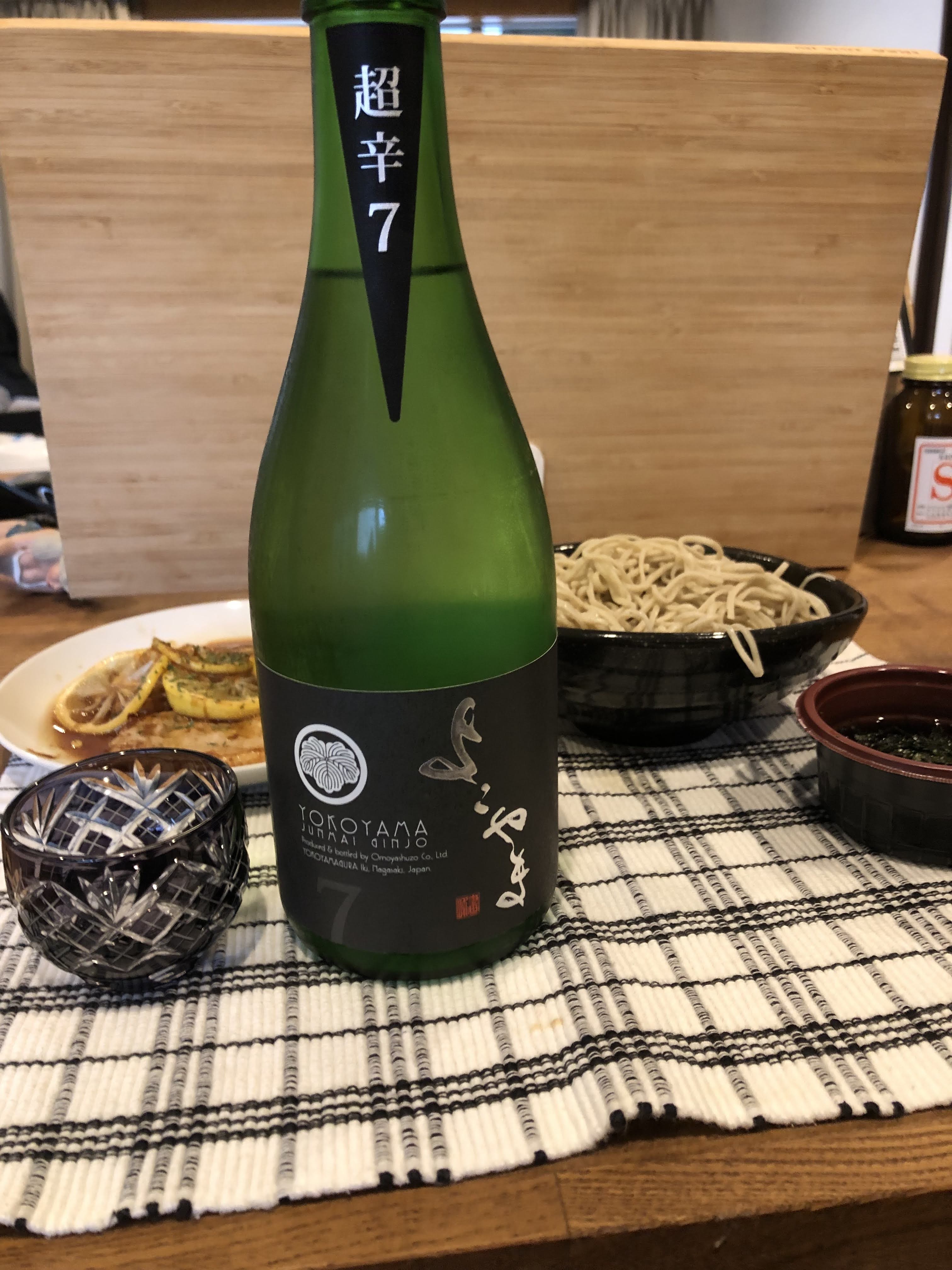
Yokoyama Junmai ginjo Dry

Yokoyama Junmai ginjo Dry

It’s fire-aged.

What is hi-ire?

Hi-ire is the opposite of nama-shu. It is the process that preserves the flavor the longest. If the bottle is not opened and kept at 10 degrees Celsius in the refrigerator, it will keep its freshness for up to one month. In case you are wondering, nama-shu is fast.

More than that, I was surprised that the brewery is on “Iki Island. I was surprised that sake is also made on Sadogashima, but I didn’t expect it to be from Ikijima.

Iki/Tsushima/Goto: The Story of Japanese Heritage Recognition] Located halfway between mainland Japan and the continent, the islands of Nagasaki Prefecture have been a strategic point of maritime traffic and a hub of trade and exchange connecting them since ancient times. In particular, the relationship with the Korean Peninsula is deep. Iki prospered as a branch state in maritime trade during the Yayoi period, and Tsushima has a history of monopolizing trade and diplomatic affairs with the Korean dynasty since the Middle Ages, flourishing as a base for relay trade and a place of honor. Although its role as a transit point has diminished with the development of the economy and transportation system, ancient historical sites, castle ruins, and gardens tell the story of its prosperity, and traces of Japan-Korea exchange can be seen in local products such as shochu and noodles, as well as in folk customs and events. These border islands, which have experienced repeated reconciliation and conflict, but have also maintained continuous exchange, have been recognized as a Japan Heritage site because they are a rare area where one can feel the deep bonds between countries and peoples. This castle was built by Toyotomi Hideyoshi during his invasion of Korea (during the Japanese Invasion of Korea in 1592) and is designated as a national historic site. The castle was built on a castle mountain in Katsumoto-ura, located at the northernmost tip of Iki Island, mainly by Shigenobu Matsuura (Hirado), with the cooperation of lords such as Harunobu Arima (Shimabara), Kimae Omura (Omura), and Jungen Goto (Goto). Katsumoto Castle served as a military base to supply and repair food and weapons for soldiers traveling to the Korean peninsula.

Iki Sightseeing Navigation

It’s a historically important island. I had no idea that there was a local brewery here as well.

My interest was piqued, so I looked it up.

Founded in 1924. Iki is said to be the birthplace of barley shochu. For a while, they gave up making sake and mainly made shochu. They resumed making sake along the way. The story is that they have come to the present day. If you are interested, please visit the official Omoie Shuzo website.

Yokoyama Junmai ginjo

Screw cap.

Open the bottle.

Yokoyama Junmai ginjo

Slightly sweet aroma.

Gulp it down!

Japan Ranking 143rd
Nagasaki Prefecture Ranking 1st

Coment:A
The flavor comes quickly, but it seems to flow quickly and smoothly.
The sweetness is not so strong.

Comment:B
It has a fresh citrus aroma. Even though it is super spicy, it is not that dry. Mellow

Yokoyama Junmai ginjo Taste Evaluation

Yokoyama Junmai ginjo Taste Evaluation

My first impression is that it is easy to drink. It is light and has a nice sharpness after finishing. The lactic acidity and sweetness are well controlled, and the taste is never boring. It has a nice fruity aroma that remains after the drink is over. The alcohol is not too strong and well balanced. The balance is perfect for drinkers. This is my favorite.

Side dish

pork with lemon steak!
Soba and pork with lemon steak!

Accidentally, today we had soba noodles and pork with lemon steak!

It was a very good combination with Sake. Soba and sake are still the best combination.

It was a very good day.

Today’s snack was the standard yakitori. It is frozen. The taste is not as good as it should be, but it is not bad.

Click here for other West Japan →Here

Thank you for reading to the end. Please don’t forget to bookmark this page.

  1. porntude's avatar
  2. click here's avatar

Sushi bar popular overseas opens in Japan”Kinka”

I went to Kinka Sushi. A sushi bar from Canada has opened a store in Japan.

  1. Kinka Roppongi
  2. Kinka Shibuya
  3. Store Location

Other Sushi Articles

So a Japanese went there to evaluate it.
The restaurants are located in Roppongi and Shibuya.
Roppongi is a town for older Japanese.
Shibuya is a town where young people gather.

Kinka Roppongi

kinkasushi
kinkasushi Roppongi

Roppongi is for lunch.
Shibuya was for dinner.
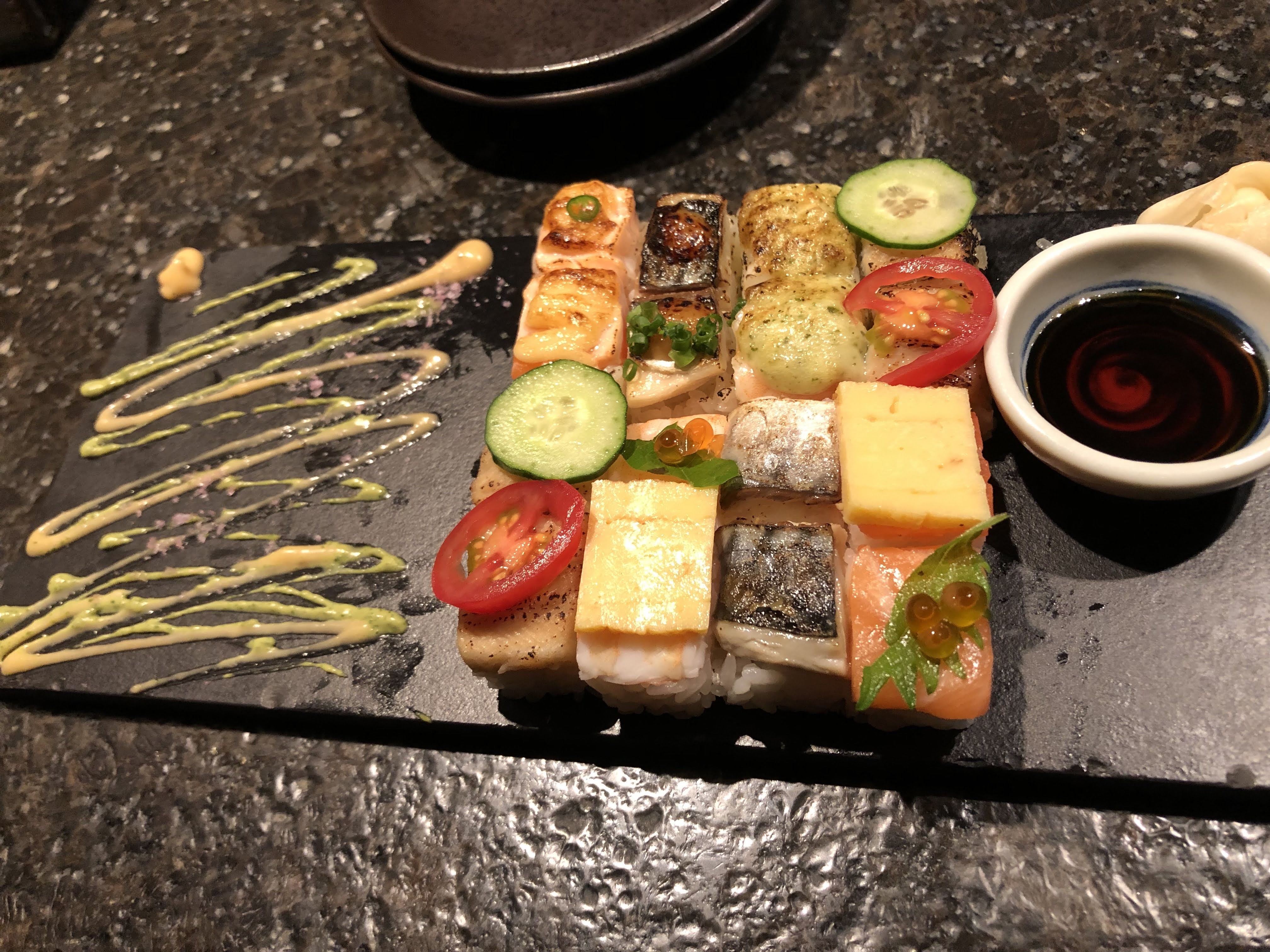
The restaurant’s most popular item is mosaic sushi.

restaurant
kinkasushi Roppongi

Lunch is not that expensive, but dinner may have more atmosphere. The restaurant is located in a place where there are many older customers, such as businessmen.
The taste is not particularly good, but not bad either. The atmosphere of the restaurant is very nice, not like a traditional Japanese sushi bar, but more like a modern sushi bar that has evolved into a modern sushi bar

kinkasushi Shibuya

This sushi is not served for lunch, but we visited the Roppongi restaurant.
Lunch is not so expensive. However, to be honest, the taste is not that great. It is not bad, but the taste is not special.

For mosaic sushi, we went to dinner in Shibuya. Reservations are required here. Make a reservation. We came back to the restaurant. This restaurant is full of young people.

kinkasushi Shibuya

We were led to the counter. Finally, we ordered mosaic sushi. I also ordered the Aburi-zushi set.While we were waiting for our order, two sets of Westerners came next to us.

kinkasushi Shibuya
kinkashibuyasushi2
kinkasushi Shibuya

kinkasushi Shibuya

Well, we had it. Sushi from Canada, after all. It is made differently from the sushi I know.

Japanese sushi is made by seasoning raw fish and making the most of the ingredients, such as vinegar or soy sauce marinade.

However, because of the different food culture, sushi from other countries is closer to meat dishes, and fish is seasoned in the same way.

After all, seared sushi and mosaic sushi do not taste vinegary or salty, but rather heavy
It’s like eating sushi, but with about as much fat as eating a pizza. The sense of satisfaction is amazing.

The colors are more artistic than sushi.
The appearance of the colors also has a foreign look. In Japan, real sushi has a lot of wild colors. It is rare to find Japanese food that uses sauces as art.

KINKA Sushi Bar Izakaya Roopngi

📍〒106-0032 Hexart Roppongi 2F 7-6-20 Roppongi, Minato-ku, Tokyo

KINKA Sushi Bar Izakaya Shibuya

📍〒150-0042 2F, 3-10 Udagawacho, Shibuya-ku, Tokyo

  1. porntude's avatar
  2. click here's avatar

Trendy Sake, one of the top ranking sake in Japan

Ganki This one is also famous, isn’t it? I had been curious about it, but as is often the case, it is not in the store when I want it. This time, I bought it at Hasegawa Sake Shop (Ginza Nihonbashi store).

Today, too, a dusty, solitary drink.

  1. Ganki Junmai Sake
  2. What is a special name?
  3. Ganki Taste evaluation
  4. Snacks

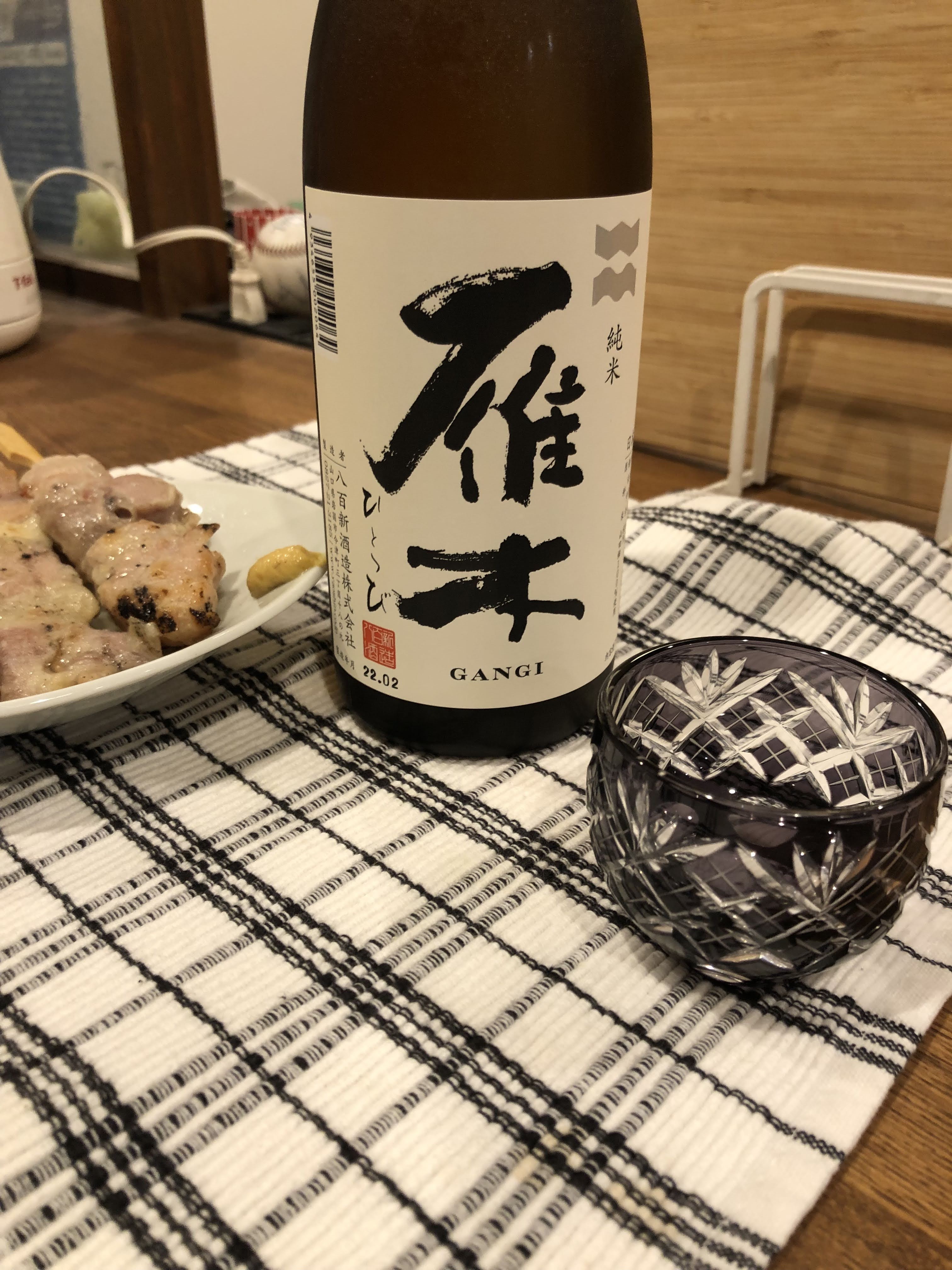
Ganki Junmai Sake

Ganki Junmai Sake
Ganki Junmai Sake
Ganki Junmai Sake

I looked up the brewery. They only make junmai sake. They are particular about not making ginjo-style sake, which is flavored with honjo-style sake.

What is a special name?

Junmai sake is made using nothing but rice, rice malt, and water, and depending on the ratio of these ingredients, junmai sake, junmai ginjo, junmai daiginjo, special junmai sake, and sake without added brewing alcohol are all labeled with this name.

GANKI’s lineup includes only junmai sake. Honjozo, the traditional sake brewing technique in which brewing alcohol is added as a secondary ingredient, is also a traditional sake brewing technique, but we do not require it. We do not need it because we want to focus on extracting the potential of the rice material itself, just as in the case of Ichikizou, where a statue is carved from a single piece of wood. We also do not use activated carbon to filter the finished sake, which is a common practice, but we do not need to do so. This is because we have set ourselves the task of making sure that the finished sake does not require any secondary processing. We do not add or subtract anything unnecessary, but simply face the sake brewing process head-on.

From the official Yaoshin Shuzo website

The history of the brewery seems to be quite old, and according to the trends we have researched so far, sake is often one of the fermented products rather than a specialty. They also seem to make soy sauce and miso.

The same is true of the Yakushin Brewery here.

In 1877, Shinzaburo Yaokiya, the adopted son of Jinbei Yaokiya, who was engaged in various businesses as an official merchant of the Iwakuni-Yoshikawa domain (now called a general trading company), established Yaokushin at the site of a teahouse, a villa of the domain lord located near the mouth of the Nishiki River. The “Hikifuda,” which remains today, describes the business activities at the time of the establishment. According to the “Hikifuda,” while the main business of “Yaokijin” was soy sauce brewing, Shinzaburo’s main business was sake brewing. At the same time, Shinzaburo continued the soy sauce production and developed various businesses. One of the unique features of the ice storage facility is that it is said that there was an ice house on the property. Shinsaburo’s spirit of venture can be seen in the fact that he chose sake brewing as his main business. The brand name at the time of the establishment was “Shinkiku,” named after Shinsaburo and his wife Kiku, a married couple. Shinsaburo’s successor, Shu Yaokuya II, separated soy sauce production and greatly developed sake brewing, making “Shinkiku” the top brand in Iwakuni. The second generation was at the peak of Yakushin Shoten’s (the company’s original trade name) success. However, the shortage of rice during and after the Greater East Asia War made it difficult to obtain rice as a raw material, and the government encouraged the triple brewing method, in which a large amount of brewing alcohol, sugar, and other secondary ingredients were used to make sake, forcing producers nationwide to follow this policy. Shinkiku’s toji, who had only ever made junmai sake, was unable to adapt to the unfamiliar triple brewing method, resulting in sake of inferior quality compared to his peers. On the other hand, the general liquor wholesale division steadily expanded its business and spun off as Yaokushin Liquor Sales in the 1960s, and Yaokushin Shoten, which handled the main business of sake brewing, became a shadow of Yaokushin Liquor Sales.

From the official Yaokushin Shuzo website

The Ganki website is quite elaborate. I think it is interesting that the websites of recent breweries have a lot of individuality.

It’s not only about prior knowledge, but also about drinking the sake.

Old cap, isn’t it?

Is it a pattern of geese?

Don’t cut your hand. Be careful.

Ganki Junmai Sake
Ganki Junmai Sake

Opening the bottle

The sweet aroma of junmai rice. Slight ginjo aroma.

The 2:8 aroma balance is like this.

Sip it!

Japan ranking 42nd
Yamaguchi Prefecture Ranking 4th

Comment:A
I can drink endlessly. You’ll run out of a bottle very quickly.

comment:B
I think it tastes firmly boozy and fruity. This is delicious too!

Ganki Taste evaluation

Ganki Taste evaluation

The balance is good. Junmai sake is characterized by the sweetness of the rice, while ginjo-style sake is characterized by its aroma, which is a big difference. Junmai sake has a moderate fruity sweetness and freshness, with little cloying taste. Its sweetness makes it a good match for dishes with strong oil, soup stock, or miso flavor.

Snacks

Yakitori
Yakitori

Today’s snack was the standard yakitori. It is frozen. The taste is not as good as it should be, but it is not bad.

Click here for other West Japan →Here

Thank you for reading to the end. Please don’t forget to bookmark this page.

  1. porntude's avatar
  2. click here's avatar

“紀土”在日本爆炸性地流行起来

朋友总说纪土很好喝,今天我决定去好好找找。

在銀座6 的地下一层。店名叫做いまでや銀座

イマデヤ酒店
イマデヤ酒店

因为太纠结是买粉色还是绿色,就去问了店员。

结果是精米度的不同。粉色是最开始酿造纪土的是和,叫做“柴田”的师傅酿造出来的,而绿色的则是他的弟子们酿造出来的。

店员告诉我粉色的会比较甜。

顺带一提,这个甜并不是一般的味觉上的甜、

而是喝的时候甜甜的香气会从鼻腔里出来

谢谢店员告诉我这一点。

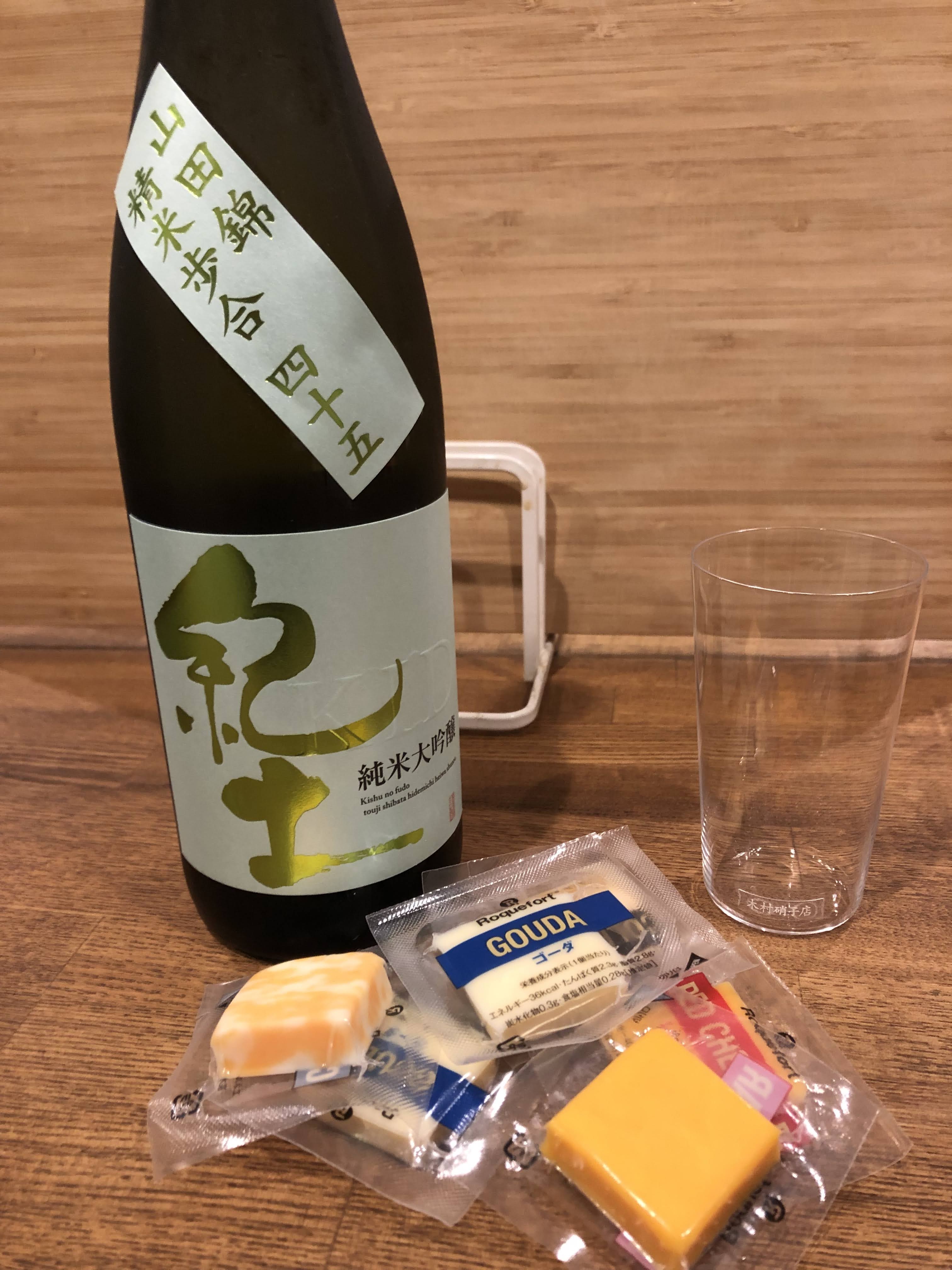
  1. 紀土 純米大吟醸 精米歩合45%
  2. 紀土 純米大吟醸 精米歩合45% 评价
  3. 稍微调查了一下

紀土 純米大吟醸 精米歩合45%

紀土 純米大吟醸 精米歩合45%
紀土 純米大吟醸 精米歩合45%
紀土 純米大吟醸 精米歩合45%
紀土 純米大吟醸 精米歩合45%
紀土 純米大吟醸 精米歩合45%
紀土 純米大吟醸 精米歩合45%

就这么喝掉真是觉得可惜啊。

复古的瓶封

紀土 純米大吟醸 精米歩合45%
紀土 純米大吟醸 精米歩合45%
紀土 純米大吟醸 精米歩合45%
紀土 純米大吟醸 精米歩合45%

香气非常强烈,仅仅用鼻子嗅一下都能感受到吟酿特有的果香。

喝上一口

紀土 純米大吟醸 精米歩合45% 评价

紀土 純米大吟醸 精米歩合45% 评价
紀土 純米大吟醸 精米歩合45% 评价

喔~原来是这样。

酸味几乎没有,非常的容易入口也不是很粘稠,整体的平衡性非常好

经过喉咙里也不会留下杂味,是充满果香且很清冽的,整体靠近红酒的薫酒。

稍微调查了一下

这样和平的酒造,也是经历了很多次的关门的危机。在二战中,在激烈的战局里,因为战争逐渐泥沼化,国家下命令让酒造关门。直至战后为止也没有获得许可再开。 这时作为二代目的山本保正为了演讲“酒造再开”甚至都到了国会。尽管很震惊,被逼迫至停业的遗憾、在战后和平的时代制造就是一种希望,这次演讲收获了许多掌声。在这种热情的支持下,最后终于获得了再开的许可。想要在这个和平的时代制造日本酒的愿望,也就铸成了这酒和平的名字。

但是再开并不是顺利的。但是最重要的酒窖并没有回到手里。实在没办法,就跟和歌浦的谷口酒造借了一间屋子重新开始了。在这个逆境中得到了「和歌鶴」这个品牌的支持、这是从这句「潮满和歌浦,浅滩尽淹没,群鹤飞鸣疾疾向,芦苇丛边」万叶集里的诗句由来的。经过了战后十几年,终于回到了溝ノ口酒造开始了酿酒。但遗憾的是,休业了一次的酒造凭一己之力很难东山再起、直到昭和60年代 从给京都的大企业的卖桶做起,又开始仔仔细细的售卖自己的品牌。但是,我们的理念是酒造是从自己想要做的东西开始做起,着力于发展自己的品牌。 之后、平成元年、5年、17年、20年的全国新酒鉴评会上,屡屡受到金奖、努力酿造和歌山风格的酒,才有了今天的我们。

平和酒造

真是让人激动啊〜。无论是哪的酒造历史都是很长啊。这或许也是日本的企业中绝大多数长久的企业都是酒的公司的关系吧。

「久保田」的系统很相像。

和寿司之类的醋饭相比,蔬菜和奶酪与这款酒的相性或许更好。作为一款口粮酒也是不错的,比起常温冷藏一下饮用更佳。随着口腔的温度上升后,更能体会一丝甜意。当然也跟个人喜好相关。。。

今天也是安稳的一天啊〜

  1. porntude's avatar
  2. click here's avatar