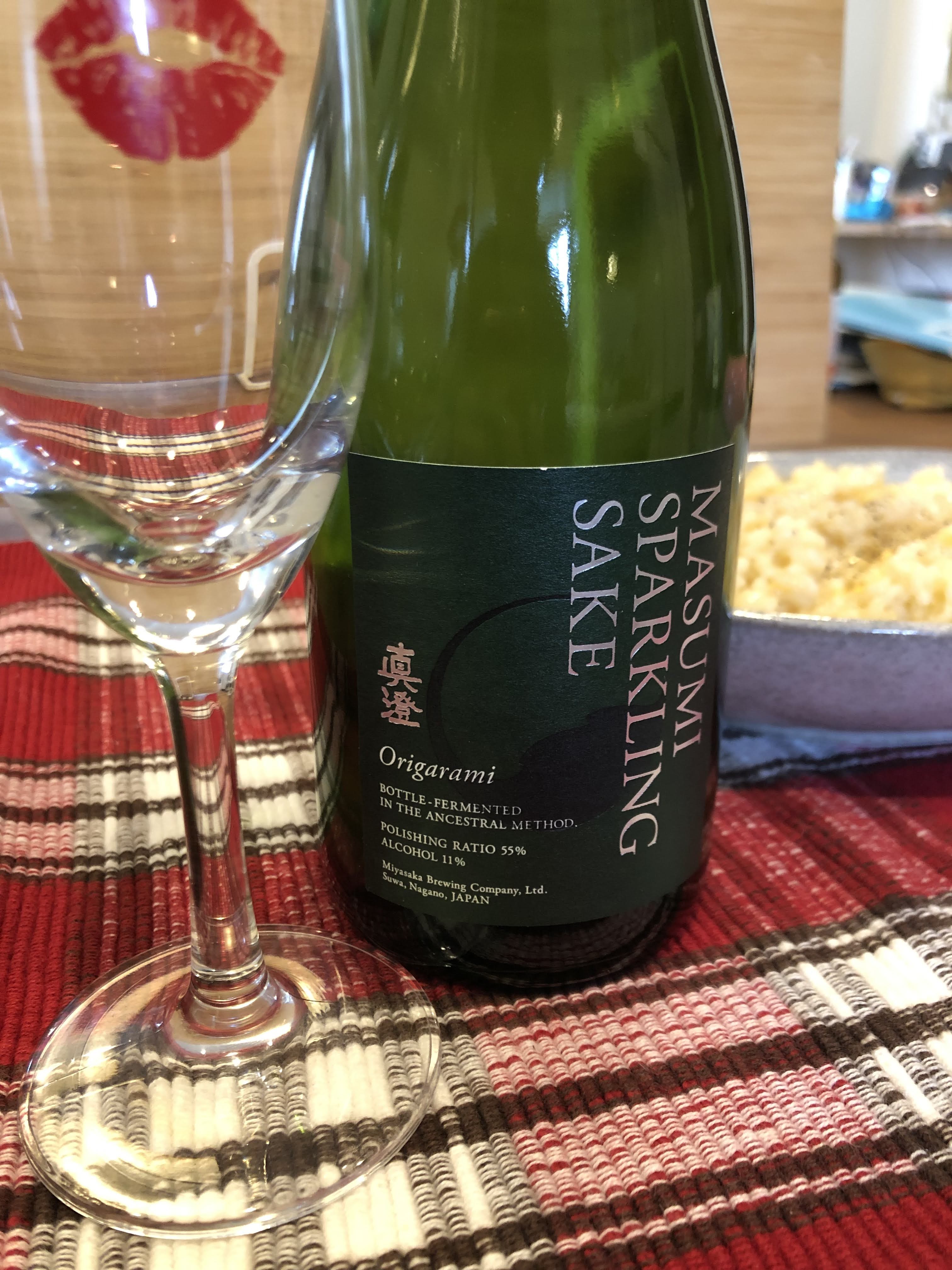
Masumi Sparkling! Different from other series

I try to pick up some sparkling sake these days. There are not many of them when I go to liquor stores. Is it because the production process is special? Is it because the production process is special? Is it using carbonic acid from natural yeast or adding gas? I am going to do some research on this.

  1. Masumi Sparkling
  2. Taste Evaluation
  3. What is an “Orihiki”?
  4. Today’s snack

I found what I had been looking for at a liquor store where I usually go on a whim. I have had a lot of Masumi sparkling wine, so I wondered how the sparkling one would turn out to be. I’ve had a few sparkling wines, so I thought it was about time to compare them.
And that is why I finally came across this one.

Masumi Sparkling

The black label with horizontal Masumi letters is a nice design with a luxurious feel.

Masumi Sparkling
Masumi Sparkling
Masumi Sparkling
Masumi Sparkling
Masumi Sparkling
Masumi Sparkling

The ingredients list is wrapped around the bottle, not on the back. It sticks out like a flag on the side, like the muffler of an animated character in the early Showa period.

The rice polishing ratio of 55% leaves a certain amount of rice in the bottle. It is labeled Junmai-shu.

The rice polishing ratio of 55% leaves a certain amount of rice in the bottle. It is labeled Junmai-shu.

Opening the bottle

There is a sense of gas in the air.

Masumi Sparkling Cap

The stopper is also distinctive, with a convex inner surface that creates a tight seal to prevent gas leakage.

Masumi Sparkling

Oh, it is yellow. This is the first time I have tasted a sparkling wine with such a pronounced yellowish color.

The aroma is, as usual, blown away by the carbonation.

Gulp.

Japana ranking 46th
Nagano Prefecture Ranking 2nd

Comment: A
Masumi sparkling.
Looks like sparkling wine. It was light and delicious!

Comment: B
Sake rice: Kinmon-Nishiki
Rice polishing ratio: 55
Our first Kinmonnishiki!
Natural, fine bubbles created by the yeast! Very exciting!
The flavor is moderately dry and bitter, with a crisp finish!
The flavor is dry and bitter, with a crisp finish!
Like lemon squash!

Taste Evaluation

Masumi sparking
Masumi sparking

  Overall, this is one of the most distinctive sake sparklings I’ve ever had. The overall acidity, which is not lactic acid, is very strong. Among the various Masumi series I drank last time, this tastes similar to the Masumi Junmai Chino. Chino is characterized by a complex flavor that is easy to drink through. This sparkling sake also starts with acidity and finishes with a complex flavor.

  In common parlance, the word “sharpness” refers to a simple taste that leaves no aftertaste when finished. It is like having a refreshing personality, or being able to say goodbye to a lover without leaving any aftertaste.  On the other hand, it is a metaphor to say that it is complicated to keep on messing things up. This Masumi Sparkling has a complicated parting of ways. If you like Kaya, you can say “oh, this is what it tastes like”.

I did a little research.

Masumi official website

This is a bubbly sake that has not been racked after the second fermentation in bottle. The first half has a clear taste, while the second half has a creamy taste with a slight leesiness. The appearance is a pale, hazy lemon yellow. The bubbles are fine and lively. The aroma is mainly of green apple, pear, and other fruits and white flowers, with a hint of sour cream with a hint of fresh acidity. In the mouth, the carbonation and sweetness are pleasantly stimulating, and the dry, clean finish, accompanied by acidity, is refreshing. Foods that go well with this wine: For sushi, try kohada. It also goes well with marinades, vinegared dishes, shrimp cocktails, and other sour or light seafood dishes. It is also a sparkling wine to enjoy with brioche or French toast at a holiday brunch, as it matches very well with buttery flavors.

Masumi Sparkling ORIGAMI official

What is an “Orihiki “?

 So it’s not Orihiki-brewed. In other words, Jo-so (pressing) is the process of pressing the fermented rice. After the Kaminoza, rice grains and other solids are left behind, leaving a light cloudiness. These solids are called “dregs,” and the process of allowing them to settle out is called Orihiki.  

In this image, when you open the lid of a cup of yogurt, you will see a clear, colorless liquid in the supernatant and the rest of the yogurt is the individual yogurt. The solid part is the tailings and the liquid part is the sake. The ratio of the two is not the same if it is yogurt, though. The fact that it is not Orihiki means that there are some solids in it, and it is closer to the original sake. This means that there are some solids in the sake, and it is closer to the original state. The color of the sake itself has a yellowish tinge due to the 55% rice polishing ratio, and it may have a complex flavor even after drinking through.

Today’s snack

  Therefore, it is a slightly characteristic sparkling wine. It is a sparkling wine with a slightly distinctive flavor, and its evaluation depends on one’s taste.

I made homemade risotto. The sparkling wine is a perfect match for strong flavors such as cheese.

Let’s have it appear again with another sake.

Click here for other Nagano region→Here

Thank you for reading to the end. Please don’t forget to bookmark this page.

  1. porntude's avatar
  2. click here's avatar

Good with sushi. Undiscovered famous Hakugakusen.

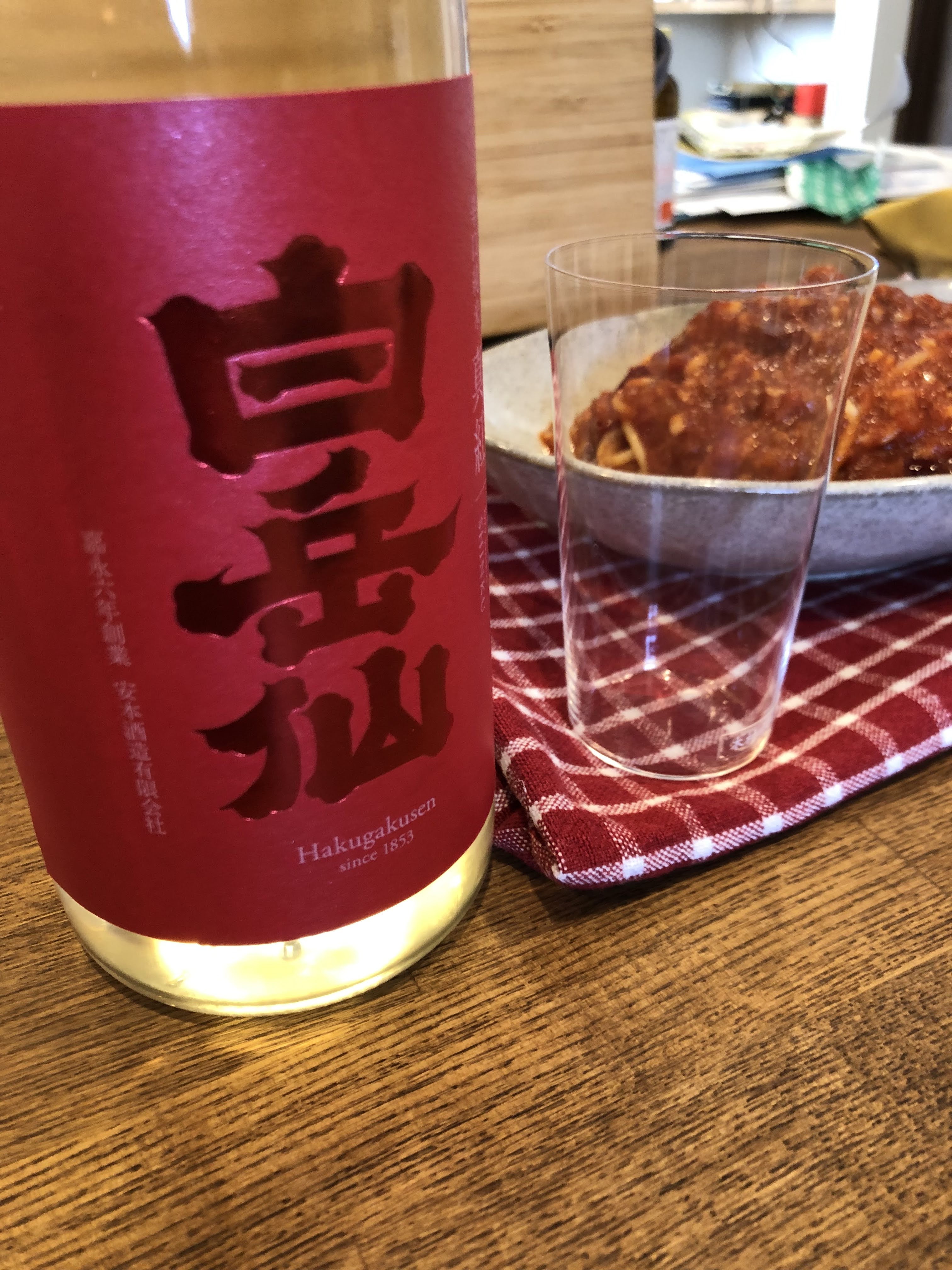
I drink by myself sometimes. I bought it together with a certain sake called “Hakugakusen. Sometimes, I just go with my intuition and buy it. I bought it without any previous information. I thought it was a sake that only an enthusiast would drink.

  1. Hakugakusen Junmai Crimson
  2. I looked up the brewery
  3. The difference between hard water and soft water
  4. Taste evaluation
  5. Arrabbiata

Hakugakusen Junmai Crimson

Hakugakusen Junmai Crimson

I did some research and found out that

This brewery is located at the knee of Lord Yoshikage Asakura, who built prosperity during the Warring States period. Behind the Yoshikage’s mansion is Ichijo Falls, which is said to be the place where young Kojiro Sasaki created the technique of “Tsubame-gaeshi” (the return of the swallow to the ground). The Yasumoto family, of which the current head is the 46th generation, was a merchant in agriculture, forestry, and money exchange during the Warring States period, and is now engaged in sake brewing.

From the Yasumoto Sake Brewery official website

I looked up the brewery.

I was a little surprised at how long the history is. I didn’t realize that even junior high school history textbooks have history going back to Edo, Meiji, Taisho, Showa, Heisei, and 2025, with only one-third of a page remaining until now. I am sorry for my ignorance. I’m pasting the official website link for your reference, but please note that the web page is broken. Please be careful, because the web page is broken.

Hakugakusen Junmai Crimson

It’s a dry junmai sake, “nama-zake”. The web page says that it is made from “Hakusan water (medium-hard water) from the Hakusan water vein underground, which is the brewery’s underground water”.

The difference between hard water and soft water

The difference between hard water and soft water is simply how much minerals and other ingredients are contained in the water. The difference between hard and soft water is simply how much minerals and other ingredients are contained in the water, which causes the koji mold to change the ingredients and create new chemical changes when making sake. This is what gives sake its taste, aroma, and other characteristics.

Crimson, red and white for pure rice. It is a nice red color.

Old caps are made of old-fashioned steel. Don’t cut your hand.

Somehow like a western family crest.

Opening the stopper

Hakugakusen Junmai Crimson

Aroma of current mainstream ginjo, a little like ginjo sake.

Gulp!

Japan ranking 438th
Fukui Prefecture Ranking 11th

Comment: A
It is dry, but the aftertaste is clean without leaving an unpleasant alcohol taste.
The initial fruity taste in the mouth is followed by the alcohol taste characteristic of dry sake.
The match is grilled sea bream. The sweetness increases a little.

Coment: B
The first Hakugakusen.
I chose “Dry Junmai Shinboku”. It has a nice flavor of rice, but it also has a nice sharpness.
It is a true “Dry Junmai” as it is full of the flavor of rice and has a firm sharpness.
It is truly a dry junmai! It is great with yakitori and dote-ni.
Great with grilled chicken and dote-ni!

Taste evaluation
Hakugakusen Junmai Crimson

The taste changes from a Ginjo type mouthfeel, such as Kido, to sweetness, and then to a complex taste as you finish the bottle. It is a Junmai sake, but it also has a somewhat Ginjo-style feel to it. The first impression is that it is easy to drink if it is a Ginjo-style sake. For drinkers, it may seem sweet. After that, the sweetness of the rice comes out, so it is probably more Jun-shu than Ko-shu. The overall balance is good and the aroma is not too strong. 3 steps back from the melon-like flavor. It seems to go well with dishes with strong flavors.

Arrabbiata

According to our research, “It is also made in the old-fashioned way of squeezing moromi in a sake bag one by one, so that you can drink it while eating it. I would like to continue brewing sake that can be drunk while eating or eaten while drinking.” This is the reason for the company’s desire to continue brewing sake that can be consumed while eating or drinking (“shochu-shu”<sake to be drunk with a meal>). The previous “Miyama Ichidai” was also based on the concept of “Shokuchu-shu, (sake to be drunk with a meal),” but I have the impression that “Shokuchu-shu(sake to be drunk with a meal)” is a sake that takes three steps back. Not too assertive, but with a good sense of distance. Therefore, it can be well matched with strong dishes.

arrabbiata
arrabbiata

I made arrabbiata with ingredients I had at home. I made arrabbiata with ingredients I had at home. I added a lot of chili peppers, but I discovered in a new way that sake and spicy food do not go well together.

Let’s have it appear again with another sake.

Click here for other Hokuriku region→Here

Thank you for reading to the end. Please don’t forget to bookmark this page.

  1. porntude's avatar
  2. click here's avatar

Hard to find series. Aramasa. White malted rice.

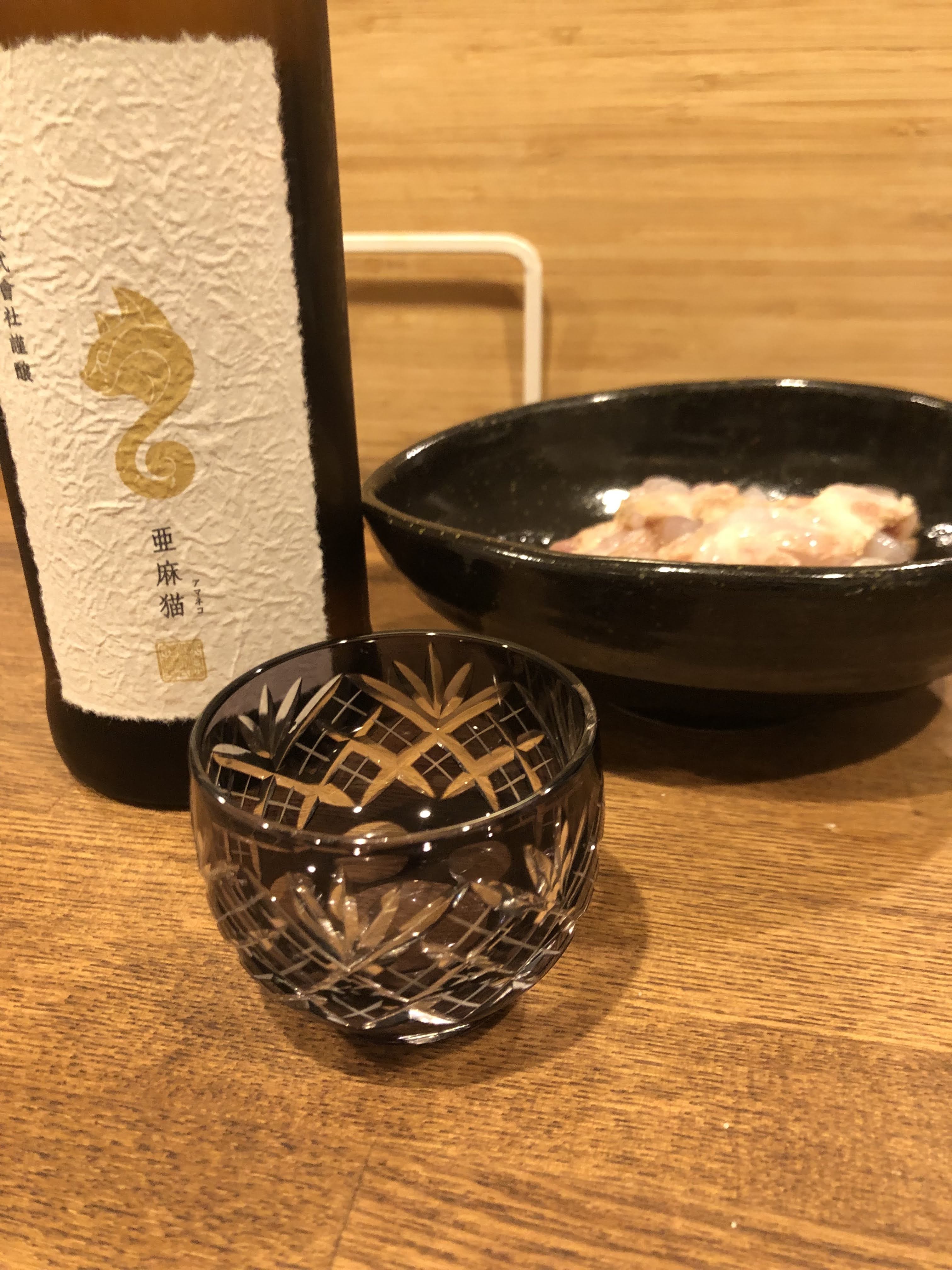
Even a dusty one person drink. By chance. I had been looking for it for a long time and finally found it. It’s a “Aramasa” flax cat(Amaneko). It’s for one person only, right?

Aramasa Brewery’s official website→here

  1. Aramasa” flax cat (Amaneko)
  2. Taste Evaluation
  3. Pork Belly Cartilage (pork belly tip cartilage)
  4. What is Pork Belly Cartilage

This brewery’s sake is so popular right now that the general public rarely has a chance to get their hands on it.

There are other series, but drink it anyway. It’s like that, isn’t it? When I was a student working part-time at an izakaya, Kikumasamune, Tengumai, and Aramasa were always available in the store and treated like beer, but nowadays you can’t get them.

Aramasa” flax cat (Amaneko)

Aramasa" flax cat (Amaneko)
Aramasa” flax cat (Amaneko)

It was just by chance that I came across them, so I bought them immediately. However, this Flax Cat is different from other series in that the malted rice is white malted rice. White yeast is used to make shochu, and most sake uses yellow yeast, so it is a variation of Aramasa. The other series are too popular and will probably not be available anytime soon. I miss the time when I used to pour without worrying about overflowing with a bottle.

Aramasa" flax cat (Amaneko)
Aramasa” flax cat (Amaneko)

Many of the words are familiar to enthusiasts. Yeast used: “Kyokai No. 6” is Shinsei’s yeast.

With white yeast, the citric acid is said to give a refreshing sour taste. White koji was discovered by mutation of black koji. I only have an image of citric acid being used for cleaning…
Aramasa" flax cat (Amaneko)
Aramasa” flax cat (Amaneko)
Aramasa" flax cat (Amaneko)
Aramasa” flax cat (Amaneko)

It’s like breaking the seal. It’s an old cap.

The feeling of unsealing, the one where a specter comes out from inside.

Aramasa" flax cat (Amaneko)
Aramasa” flax cat (Amaneko)

The sour, acidic aroma of old-fashioned sake. It has a gaseous feeling and is shrieking.

Gubiit!

Japanese Ranking #1
Akita Prefecture Ranking #1

Comment: A
Bottle like wine Delicious.

Comment: B
Mouthfeel like a sweet white wine
The sweetness and umami of the rice is strong. This is sake after all!

Taste Evaluation

Aramasa" flax cat(Amaneko) Chart
Aramasa” flax cat(Amaneko) Chart

Mmmm, it’s my first time to drink white yeast rice. It has a strong taste. It doesn’t have much of a sake feel. It’s almost like a cocktail. It tastes like white peaches. Rather than pairing it with food, it seems to be more compatible with desserts, etc. It seems to be well received by women. It might be better to drink it alone. I can imagine it with Japanese or Western sweets. It is not described as dry. It is well worth a try, but I think it would be easier to drink it as a new cocktail than as sake.

Pork Belly Cartilage

pork belly cartilage
Pork Belly Cartilage (pork belly tip cartilage)
What is Pork Belly Cartilage
Pork Belly Cartilage
Pork Belly Cartilage (pork belly tip cartilage)

For someone who says dessert is good as my recommendation, pair it with cartilage. And it comes with a delicious ponzu (Japanese citrus juice). I think the compatibility was a bit of a failure this time. The mellow cartilage was delicious. I think a dry sake would be good with this.

What is pork belly cartilage (pork belly tip cartilage)?

Pork belly cartilage, also known as pica, is the part attached to the end of a pig’s ribs. Misawa City in Aomori Prefecture is famous for its “paica cuisine”, and there are many restaurants that serve a variety of paica dishes such as paica rice bowl, paica curry, and paica cutlet. In fact, the cartilage of pork belly is a rare part of the pig, and only a few hundred grams can be obtained from one pig, but it used to be thrown away because it is too hard to eat as it is. However, the Misawa Livestock Breeders’ Association decided that it would be a shame to throw away such a delicious part, so they started serving paica nabe at events, and now it has become one of Misawa City’s representative gourmet foods.

Let’s have it appear again with another sake.

Click here for other Touhoku region→Here

Thank you for reading to the end. Please don’t forget to bookmark this page.

  1. porntude's avatar
  2. click here's avatar

Also tastes sparkling that resembles wine from the outside.

I drink by myself in the dust sometimes. I am not so sure if I’m a lightweight alcoholic, but I’m a bit skeptical these days. But now that the self-restraint has been lifted, I am able to go out for a drink, and the day has come when I feel that it’s good to drink at my own pace. I’m not sure if it’s a good time to go out for a drink.

  1. How about sparkling wine?
  2. Taste Evaluation
  3. Spicy Cod Roe And Cheese Bacon

How about sparkling wine?

I have been picking up sparkling sake whenever I see it, and I have noticed that liquor stores surprisingly don’t carry sparkling sake. So, I decided to drink more and more of the ones that caught my attention.

Miyama Sparkling
Miyama Sparkling

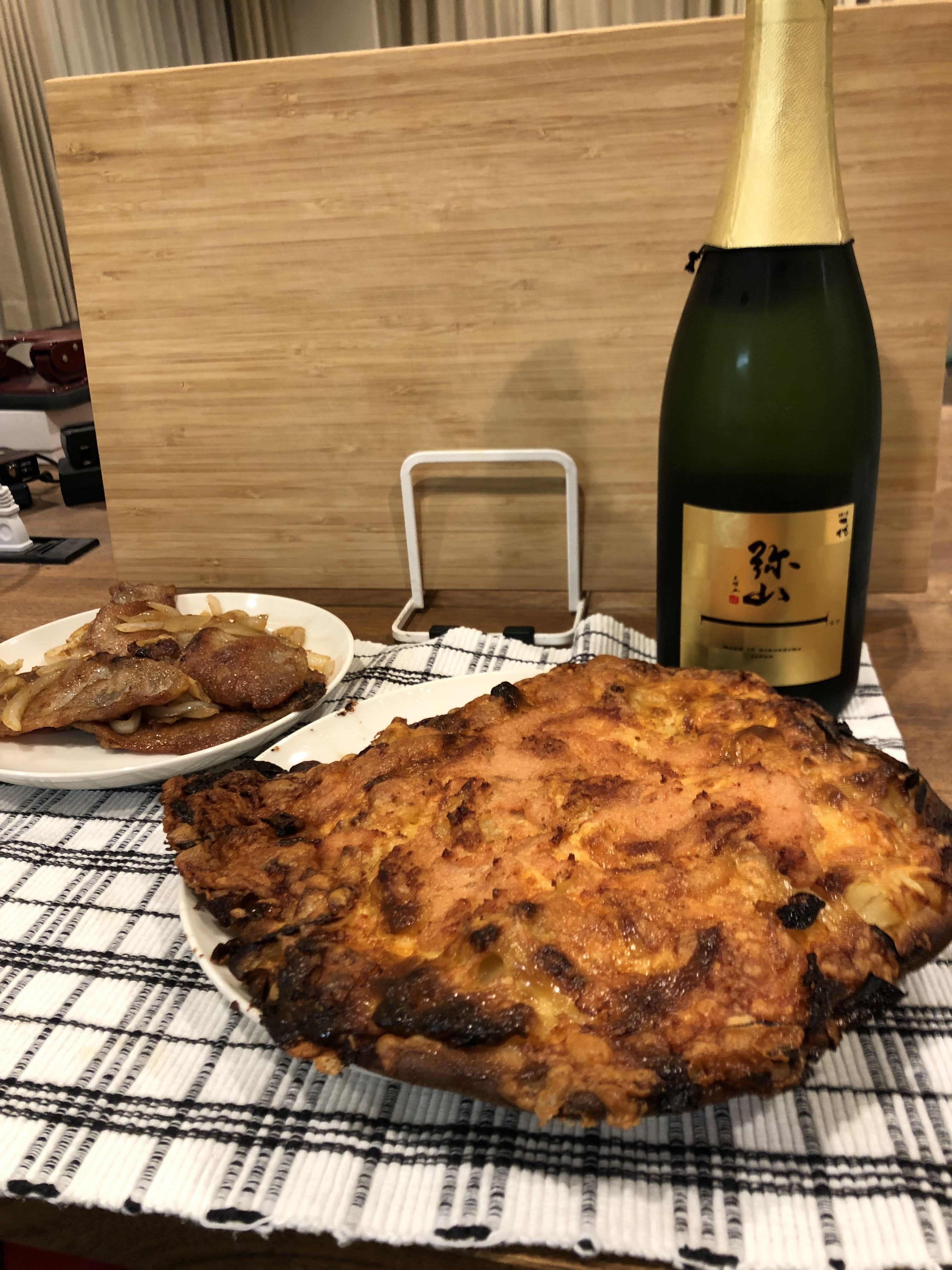
I read it as “Miyama”. I couldn’t read it at first. It is a gorgeous label, isn’t it? Black letters on a gold background. The design looks like a gold folding screen in a castle.

Miyama Sparkling
Miyama Sparkling

I mistakenly thought I had bought the wrong champagne at first because the brewery was written in katakana. At least, they should have written it in English. As a side note, for some reason, the Japanese word for “police box” has been forced to be written in romanized form as “koban. Why not just use “PS” for Police Station?

Miyama Sparkling
Miyama Sparkling

You don’t even have to alphabetize the word “dry”…

This sake is brewed at a brewery overlooking Yayama, the main peak of Itsukushima, one of the three most scenic spots in Japan, on the opposite shore. The character for Yazan, the face of the label, was written by Mr. So kanji Ueda, the head of the Ueda Sokei school of tea ceremony in Hiroshima. The character for “1st” expresses our wish that the sake be drunk as the first drink (toast), and the gold leaf folding screen pattern on the label expresses the Japanese character for “Japaneseness”.

Official web saite

After all, it seems to have been inspired by a folding screen made of gold leaf.

Miyama Sparkling
Miyama Sparkling
Miyama Sparkling
Miyama Sparkling

I have had several sparkling beverages, but this shape is a first for me. It is a champagne type. As stated on the official website, it seems that they focused on “strong effervescence similar to champagne”. As expected, it overflowed from the bottle.

Cork from here

I loosened the cork until the very last minute and opened the bottle in the sink, but then I found that nature was terrifying!

In the end, only the cork rolled on the floor.

Miyama Sparkling

Struggling with bubbling sparkling alone
I’ve got to pull myself together.

Miyama Sparkling
Miyama Sparkling
Miyama Sparkling
Miyama Sparkling

It’s good, isn’t it? The sound of strong carbonation. After all, the smell of sparkling wine flies away with carbonation.

Gulp!

Taste Evaluation

Miyama Sparkling Chart

It is pleasantly carbonated. Stimulation comparable to that of foreign champagnes. It is well-balanced and has no special characteristics, but it is a very easy-drinking aperitif, after all. The alcohol content is low, so even those who are not comfortable with sake can easily drink it. The sweetness of the lactic acid acidity makes it easy to drink. It has a dry finish, so it is not too sweet to finish drinking, and you will be able to drink it nonstop. I checked the official website later, and it seems that this is what they are aiming for.

I received cod roe from a friend. I had some leftover ingredients, so I thought it would be good on a pizza with champagne.

Spicy Cod Roe And Cheese Bacon

Cheese cod roe pizza

I made a cod roe cheese pizza, but it was burnt all over.

It looks bad, but it was delicious. If it’s bubbly, it’s not bad with a greasy meal.

Click here for more information about spicy cod roe.

It was a good day to be tipsy again.

Click here for other West Japan sake→Here

Thank you for reading to the end. Please don’t forget to bookmark this page.

  1. porntude's avatar
  2. click here's avatar

Kaze no Mori Alpha is a different concept

The last time I bought Wind Forest, it was delicious! I wonder what other kinds taste like. I went to Mizuhashi Sake Shop to try to enter a new world of drinking comparison.

  1. Kaze no Mori ALPHA8
  2. Ingredient details
  3. Different shades
  4. Why milling from brown rice?
  5. Taste Evaluation

The last time I bought Kaze no Mori, it was delicious! I wonder what other kinds taste like. I went to Mizuhashi Sake Shop to try to enter a new world of drinking comparison.

Thank goodness it’s there. I had a good experience with Junmai Daiginjo, which was recommended to me by the clerk last time.

The days have passed since then, and my experience has improved to a certain degree. I decided to go for Junmai instead of Ginjo and picked up Kaze no Mori ALPHA8!

Official site→Here

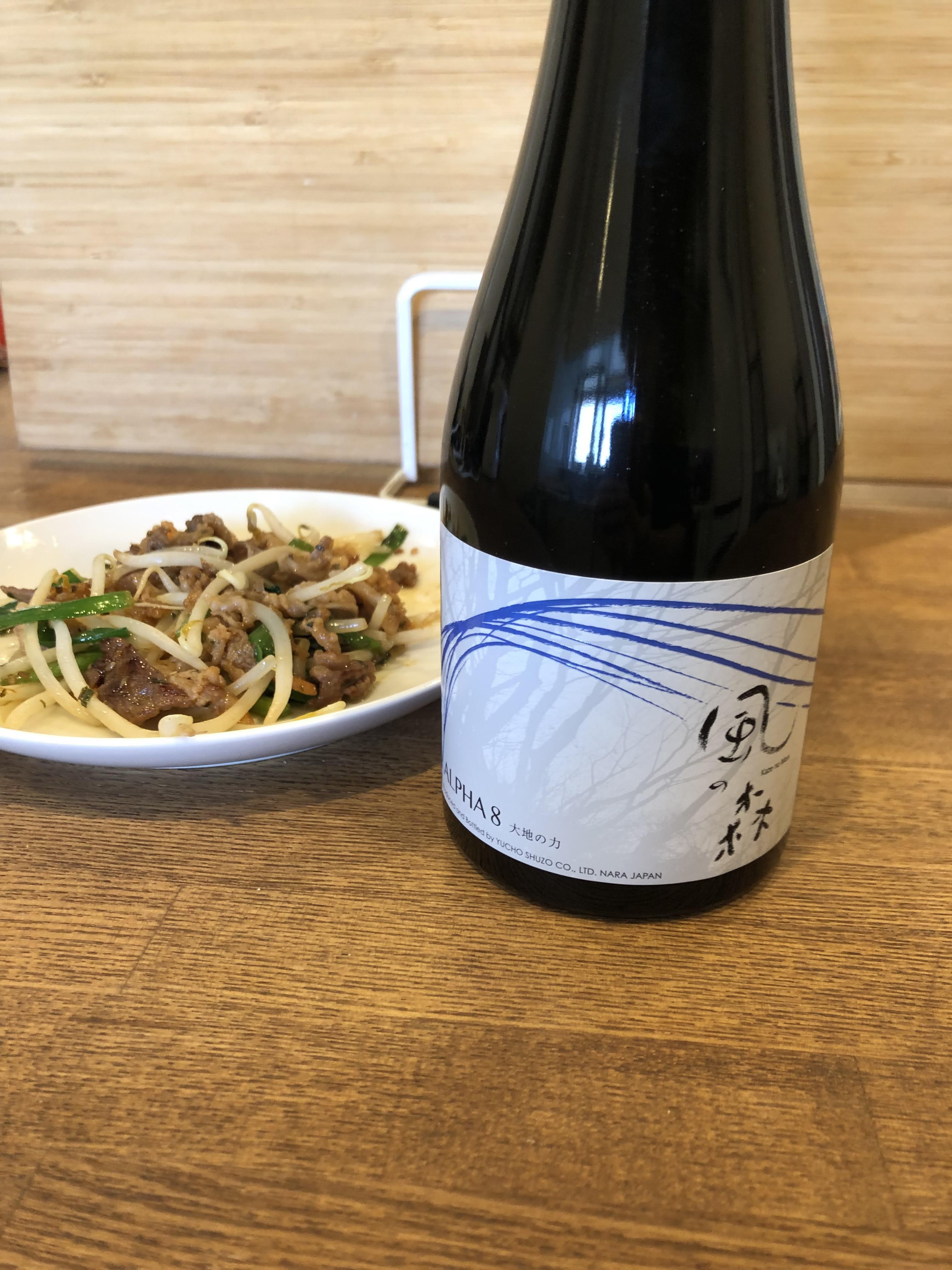
Kaze no Mori ALPHA8

Kaze no Mori ALPHA8
Kaze no Mori ALPHA8

It’s not a good shot, but what is it? The bottle is not like a sake bottle, but it looks like a bottle from the ancient Middle East.

Ingredient details

The reason why we chose Kaze no Mori ALPHA8 is that it is 100% polished rice. Not that we don’t use rice, but that we don’t polish (shave) the rice. I’m interested in the fact that the rice is 100% milled rice. It is very interesting, isn’t it? The alcohol content is a little high at 16%. The 100% Akitsuho, which is made with local love, is the mark of Kaze no Mori. We are very interested in it.

Opening the bottle

Poof! Gas as big as champagne! This is amazing! I was blabbering to myself.

Different shades

Kaze no Mori ALPHA8

Oh, no. Did you notice it?
The difference from the usual.

Yes, I took off my glasses and looked twice. I took off my glasses and looked twice because they have a blue light cutoff. (Lenses with blue light cut are not clear lenses but have a slight yellow tint, which makes white objects look a little yellow.)

And if you look closely, you can see a gaseous feeling like carbonation.

The aroma is a faint vanilla sweet aroma of pure rice.

This hue is due to the fact that the raw material is made from brown rice, which gives the sake a slightly brownish tinge, rather than the transparency of typical sake.

Why milling from brown rice?

Brown rice is taken from rice and processed from brown rice to polished rice.
The degree to which the rice is polished is indicated by the milling ratio.

What are the effects of this process?
The more polished the rice is, the more pronounced the aroma will be when the sake is made. On the other hand, the closer the rice is to brown rice, the more complex the flavor will be.

Kaze no Mori ALPHA8

“They created UNDERWATER… inspired by this beer…” No need to make it look like the color. I don’t think so, but upon closer inspection, the initial setup is very different from the sake I’ve seen so far. Inspired by the makers of a beer made with 80% brown rice, we looked into ultra-hard water, deep groundwater, No. 7 yeast, and the amorphous process.

In order to achieve this, they also invented our own unique process, the Amorphous process. The amorphous starch, which is usually achieved by steaming rice, is realized by a special heating and roasting process.

Is this a particular way of doing things? Everything is a non-theoretical use.

Gubi!

Taste Evaluation
Kaze no Mori ALPHA8
Kaze no Mori ALPHA8

The impact is a ginjo-like aroma and citrusy sweetness like tangerine, changing to a sugary melon, with a slightly gentle bitter finish.
It is so good that you can’t go wrong with the Kaze no Mori series. It has a marrowy flavor and is a more junmai sake than the previous Kaze no Mori 507. It is easy to drink with a good balance of ginjo and junmai types, suitable for those who are not used to drinking sake until they get tired of drinking it, and for sake lovers to drink before a meal as a stretch for the stomach. It has a delicious sweetness that is the main flavor, so it is best served chilled as an aperitif. It might go well with stir-fried or oil-based foods.

I drank it with stir-fried vegetables and couldn’t stop.

In Japan, this home-style dish is stir-fried with vegetables, bean sprouts, and meat. It is a simple dish that can be made in any home.

Click here for other West Japan sake→Here

Thank you for reading to the end. Please don’t forget to bookmark this page.

  1. porntude's avatar
  2. click here's avatar

Fiery stinky ramen in Akihabara

Japanese ramen has many flavors of soup. They can be broadly classified into “soy sauce,” “miso,” and “tonkotsu (pork bone). Soy sauce is mainly flavored in the Kanto area, miso in Hokkaido, and tonkotsu (pork bone) in Kyushu. There is also a fierce ramen area in Tokyo. These are mainly downtown areas, but famous areas include Ikebukuro, Shinjuku, Shibuya, Akihabara, and Shinbashi in Tokyo, where many restaurants are located side by side. The main types of ramen are soy sauce and tonkotsu (pork bone) flavored ramen, with miso (fermented soybean paste) being the least popular of the three. Pork bone ramen has the strongest flavor. However, because the broth is made from pork cartilage, it has a strong fishy smell. Because of its strong flavor, it is very popular among men.

Official saite→Here
They have also opened stores in Singapore and Korea.

  1. Ramen_Waizu
  2. Akihabara Streetscape
  3. Discover delicious ramen place
  4. Ramen noodle making

For other delicious Ramen

ramen
Ramen_Waizu

Akihabara Streetscape

Discover delicious ramen place

I wandered around Akihabara’s battleground district in search of the best ramen.
Smell, smell. It smells fishy. It is, after all, pork bone ramen.

Tonkotsu Ramen
Tonkotsu Ramen

More than 90% of Japan has a system of buying meal tickets from vending machines. I assume it is the same in other countries.
This is to enable cooks to concentrate only on cooking and to keep labor costs down.

The system is the same in other countries, so I won’t bore you with the details, but it involves putting in money and pushing a button.

According to one Japanese ramen lover. there is a rule that the most popular ramen is usually the one on the top left of the machine.

Basic store style
Basic store style
Basic store style

Basic store style of Japanese ramen shops

Don’t forget that in Japan, water is free in restaurants.

water

Most ramen shops have a system where you fill up your own water, so go fill it up as soon as you enter the store.

Many ramen shops display instructions on how to enjoy the delicious food.

It’s a big deal but a method that should be tried at least once.

The sign above is Tsukemen Ryugi

  1. Eat with the flavors as they are
  2. After eating about half, sprinkle black shichimi (seven spices) on the noodles and eat.
  3. After finishing the noodle, divide the broth of your own ramen with the original broth. Drink it.
    Ask the staff for the soup.

Left sign description.
A delicious way to eat ramen.
Please eat it as it is first.
After you eat about half of it. Add a clove of fresh garlic and a pinch of pepper.
It tastes even better.

Pepper, garlic, vinegar, spicy seasonings.

This set of seasonings is also usually found at all ramen shops. Pepper, garlic, vinegar, spicy seasonings.

Ramen noodle making

ramen

Tonkotsu ramen soup is always cooked over low heat to remove the lye. The broth from the bones is simmered over low heat to release its flavor.
Therefore, the soup is mixed well and seasoned before serving to customers.

Tonkotsu Ramen

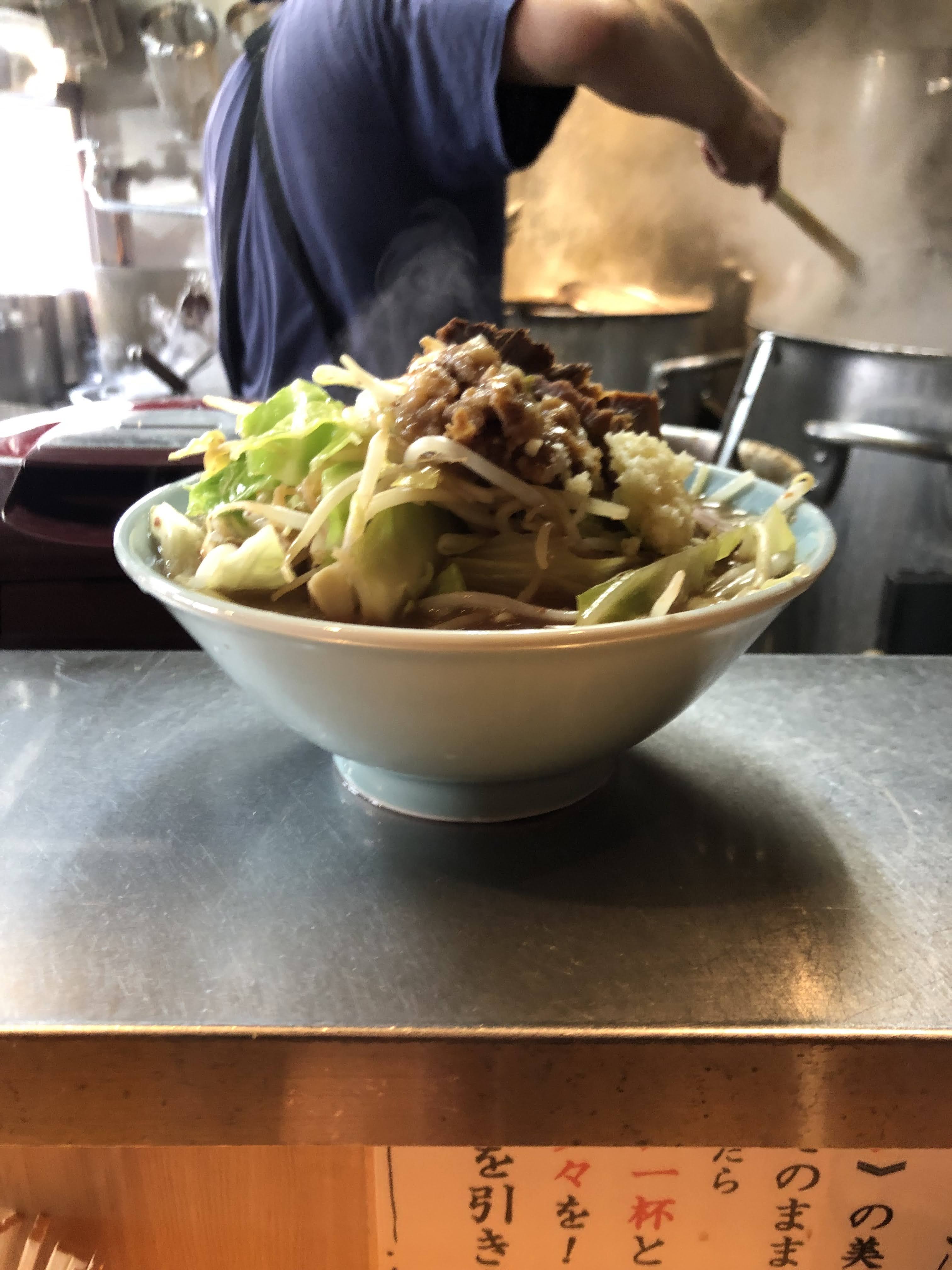
A mountain of male popularity.

ramen

The noodles are medium thick and the soup is cloudy brown. Mainstream tonkotsu ramen is cloudy white. However, this restaurant is brown.

Yum!

Tonkotsu Ramen
Tonkotsu Ramen
Tonkotsu Ramen

Ingredients are grilled pork, bean sprouts, onions, garlic, and cabbage.
The soup is thick and very juicy with back fat. The noodles are medium in size, filling the stomach and satisfying. The unique flavor of the pork bones is in the soup and is sure to satisfy.

I added plenty of garlic as instructed.

📍3-7-9 Sotokanda, Chiyoda-ku, Tokyo

Also, in Japan, tissue paper is basically used instead of napkins. Here, surprisingly, it was tucked away on the top shelf. If you like Tonkotsu Ramen, I recommend it. It was delicious.

Thank you for reading to the end. Please don’t forget to bookmark this page.

  1. porntude's avatar
  2. click here's avatar