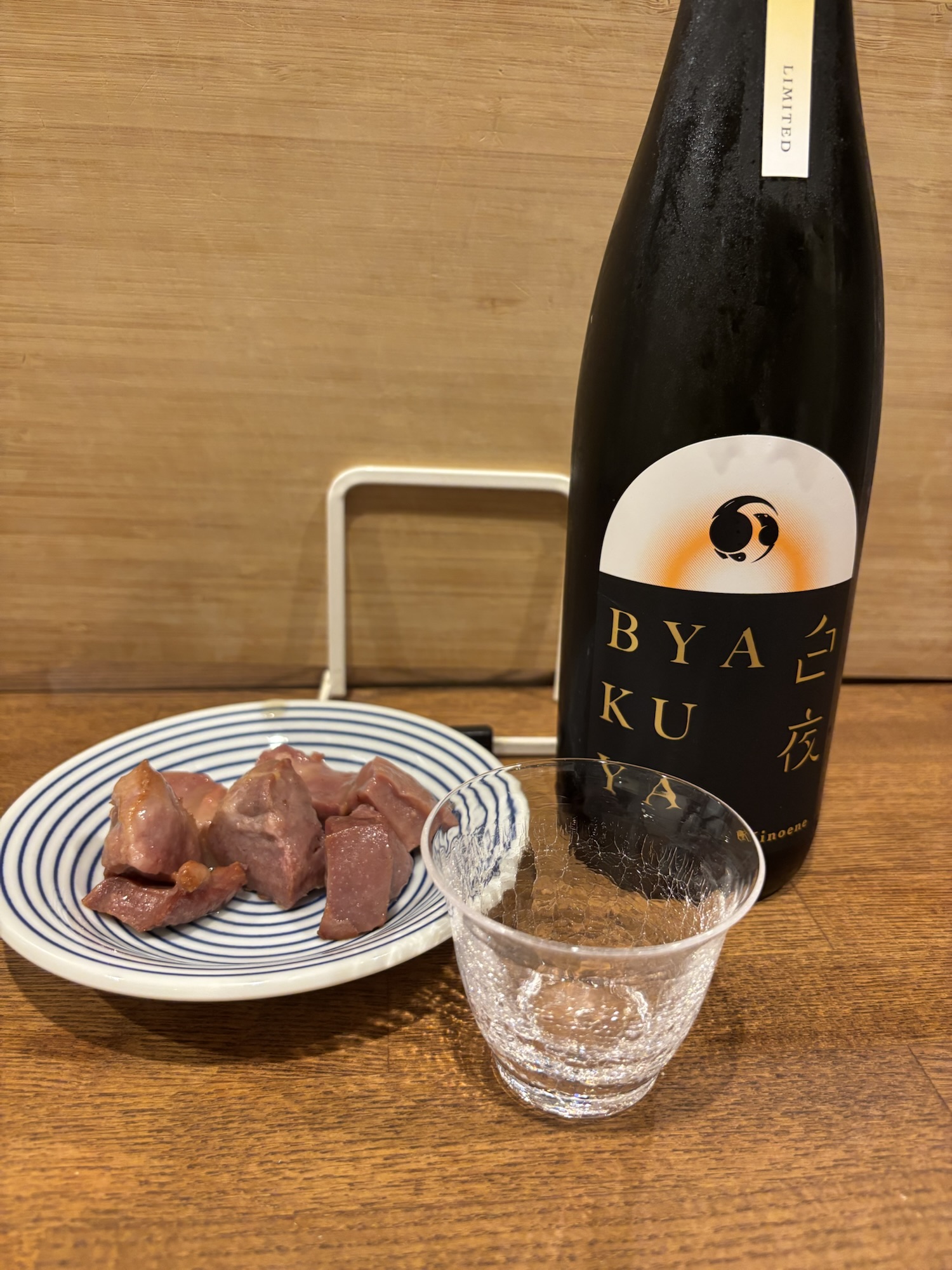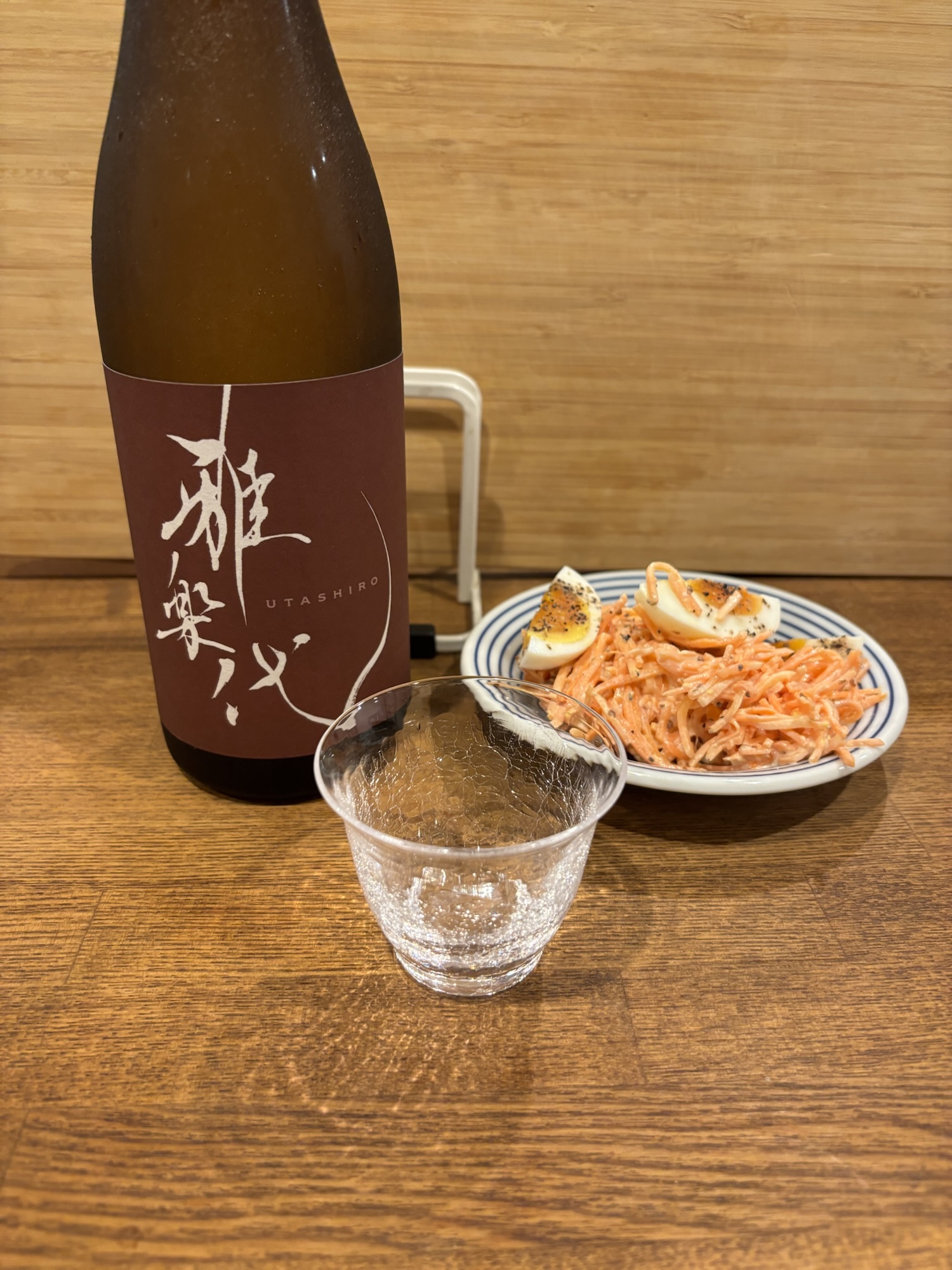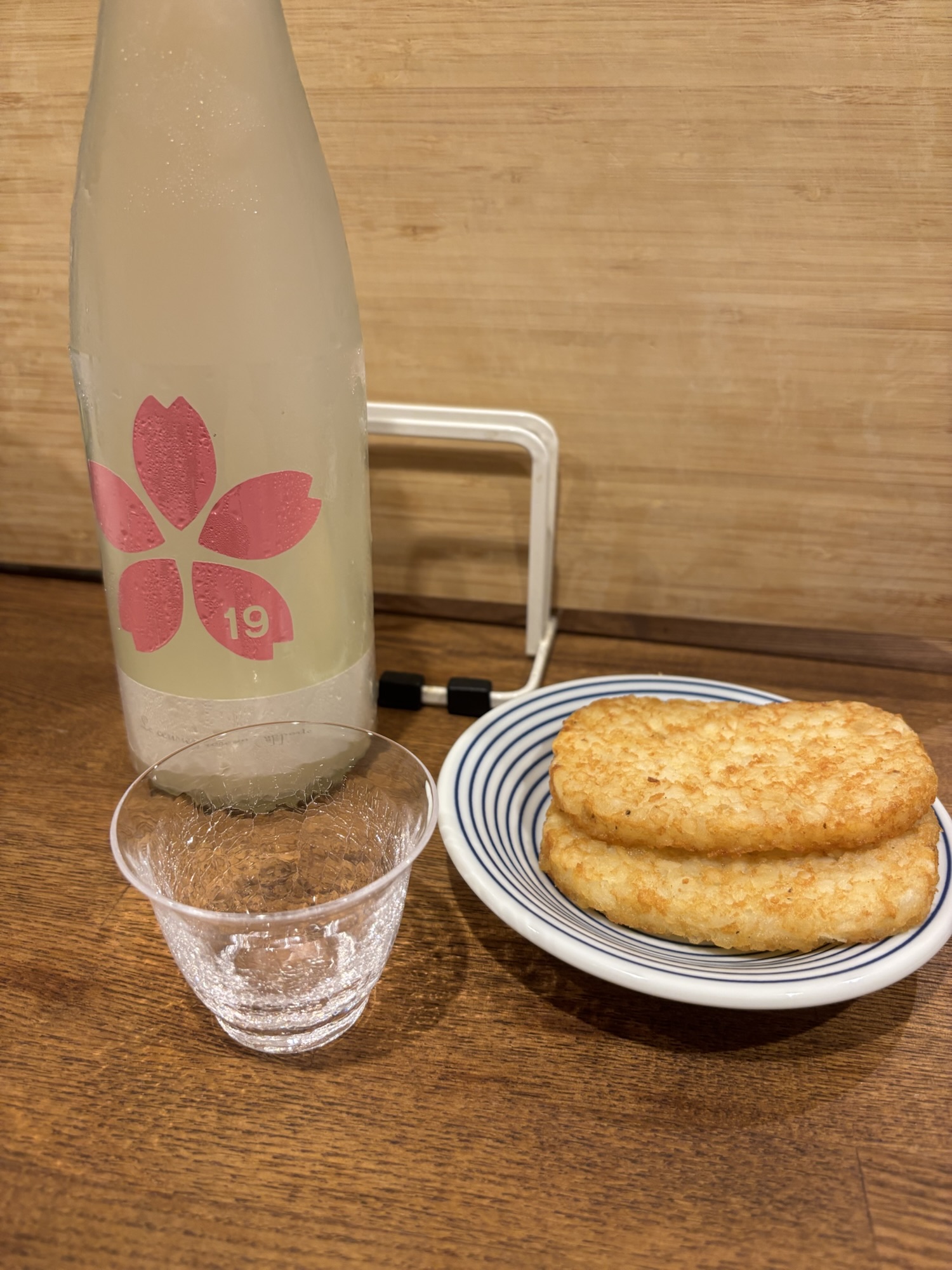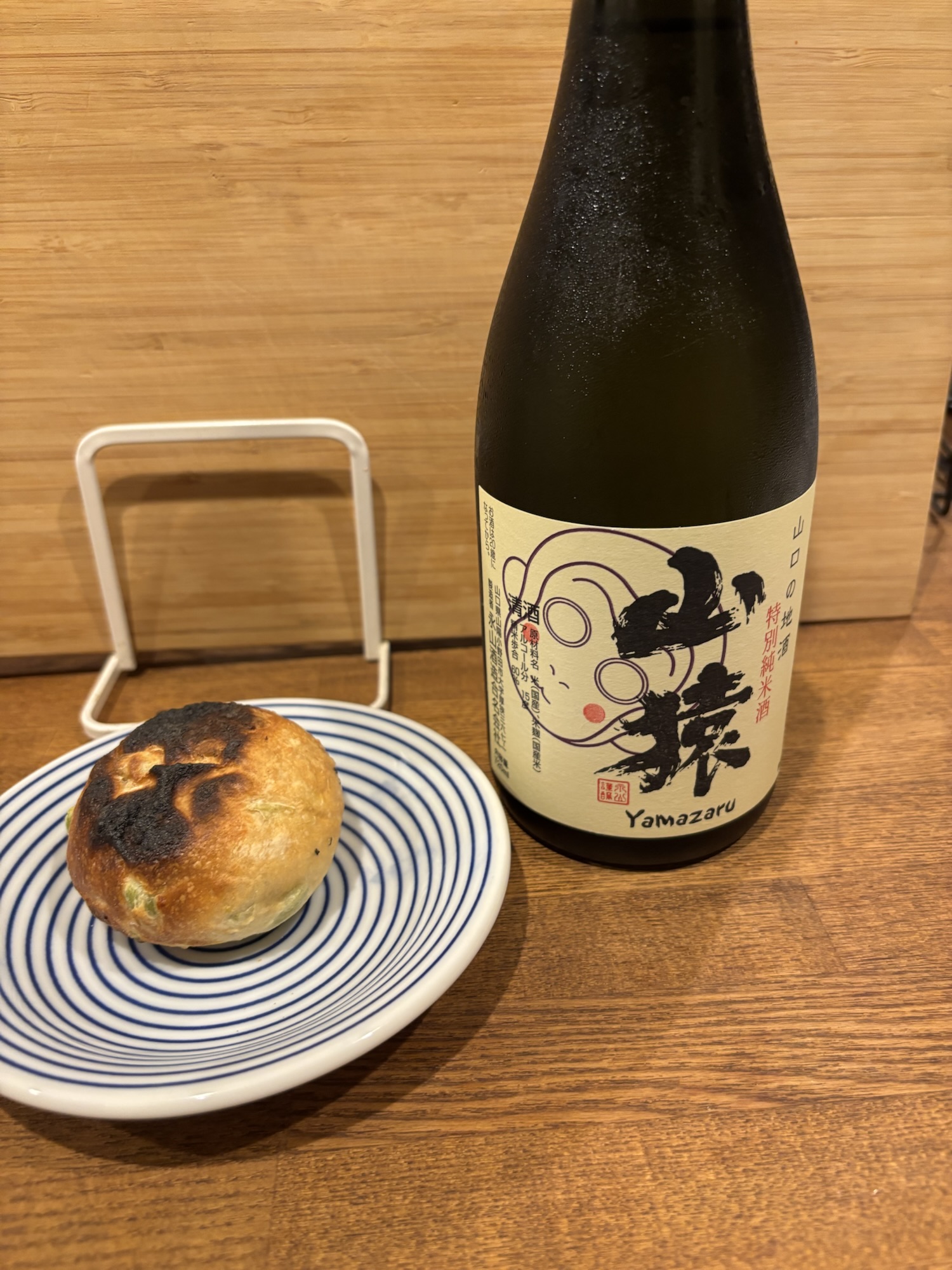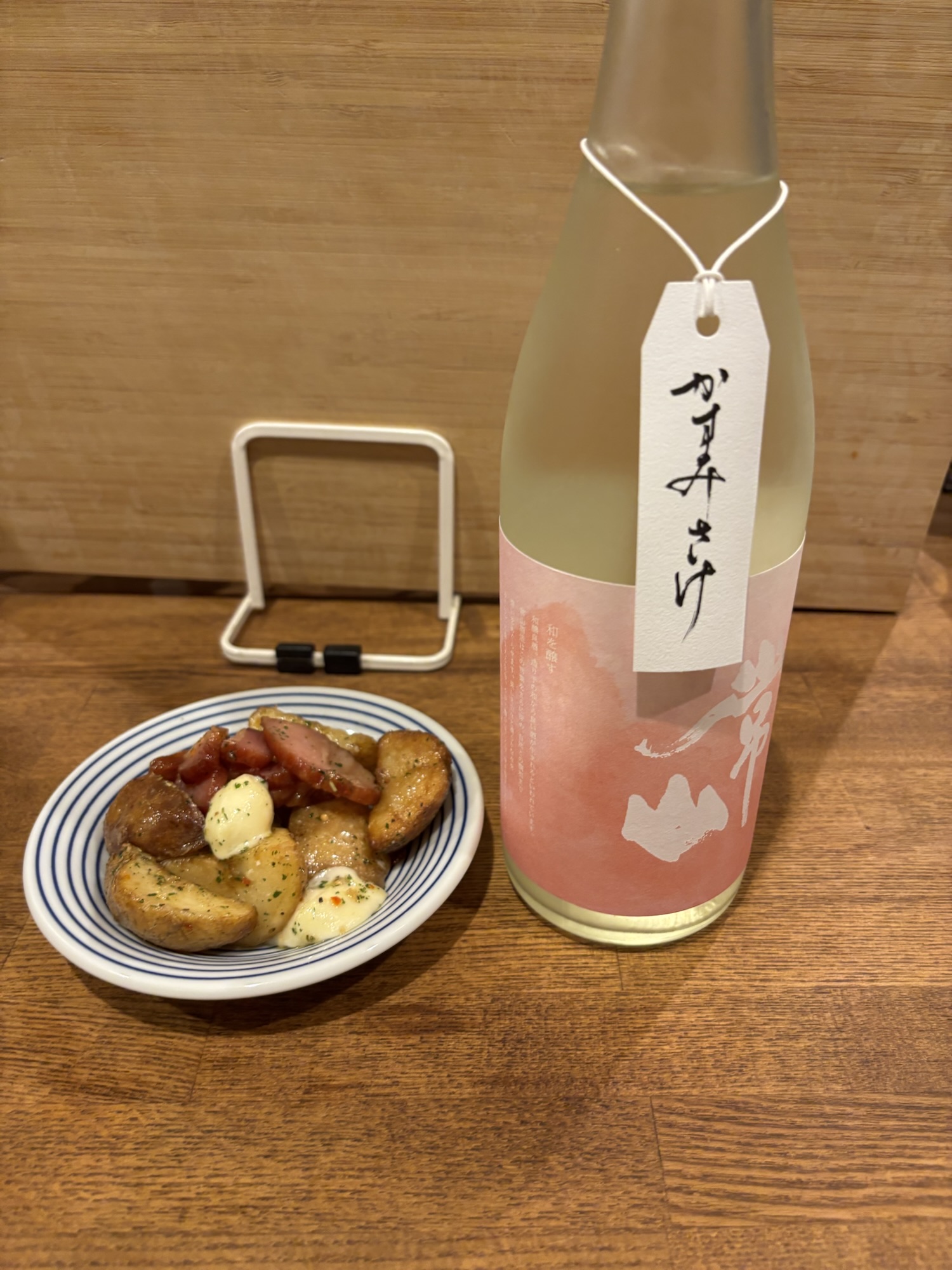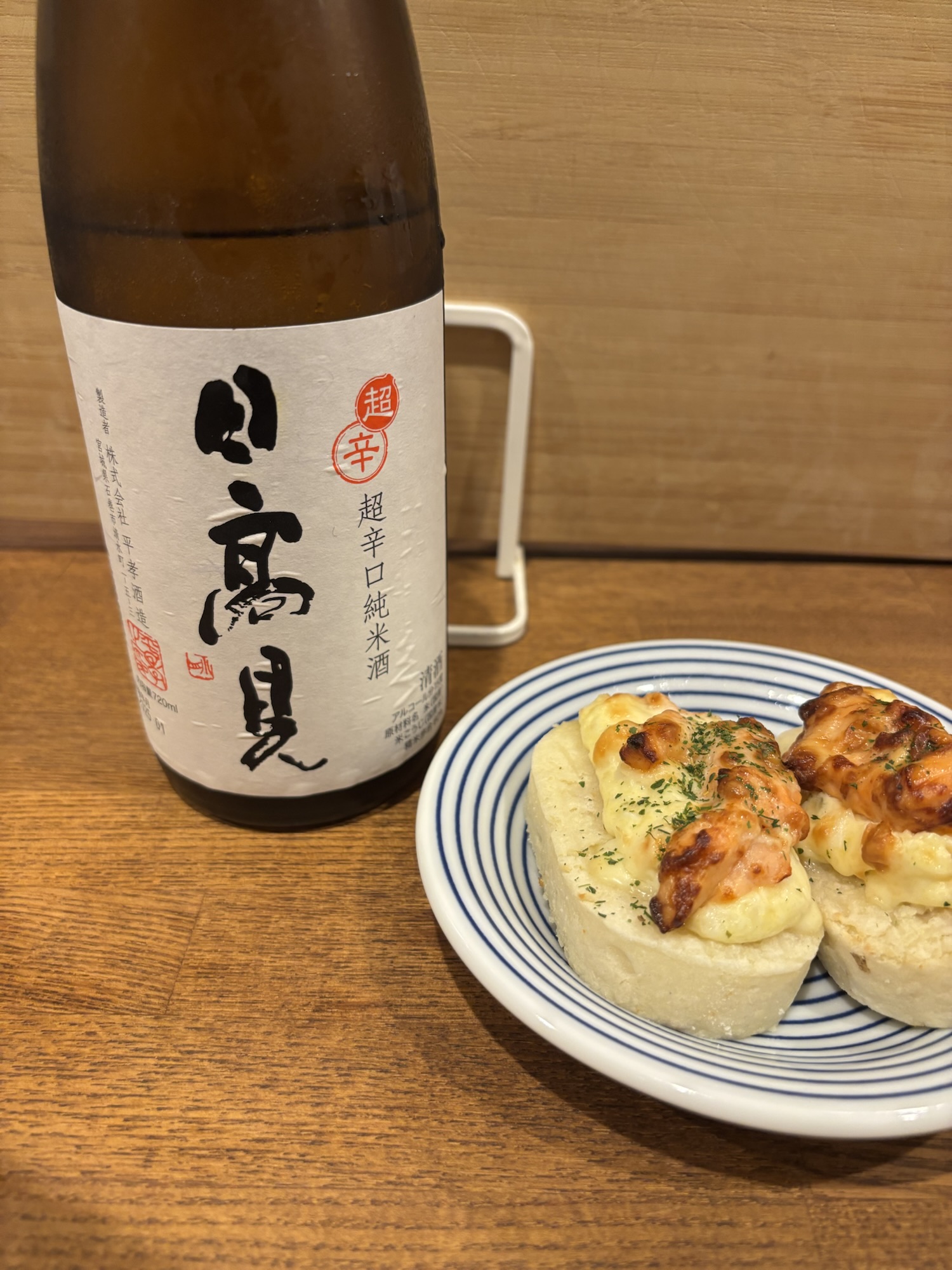
My favorite sake. Nagasaki’s dry sake. Delicious.

Yokoyama SilverI couldn’t forget it because it was so good last time, and to my surprise, they were selling a different one, so I was excited to buy it. I won’t hesitate to go back.

  1. Yokoyama Silver
  2. Yokoyama Silver 7 evaluation
  3. Today’s snack

Yokoyama Silver 7

Yokoyama Silver
Yokoyama Silver
Yokoyama Silver
Yokoyama Silver

It is pink. Please enjoy it chilled in a wine glass. I’m so excited. I have high expectations.

Yokoyama Silver
Yokoyama Silver

Coo! I have a weakness for limited edition phrases. 2021BY BY is the year it was made at the brewery.

Yokoyama Silver
Yokoyama Silver

Screw cap. It’s “Yokoyama” in hiragana.

Yokoyama Silver
Yokoyama Silver

The bottle is opened as if it were going to be popped.

Yokoyama Silver
Yokoyama Silver

The aroma is faintly ginjo.

Gulp it down!

Japanese Ranking 106th
Nagasaki Prefecture Ranking 1st

Comment: A
Last year it was a draft sake, but this year it is a draft. Is that why the label color is different?
Clear and soft on the palate. It has a fruity, muscat-like flavor with a freshness of nama-zake.
As expected, it is the most fruity of the three types compared.

Comment: B
Fizzy and refreshing

Yokoyama Silver 7 evaluation

Yokoyama Silver evaluation

t has a sweetness that is not too sweet, and the finish is clear and dry. It has a melon-like sweetness. The taste is refreshing and never boring. It is a food sake. The last one was drier and more to my liking. This one is also delicious. I like dry sake.

Today’s snack

The snack was goya campuru (bitter melon stir-fry) from Famima.

bitter melon stir-fried with pork, tofu and other vegetables

Bitter melon is good for your health and goes well with sake. It was another good day.

Click here for other West Japan →Here

Thank you for reading to the end. Please don’t forget to bookmark this page.

  1. porntude's avatar
  2. click here's avatar

Temples and shrines are not the same. Points of Difference

There are temples and shrines in Japan. This distinction will help you understand Japanese culture better.

  1. The deities enshrined are different
  2. The manner of praying is also different
  3. How to instantly distinguish between a temple and a shrine

The deities enshrined are different.

Temple = “Buddhism”
  A place to worship the principal image (mainly Buddhist statues)

 Shrine = “Shinto
  A place to worship mirrors and other sacred objects (objects in which deities are believed to reside)

The Japanese, who believed in natural objects, began to build temporary places of worship in sacred places where deities were enthroned.

Gods enshrined in shrines

shrine
shrine

Buildings were constructed for such purposes as sheltering from wind and rain, and, influenced by Chinese temple architecture, the architectural structure of shrines was arranged to provide a place to worship the spirit of the gods (mittama). There are six other names for shrines: Jingu, Miya, Daijingu, Taisha, and Sha, which are distinguished by size and rank. The highest rank is “Jingu,” as represented by the Ise Jingu Shrine.
Shinto has no founder, but Buddhism is a religion with Buddha as its founder, born in ancient India. Temples in Japan began as places of prayer for the protection of the nation when Buddhism was introduced to Japan.

Gods enshrined in temples

temple
temple

Temples in Japan began with the introduction of Buddhism to Japan and started as places of prayer for the protection of the nation.

Temples are places where Buddhist priests study and practice Buddhist doctrine, and shrines are places where deities reside.

Therefore, the purpose of worship and the content of wishes at temples and shrines are different.

At shrines, people express their gratitude to the gods and pray for happiness in this life, whereas in Buddhism, along with happiness in this life, people can also wish for a place in the Pure Land of Ultimate Bliss after death.

The manner of praying is also different.

Upon entering the shrine grounds, worshippers first purify themselves and their minds at the hand-watering basin.

After that, they offer money at the hall of worship or the main shrine.

The method of worship up to this point is the same for both temples and shrines.

The major difference between temple and shrine visitation is whether or not clapping is used. The major difference between temple and shrine worship is whether or not clapping is done.

How to visit a shrine

shrine
shrine

The shrine is to be clapped twice (kashi-wade).
Procedure for visiting shrines

(1) Place your money in the money box.

2) If there is a bell, ring it, then fold your state deeply 90 degrees and thank twice.

3) Calmly clap your hands twice and pray with your hands clasped together

④Tell your wishes and the happiness of others, and finally bow deeply and retire.

Some people believe that the clapping of hands is to make the gods notice you.

Please note that some shrines have different numbers of clapping and bowing.

How to visit a temples

temple
temple

The proper way to worship at a temple is simply to clasp your palms together in front of your chest and bow lightly. Be careful not to do Kashiwa-Te by mistake.

Order of visitation at temples

(1) Put your money in the donation box.

(2) If there is a crocodile entrance, ring it and pray with your palms together in front of your chest without clapping your hands.

(3) Finally, bow and leave the temple.

The gesture of ” clasping hands” originated in India, and is said to express the wish for Buddhahood by joining the right hand (in the Buddhist world) and the left hand (in this world) to unite the world of Buddha and this world.

How to instantly distinguish between a temple and a shrine

The best way to distinguish between a shrine and a temple is to look at the roof.

Shrine Features

About Shrines

Shrines use natural materials such as thatch, hiwada (cypress), and kokera (persimmon) for roofs, and the influence of these materials remains strong even today.

Because of the Japanese belief in wood, wood is basically used for everything except roofs.

Chigi and katsuogi are characteristic parts of shrine roofs.

The main shrine building, where the sacred object is enshrined, is often located behind the hall of worship.

On both sides of the approach are the shrine office, a kaguraden, a water closet, and komainu (guardian dogs).

About temples

Since Buddhism is a religion that came via China, tiles, which also came from the continent, are used for roofs.

After the Middle Ages, architectural styles of temples became more diverse, and building materials other than wood were also used.
As large temples began to house large numbers of ascetic monks, they needed a dining hall and other buildings to serve as living quarters, and so they began to be equipped with a number of buildings called “Shichido Gyan”.

Differences in entrances

For shrines and temples separated from the secular world, the entrance serves as a boundary.

Shrines are “Torii”

The Torii gate is the symbol of the shrine and is also used as a map symbol.

It is located at the beginning of the approach to the shrine, and beyond this point is the sacred area where the gods descend.

The basic form of the Torii consists of two pillars topped by a Kasagi, and a Nuki (a piece of wood) below the Kasagi connects the pillars.

The temple is the “Mountain gate”

The Yamamon is the formal entrance to the temple, beyond which is considered to be the land of the Buddha.

By passing through the temple gate and purifying the mind, one faces the Buddha with a beautiful mind.

The name ” Sanmon” is said to derive from the fact that most temples were built on mountains.

Komainu (guardian dogs) stand by the approach from the Torii gate to the hall of worship and are responsible for driving away evil spirits.

Since ancient times, komainu have been regarded as spiritual beasts and have served to ward off evil spirits from entering the shrine.

Depending on the shrine, a fox (Inari Shrine), a deer (Kasuga Shrine), or some other animal may take the place of the Komainu.

Other shrines and temples have a long history and various historical properties. If you take a walk all over the area, you will encounter things of historical value.

  1. porntude's avatar
  2. click here's avatar

Sake representing Nagano Prefecture with a long history 明鏡止水

Today, too, I’m enjoying sake by myself. I wandered around the liquor store, but it seems that the summer sake season has come to an end, and sake with a high distribution volume is conspicuous. Is this the off-season for fall? I picked up some sake that I thought looked tasty with a focus on dry sake, and looked at them. Meikyoshisui” is a four-character idiomatic expression.

  1. Meikyoshisui Kimoto Junmai Ginjyo
  2. Taste Evaluation
  3. Today’s snack: sticky-salad

Meikyoshisui Kimoto Junmai Ginjyo

Meikyoshisui Kimoto Junmai Ginjyo

It means.

Meikyoshisui Kimoto Junmai Ginjyo

A mirror without cloud and still water. The state of mind that is clear and quiet, without any kind of rancor.

From the Shogakukan Digital Dictionary)

I bought this sake because my mind is always stagnant, so I thought it might be what I need. I bought it by name.

The elaborate “Kimoto-zukuri” (sake brewer’s yeast )

Meikyoshisui Kimoto Junmai Ginjyo

As indicated on the label, it seems to be easy to drink from cold to lukewarm.

I did a little research on the brewery. Osawa Shuzo
The main brands are Meikyosisui and Seiki. It is more impressive that it is a small company with only 5 employees.

Meikyoshisui Kimoto Junmai Ginjyo

The family crest. Beautiful blue.

Old cap. Don’t cut your hand.

Meikyoshisui Kimoto Junmai Ginjyo

Open the bottle.
Weak Ginjo aroma. A little bit of Showa-era aroma.

Gulp it down!

Japan Ranking 202nd
Nagano Prefecture Ranking 10th

Comment A:
It is soft against the lips, but when you put it in your mouth, it is not sticky and has a dry taste with a hint of bitterness. There is a faint scent of cemedine in the aftertaste.

Taste Evaluation

Taste Evaluation
Meikyoshisui Kimoto Junmai Ginjyo

It is a mellow sake. The first sip tastes unfamiliar and complex. It tastes like old Showa-era sake. The second sip is a good one, and you can get used to it. For those who like dry sake, it tastes good. It has a complex taste when you finish it. It seems to go well with simmered dishes and strong flavors. It seems to be best with the taste of an old Showa-era country woman.

Today’s snack: sticky-salad

Recently, I have been addicted to the sticky packets of side dishes (okra, yam, and wakame salad), and adding natto to them makes a great dish. They say it is very good for cleaning the intestines.
It was another good day.

It was a good day, too!

Click here for other Nagano region→Here

Thank you for reading to the end. Please don’t forget to bookmark this page.

  1. porntude's avatar
  2. click here's avatar

For beginners, easy to drink sake with light alcohol content

Today, too, I am drinking alone in the dust. It is the end of the Bon vacation. I didn’t do anything in particular. In fact, the liquor store was closed and my only hobby was…. So I wandered around a large liquor store. I decided to buy by feeling once in a while.

  1. Shizengo
  2. Taste Evaluation
  3. Today’s snack

Shizengo

Shizengo

Cool nature and water design. I looked up “mellow pure rice” to see what it was all about. However, it seems that they wanted to express that it is junmai brewed with yeast in the original word pattern.

It is an old cap.

Opening the bottle

The aroma is similar to that of Kido, with a sweet melon-like aroma.

Gulp!

Japanese ranking 135th
Fukushima Prefecture Ranking 12th

Comment :A
The color is near clear. A faint ginjo aroma rises to the top.
In the mouth, it has a banana-like aroma and a mild mouthfeel combined with sweetness and umami.

Comment: B
Fairly fruity

Taste Evaluation

Taste Evaluation
Evaluation

The aroma is weaker than Kido’s and it is easy to drink. The balance between the sweetness of the rice and the ginjo aroma is good. It is recommended to be served cold or at room temperature, and there seems to be little resistance for beginners. It is not too sweet and is good to drink out of. It is natural. It seems to go well with light foods such as aperitifs, desserts, salads, and tofu on its own.

Today’s snack

tohu
tohu

I had some leek salt sauce left over, so I poured it over a piece of tofu. It was a great combination.

It was another good day.

Click here for other Tohoku region→Here

Thank you for reading to the end. Please don’t forget to bookmark this page.

  1. porntude's avatar
  2. click here's avatar

Sake and Soba: Japanese Food Culture. The interior is decorated in a traditional way.

Soba is a representative of Japanese food. Soba goes well with sake, and eating soba while drinking it is a special treat.
Many restaurants purchase noodles, make soup, and serve it as a product.

Eizan Official site

appearance
appearance

This restaurant has a mortar to grind the buckwheat seeds, and they make their own buckwheat noodles.

There are still few customers due to the corona, but they ask for one dish and eat soba.

sake

Many of the restaurant’s sake are major staples. I asked for Akabu.

Many of the restaurant’s sake are major staples. I asked for Akabu. Other sakes I have previously drank and reported on include Hakkaisan, 〆(sime)hari Tsuru, Houou Biden, and others.
It is rare to find a restaurant that grinds buckwheat noodles from a mortar, so if you come to Japan, you should definitely find one and try it with sake.

Thank you for reading to the end. Please don’t forget to bookmark this page.

  1. porntude's avatar
  2. click here's avatar

Authentically delicious sushi bar in Yokosuka

A fisherman is opening a sushi bar. So I went there. The place is directly connected to Yokosuka Chuo Station.

Yokosuka is an American military base, and there are many Americans walking the streets. This sushi bar also had many Americans as customers.

What makes this sushi bar unique is that it is owned by a fishmonger.

It is a restaurant where professional fish connoisseurs always offer fresh fish and rare fish as well.

Uoki Sushi bar
Uoki Sushi bar
Uoki Sushi bar
Uoki Sushi bar
Uoki Sushi bar

The restaurant features a storefront that sells take-out sushi box lunches. It is a rare case for a typical sushi bar to sell sushi as a bento.

It is a very unique restaurant, unlike most sushi restaurants.

It tastes fresh and the stuff is good. If you have business in Yokosuka U.S. military base, you should go to this restaurant.

Uoki official site

Fishmonger’s Fresh Conveyor-belt Sushi Yokosuka Chuo Branch
Address: 2-25 Wakamatsu-cho, Yokosuka-shi, Kanagawa 238-0007
2-25 Wakamatsu-cho, Yokosuka-shi, Kanagawa-ken
tel 0468-27-8693
FAX 0468-27-8694
Business hours: Take-out: 7:00 – 21:00
Eat-in: 11:00 – 20:00

  1. porntude's avatar
  2. click here's avatar