The Corona virus has given me a lot of free time, and I've become interested in saki, making it my lifelong hobby. Here are some of the best Japanese sake encounters possible.
コロナ禍で日本酒に興味を持ち、死ぬまでの一生の趣味と位置付け、日々様々な日本酒と出会い、そして美味しい食事も探し求めるさすらいの呑んべい。可能な限り素敵な出会いをご紹介。
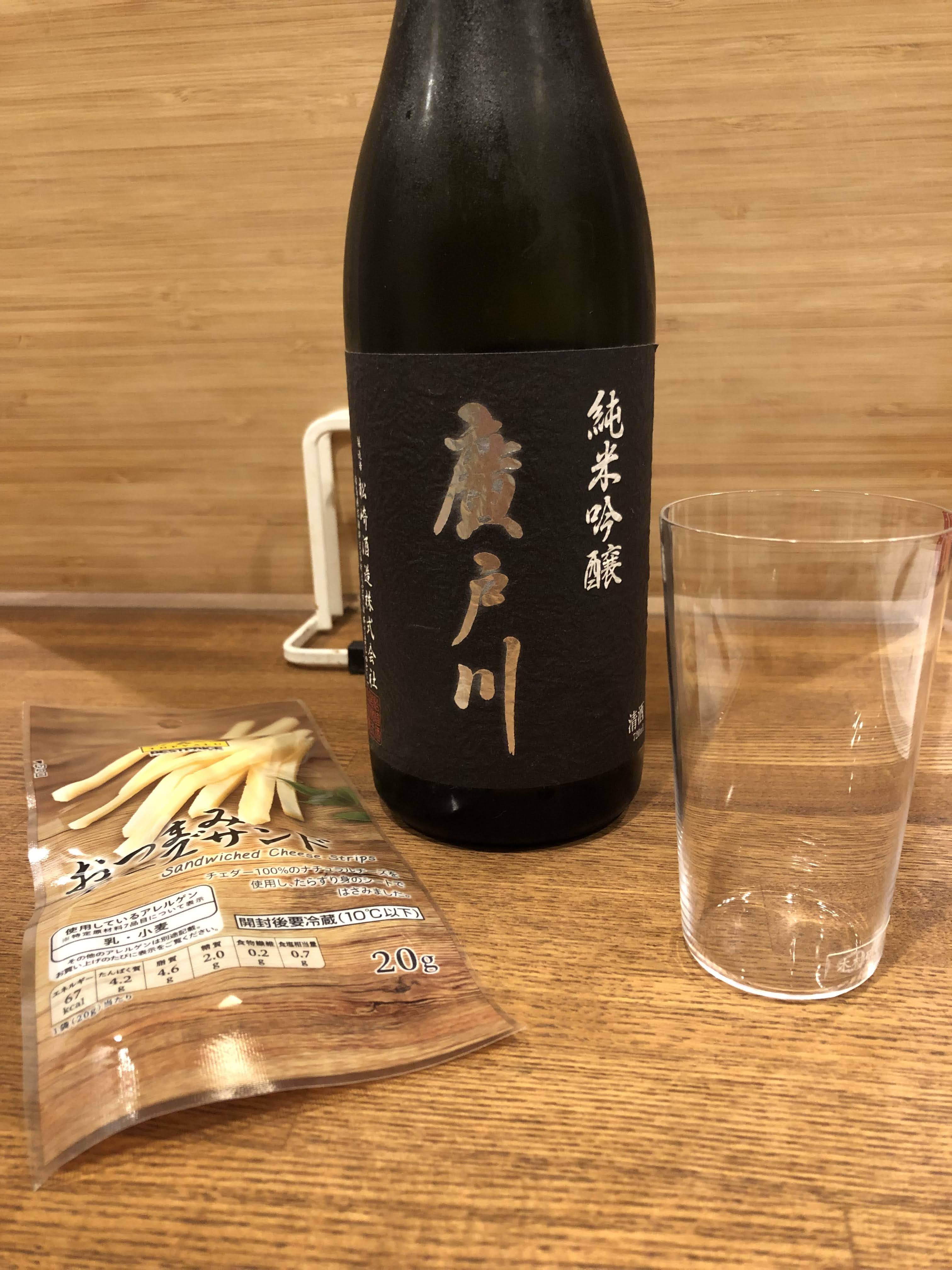
I’ve always been curious about “Hirotogawa”, and I’ve come across it not a few times on Youtube or in books about sake. I’ve been curious about it for a while, and today happened to be the day. That’s why I bought it. I bought it.
Hirotogawa_Junmai_Ginjo
Hirotogawa_Junmai_Ginjo
Hirotogawa_Junmai_Ginjo
It’s unfiltered, unpasteurized sake, which means it’s as close to the original state as possible.
Unfiltered Raw Sake
This has become popular in recent years. This is a combination of unfiltered, unpasteurized, and split-water methods. It is said to be round, fruity and full, with a combination of Ginjo and raw material aromas. It has a unique flavor characteristic.
Matsuzaki Sake Brewery
is a sake brewery in Fukushima Prefecture. I looked it up and found out that the brewery was damaged in the Great East Japan Earthquake, and after that the toji fell ill, and the current 6th generation toji has had a difficult time. They have only 8 employees, which is less than a baseball team. Amazing. I wonder if this scale is too large.
Hirotogawa_Junmai_Ginjo
Hirotogawa_Junmai_Ginjo
Hirotogawa_Junmai_Ginjo
Old Cap
Gulp!
Taste evaluation
Hirotogawa_Junmai_Ginjo_chart
The acidity is strong on the palate, and the taste is consistent. The aroma is fruity, but it’s not as crisp and clean as it should be. Overall, it is complex, and the sourness is still there. It seems to go well with salty foods such as grilled chicken and oden. I left it for a while and drank it again. To my surprise, it suddenly tasted good! The aroma was mellow and rich. And yet, it is easy to drink and has no bitterness at the end. I don’t know why, but after opening the bottle, I let it sit in the refrigerator for about a week and it came back delicious. I’ll keep that in mind.
For cheese lovers
Hirotogawa_Junmai_Ginjo_chart
For cheese lovers, it’s great – you can buy it for 9 cents, the cheese is savory and a little chewing is delicious, and I wish it would become more famous overseas.
What is Cheetara?
It is a popular product made by sandwiching cheese sticks with cod or other fish paste. The richness of the cheese and the umami taste of the cod make it a delicious snack, and in addition to the regular “Cheetara”, “Cheetara with Camembert” and “Cheetara with Parmesan” are currently on sale.
so I went to the most popular revolving sushi restaurant in Japan, “Sushiro”. It is more famous in Japan than Kura-sushi! I’m sure you’re familiar with it, as it has branches overseas as well.
Sushiro is currently the most famous sushi restaurant in Japan, even more so than Kura Sushi.
Originally, a sushi chef from Osaka ran a private sushi restaurant. Later, he opened a 100 yen per plate uniform store. Expanded to the Kanto region. Developed the world’s first comprehensive management system for opening sushi restaurants. A major company became a shareholder, and the restaurant became the most reasonably priced and delicious conveyor-belt sushi restaurant in Japan.
sushi_restauran on Gotanda in Tokyo
Introducing the Japanese “Sushiro” system, New Year’s limited and slightly different sushi.
Crowded waiting list
This is the Tokyo Gotanda branch. I knew I had to wait my turn.
You can either make a reservation in advance using the app on your phone or touch the receptionist to wait for your turn. I would recommend you to use the app to make a reservation. Because my number was 118, and by the way, the three groups in line before me, 114, 115, and 116, had made reservations using the app and came in after me. I was passed over for the turn.
Notes
However, if you make a reservation through the app and do not show up on time, be punctual in Japan because if you are not called three times, you will be put on hold and have to check in again, and you will be the fifth or later in line.
20 to 30 minutes of waiting.
call number
Seat selection machine
My turn has come. When your turn comes. Scan the QR on the receipt for your turn number into the scan on the side. Confirm your seat.
Seat numbers and accounting sheets
table
You can find your seat number on the table or on the seating map, so check it before taking your seat.
order machine
Next, when ordering, you touch the tablet that you are all familiar with, and you can select English, Chinese, or Korean.
Tuna Set
store interior
Now let me introduce you to the New Year’s special sushi.
The inside of the Gotanda store is a little cramped. The other stores are a bit more spacious and relaxing.
beer
tea ceremony
In the meantime, I prepared a cup of tea and a glass of beer.
Salmon Set
For starters, I ordered a set of three salmon for 170 yen, which is very cheap.
Yummy!!
soy sauce
wasabi
There are two types of soy sauce: one is the common “Awase soy sauce” in Japan, and the other is “Amadare soy sauce” suitable for sushi and sashimi. This is a sweet soy sauce. There is no right or wrong way to choose, so choose whichever you prefer.
The wasabi is turned around on a rotating rail, so you can take as much as you want. It’s free.
At Sushiro, you can order not only sushi, but also desserts, side dishes, and ramen at reasonable prices.
side-meal
Desert
Ramen
Tuna Set
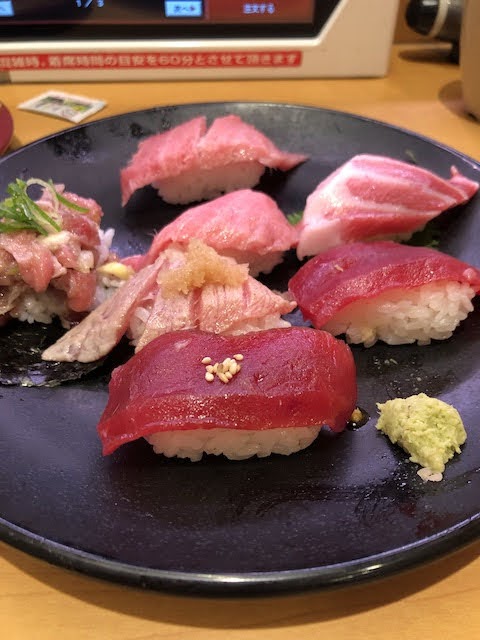
Well, today came the New Year’s limited sushi set that I was interested in, the Special Tuna 7-Piece Set.
1,000 yen per plate for 7 pieces
The rice seemed a little messy, probably because they were busy. It’s not about the appearance, it’s about the taste.
Reddish tuna is pickled tuna. And the one with oil on it is chutoro. After all, tuna is delicious. It melts in my mouth, and when I bite into it, the softness and flavor spreads throughout my mouth.
tuna minced with Welsh onion leaves
And finally, negitoro. I wrapped it in nori, dipped it in a little soy sauce, and took a bite. The freshness of the scallions and the sweetness of the seaweed and soy sauce are perfect and complement the tuna. It’s the best.
The moment the sushi came.
Cheese and prosciutto
cold yellowtail and Prosciutto
Basil mossarella cheese with Prosciutto
Sushi Roll with Cold Yellowtail and Prosciutto
I’ve never seen sushi like this in Japan, and it was my first time trying it too. It may not be fit for the Japanese palate.
Occasionally, Japanese sushi restaurants offer unusual sushi like this one
Check out method in the Shushiro
accounting machine
For checkout, you can take your seat receipt and use this opportunity to scan the QR code, and you can pay by cash, card, or electronic money.
Click here for sushi that protrudes from Tokyo Haneda Airport.→Here
Without any purpose, I just hustled around the liquor stores to see if there was any brand new sake. They had Jikon (a hard-to-find sake)! The price made me squeal.
Jikon-Jummaiginjyo
It’s a good BBQ restaurant, and I ate reasonably well. The price is the same as the price you would pay if you ate a good amount of food at a good BBQ restaurant. I can’t afford it. I was disappointed and went to the next liquor store.
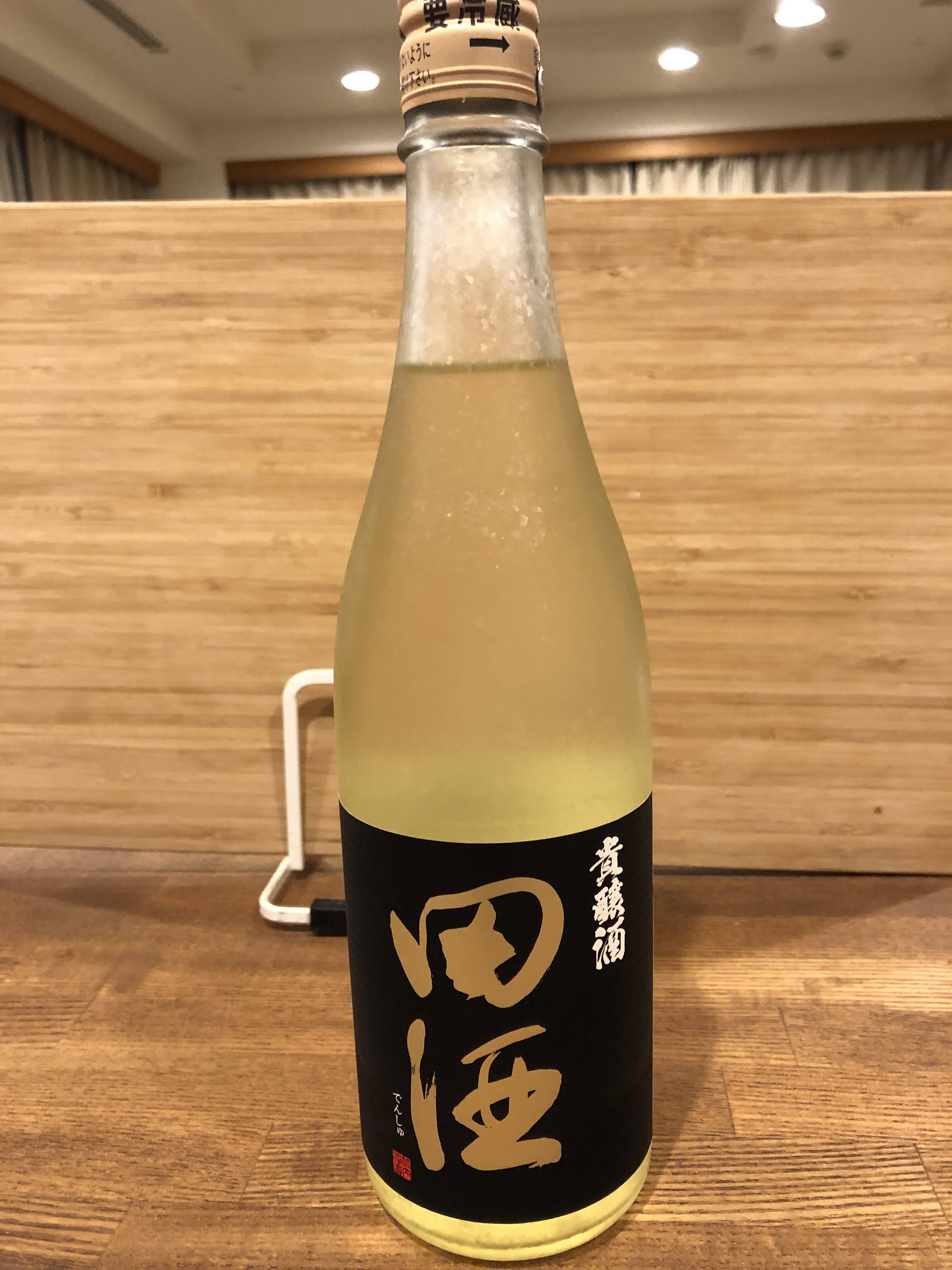
This time, I went here. This time, I found a bottle of rice wine (another brand that’s hard to find). And it’s limited to one per person. I have a weakness for that phrase. And it was the last bottle. I’ve never had a kijoshu before, so I guess that’s why I was called here today. There are others I’m interested in, but if it’s the last one, I’ll go without hesitation.
What is Kijou-shu?
Denshu-kijyo-shu
The overall color was yellowish. I’ve already had a bottle of Junmai-shu from Tasake before, so I can’t wait to compare the two. It’s a kijoshu, which means it has the word “sake” written underneath the rice malt. Normally, water is used to dilute the original sake to adjust the alcohol content, but the noble sake is adjusted with sake, not water, a miraculous method of pouring sake into sake.
What is Kijou-shu?
Sake is made by fermenting rice, rice malt, and water. A typical method of sake brewing is “three-stage brewing. San-dan-jikomi is the process of brewing sake in three stages. To explain it simply, it is a process in which the quality of the sake is improved three times before it is made into a product. I will explain it in detail at another time. In the final step, water is used to adjust the quality, and another sake is used here, which is a characteristic of Kijoshu.
It has an extremely rich taste and a unique thickening effect.
In the case of Kijyo-shu, water, water, and sake are used in the brewing process, which means that alcohol is added. This weakens (or kills) the sake yeast that produces the alcohol, and fermentation slows down (or stops). The yeast that produces alcohol weakens (or dies) and the fermentation process slows down (or stops). Since much of the sugar that should have been broken down remains intact, the result is a sweet, rich flavor.
Denshu-kijyo-shu
I didn’t drink it at the time I bought it, and was waiting for the right time, but my brother and his family were going to visit my parents, so I joined them with this.
The cap is old style.
Denshu-kijyo-shu-cap
Denshu-kijyo-shu-cap
Today, it’s not a solo drink, but an environment where everyone can share their thoughts.
It has a slight yellowish tinge. The aroma is almost nonexistent.
Now, let’s drink it!
Denshu-kijyo-shu
Taste evaluation
Denshu-kijyo-shu-evaluation
The mouthfeel is very good, with a slight tonicity and a fruity ginjo aroma, very different from the last time I drank sake, when the sweetness won out over the acidity. The overall balance of the sake is the same as that of Junmai-shu, but the aroma and sweetness on the palate is like juice, or perhaps I should say a different kind of sweetness than that of the rice. It is very easy to drink for beginners and those who are not good at sake. My family is full of drinkers. Many of us like dry sake. As it turns out, they like Showa-era sake, so after tasting a little, they went on to drink other sake. After all, for those who are used to drinking it, it feels sweet. It’s not unpleasant. Rather, it’s a delicious peach nectar. This taste is a person’s preference.
I had intended to just take a look inside, but the store was a little small, and as I wandered from left to right in front of the refrigerator, the owner called out to me. The owner of the store, who hadn’t seen me, approached me. “Would you like a drink?” I do. I thought, “Not just a little, but a lot,” but I humbly said, “Is that okay? I thought, “Not just a little, but a lot,” but I tried to be humble. It was cold, so I asked for a hot drink. One of the several bottles was Shin Tschida.
I bought it without a moment’s hesitation.
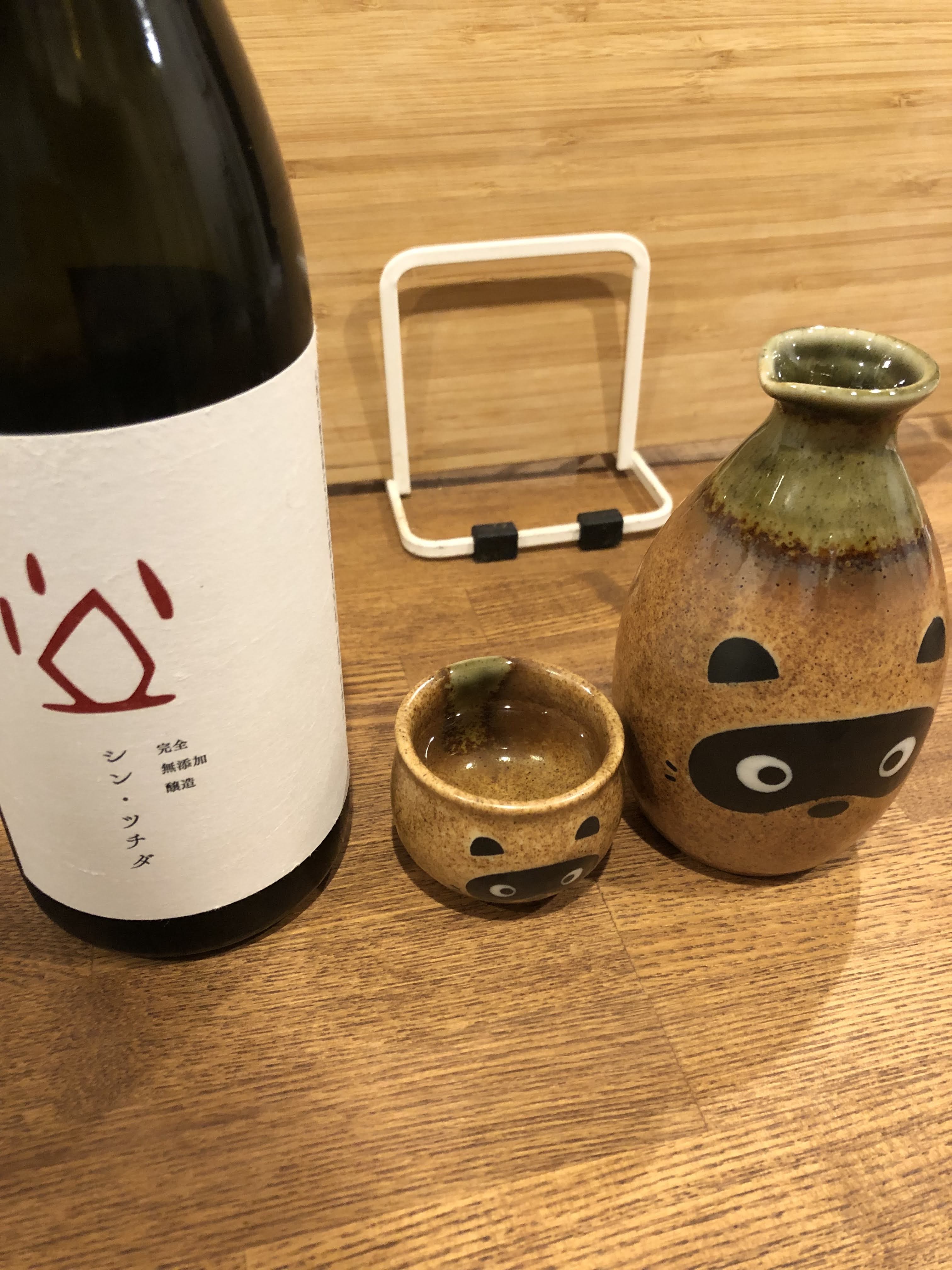
New Stuchida
New Tsuchida
According to the owner, Shin Stichida is a brewery that constantly researches and focuses on additive-free products, and I was very interested.
While most sake breweries use the famous sake rice as their raw material, they uses edible rice instead of sake rice.
they uses edible rice (rice that can be eaten) instead of sake rice, and make sake without grinding (polishing) it as much as possible.
The rice is produced in Gunma Prefecture, except when there are requests for rice from other prefectures due to contract manufacturing. The order is “Gunma rice, 3rd grade or higher, 60%, no variety specified. they hone our skills every day with the desire to make good sake from any rice grown by local farmers who are passionate about rice farming.
In the past few years, they has also been focusing on not grinding the rice as much as possible. The more the rice is shaved, the easier it is to release the aroma.
Our goal is to make sake with the entire taste of the rice. And to use up all the raw materials. In the past, it took more than a day to polish the rice, so this also helps to reduce energy consumption.
Our commitment to the production process
All the sake we brew is made with only three ingredients and bacteria: rice, water, and koji. The sake brewing process is called “kimoto-zukuri,” or “traditional sake brewing,” which encourages the activity of lactic acid bacteria and other microorganisms living in the brewery. This Edo-period process is carried out with modern machinery and equipment.
Many breweries bring in bacteria from other sources. Kimoto-zukuri is a method of brewing in which the environment is prepared so that the lactic acid bacteria living in the brewery can increase. In addition, the fact that no additives are added at all means that the bacteria, the living organisms, are guided and encouraged to work together to make good sake. The traditional sake brewing process is nerve-wracking and requires a lot of time and effort, but we feel the joy of “creating” sake and knowing that we can understand something, even if it is only a little, in the laws of the universe where there are many unknowns.
New Tsuchida
The rice polishing ratio is 90%, and lately I’ve been under the impression that this label indicates the fighting ability of the sake. I’ve heard that the rice we usually eat is milled at about 92%, so the milling rate is almost the same as that of normal rice.
It was lukewarm, and as it warmed up, the aroma unique to sake filled the air. It has a slight yellowish tinge.
Gulp!
New Tsuchida and Swellfish’s sake bottle
Taste evaluation
Japanese Ranking 185th Gunma Ranking 4th
Comment : A Aged taste with a lot of substance. Sourness and bitterness, maybe it was too early for me.
Comment : B Shin Tsuchida, I’d heard rumors, first time! It is the complete opposite of the impression on the label, a classic type. It is heavy with a thump, and as soon as you drink it, you can sense a grain-like acidity, a little bit of rice flavor and sweetness like nectar candy, but the impact of the strong and robust acidity that reminds me of austere grain vinegar or rice vinegar is different from the apple vinegar-like acidity that I prefer due to the yellow malted rice used for shochu. It is a sake I would like to study.I was surprised when I read other people’s comments. Roughly speaking, this is a Chinese rice wine.. I kept half of it because I heard it tastes better after 2 weeks.I was wondering what would go well with this matured sake, when it occurred to me to pair it with fried chicken with garlic, and it was perfect!
New Tsuchida chart
Lactic acidity without any hindrance. The overall flavor is soft and mellow, but it changes to a complex flavor at the end. The sourness is neither strong nor weak, but moderate. It is characterized by a unique aroma, like a smoky aroma, which has never been seen before. It is so distinctive that it can be recognized even if you are blindfolded. It seems to go well with salted fish or food with a strong salty taste. This is definitely a mellow sake.
The owner said, “If you let it sit after opening the bottle, the flavor will change and become mellower.
So I opened the bottle again.
New Tsuchida
New Tsuchida and raccoon’s sake bottle
This time, I warmed up the raccoon by shaking it electronically.
Oh, it’s still the same…no…I’m immature…I don’t know…the change.
Damn bad snacks
Jellyfish
Jellyfish
Let me just say this. This thing I bought at the supermarket didn’t taste good at all. (If you like this, I’m sorry to hurt your feelings.) Jellyfish just don’t seem to work for me.
It’s another dusty, rainy day for drinking alone. I’m too lazy to go out, but my mind is fidgety. But my mind is fidgety and restless. It’s raining all day, but let’s go out to refresh ourselves. So I wandered to a famous liquor store.
It’s located in a slightly confusing area through the Nonbay Street (an area lined with izakaya) from Kitasenju Station, and it’s not easy to enter. The area to the left of the entrance is for eating and drinking, and the area to the right is for buying sake. As I was looking around, I saw some sake on the bottom shelf! You’re in luck! It says, “Limit one bottle per person.
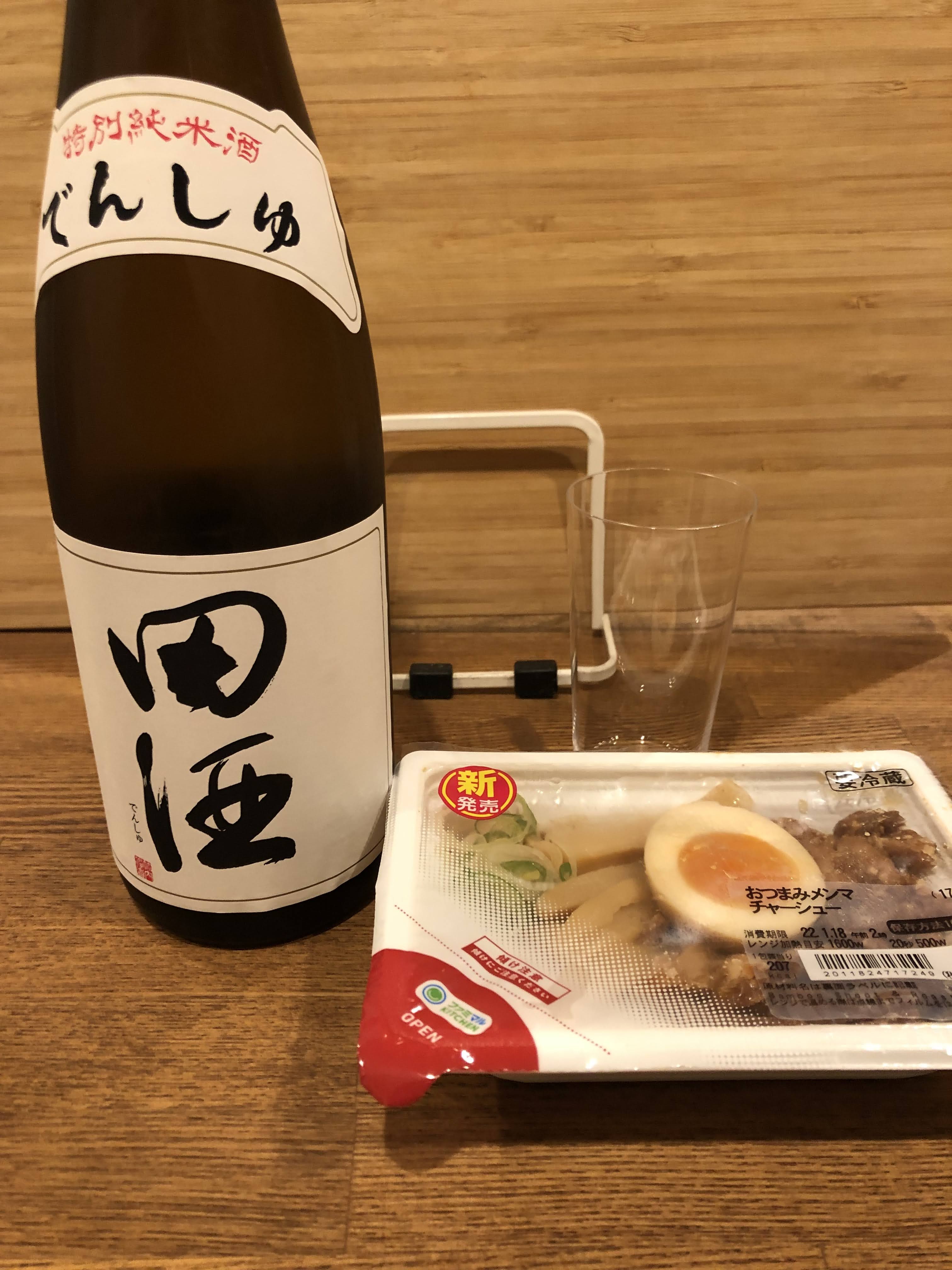
Denshu Special Jummai shu
Denshu
Denshu_label
I knew it was a rare thing. I was glad to have come here in the rain, and went home with it in my arms.
I didn’t know when I’d be able to get my hands on it again, so I felt it would be a shame to open it, but I resigned myself to the fact that it was made to be drunk.
A representative sake of Aomori Prefecture. The name of the brewery is Nishida Shuzo.
Special contract stores
The most popular brands of sake are not available everywhere. The sake brewery and liquor store make a contract before any transactions take place. In other words, even if you know about a rumored brand, it is not always possible to get it at your local liquor store. In order to prevent one person from buying more than one bottle of a very popular brand of sake, restrictions are imposed, such as a limit of one bottle per person, so that the buying opportunity is shared equally. So if there is a sake that you really want to try, you will have to keep coming back to the store and wait until you are lucky enough to find it in the store!
Denshu cap
Denshu
I opened the package. Old Cap
Japan Ranking 4th Aomori Prefecture Ranking #1
Comment : A I bought it on the recommendation of a store employee who told me it goes well with sashimi and sushi. It has a subtle sweetness with a clear, refreshing aftertaste that does not interfere with the ingredients. It is easy to drink, but I think it is a little sad to drink it by itself. It would be good for evening drinks.
Comment : B Amazingly apple. Delicious. Color: normal. Aroma: Normal. First touch: Tangy and spicy. Taste: completely apple. Aftertaste: refreshing. Apple
Taste evaluation
evaluation
I could see why it was so popular. The balance is really good. The mouthfeel is not too strong, with a fruity flavor unique to Ginjo, followed by a sharpness that will convince sake lovers to drink up. The spiciness is well expressed, and the first impression is that of a person who is friendly, but also has a strong personality. It’s a total no-brainer. There is a little bit of tanginess and flavor on the tongue. This is a taste that can be easily accepted by everyone. It has a good balance that people who are not used to sake can enjoy, and it can be a chance for people who are not used to sake to start liking it. It is a mellow sake that goes well with all kinds of food. It’s a shame that I don’t know when I’ll be able to see it again.
snack noodle
roasted pork
noodle
In case you’re wondering, this time I had a mysterious set of cinnamon noodles at Familymama, so I went all out. I was surprised to find noodles in it.













wish you all the best