The Hokuriku region yields delicious fish from the Sea of Japan during winter. Tossed by the rough waves of the Sea of Japan, fish rich in fat are caught. Toyama Bay, in particular, is often called a natural fish farm. Plankton thrives there in just the right amount, attracting fish that gather specifically for it.The bay itself is called a natural fish farm, being circular and shaped like an actual fish farm,creating an environment where fish thrive and grow vigorously.
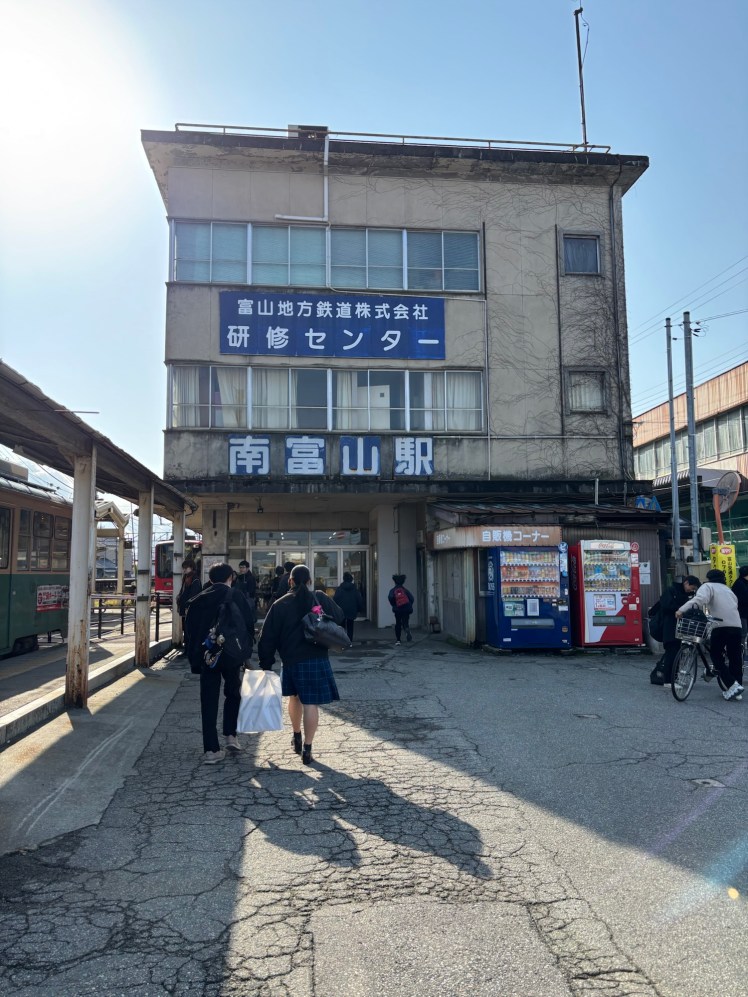
Sushi Tama, Toyama Kakeo Main Store. There’s one near the station too, but the main store has a better atmosphere.
When winter arrives, the Hokuriku region faces harsh conditions like low temperatures and snow, causing the fish to develop a lean, firm body with rich fat—an adaptation to their environment. While this might seem cruel for the fish, within the food chain, it makes for an ideal season for humans to enjoy delicious sushi. That’s why the Sea of Japan in winter offers some of the most exquisite sushi in Japan, the country that invented it. Among these, Toyama Prefecture stands out as a hidden gem—a precious area where you can still find superb sushi off the beaten path. The sushi restaurant I visited this time, Sushi Tama Honten, is renowned locally for its freshness, sourcing fish directly from the region.
Sushi Tama
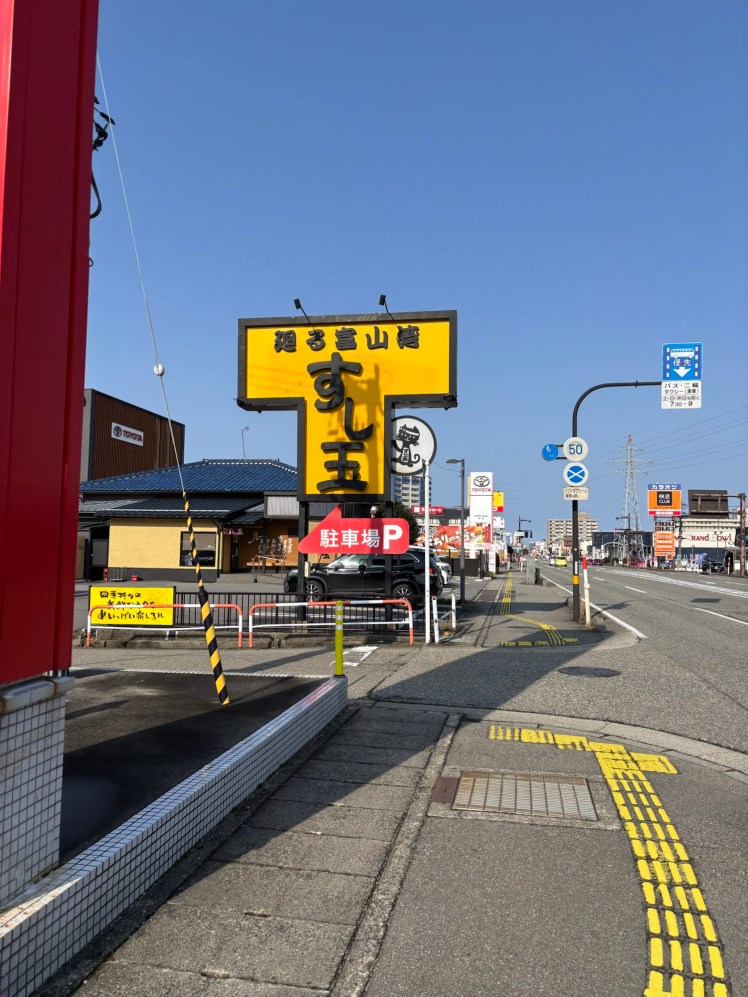
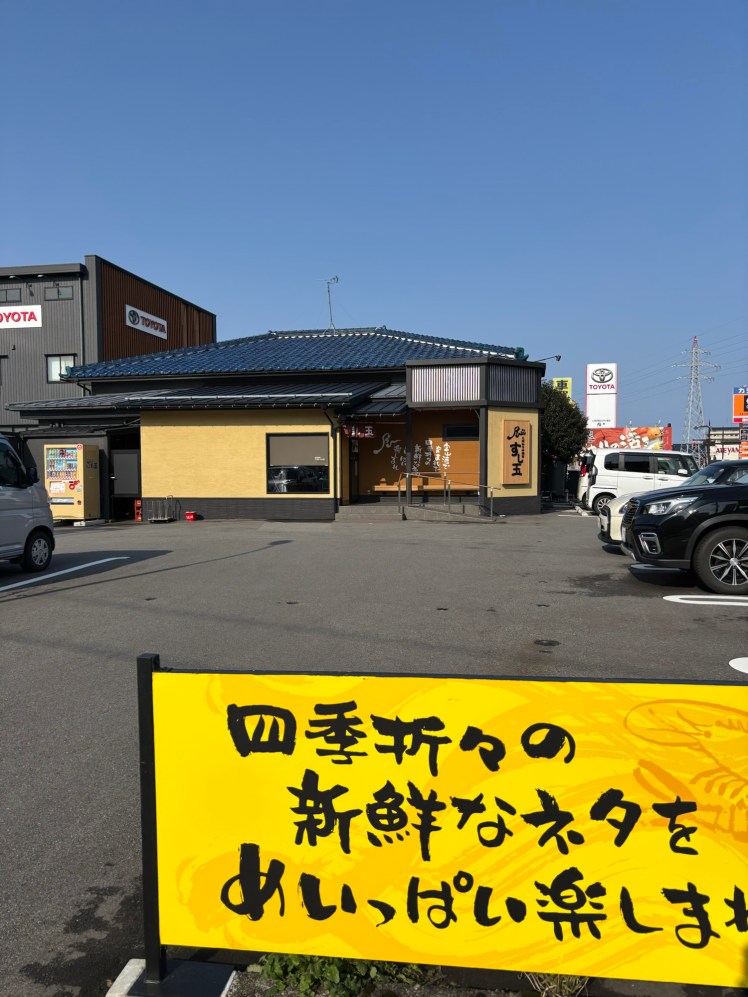
The store is located away from Toyama Station.
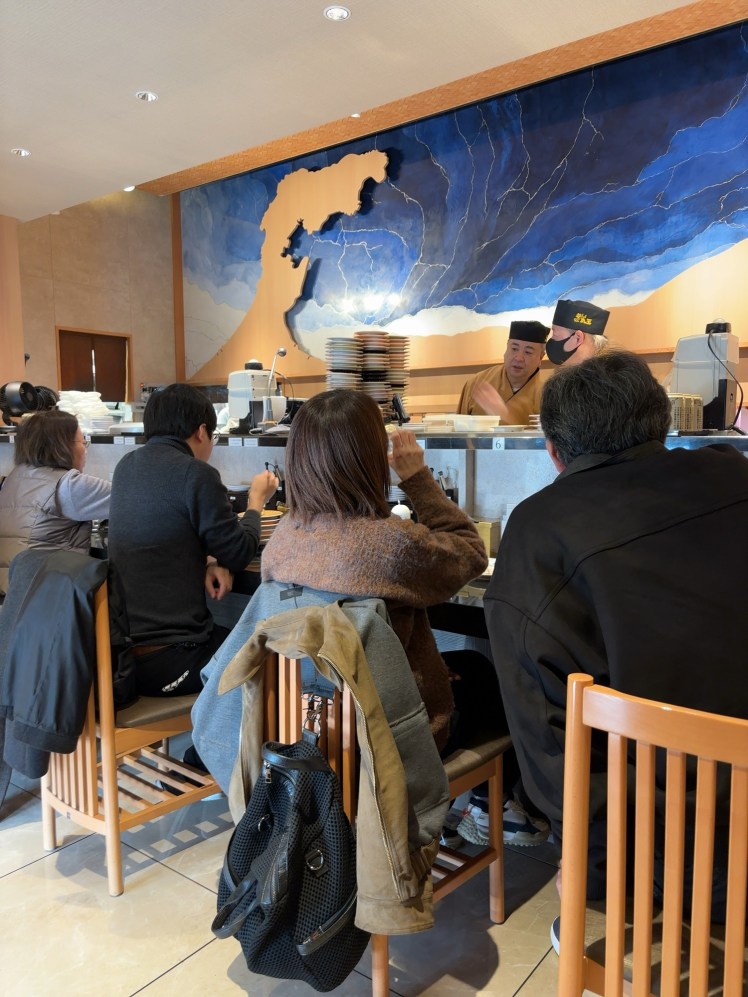
Inside the store
Even slightly off the lunch rush, this popular spot still had a line for seats. About a 20-minute wait. Sushi places have a quick turnover. Since I was alone, I was guided to a seat at the end of the counter. I immediately looked over the menu. There it was—the fish you must eat when visiting Toyama Prefecture in winter: Winter yellowtail.
Himi’s Kan Buri is different here!
Starting with Hokkaido, where autumn arrives a little earlier, winter yellowtail are landed as they migrate southward: Niigata and Sado, Toyama Bay, the Noto Peninsula, and further south in Kyoto and Nagasaki’s Iki and Goto Islands. Toyama Bay lies midway along the yellowtail spawning route. Its deep submarine valleys, extending from the Noto Peninsula, act like natural fixed nets, drawing in the winter yellowtail. This is why they are caught at their most fatty and flavorful. Yellowtail caught in fixed nets in Toyama Bay and landed at Himi Fishing Port, weighing over 7kg with excellent shape and quality, are distributed under the brand name “Himi Kanburi.” Due to the short distance from the fixed net fishing grounds to Himi Fishing Port, the yellowtail is shipped while maintaining its freshness. In recent years, some cold-water yellowtail undergo an additional step of nerve removal after being auctioned. This process helps retain umami components and freshness, ensuring the fish reaches restaurants and dining tables in optimal condition.
Toyama Tourism Navigator
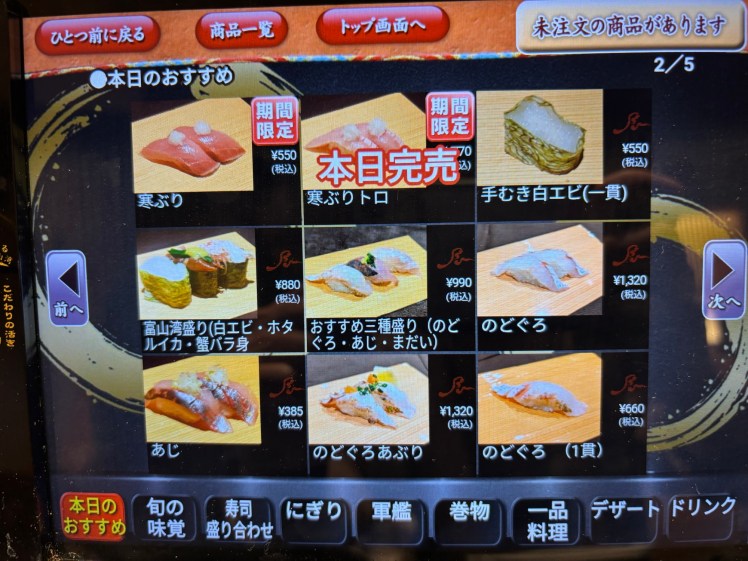
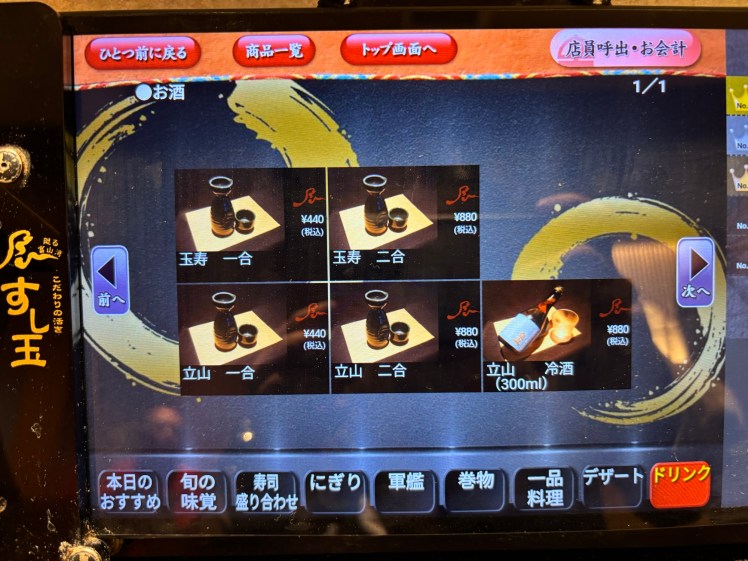
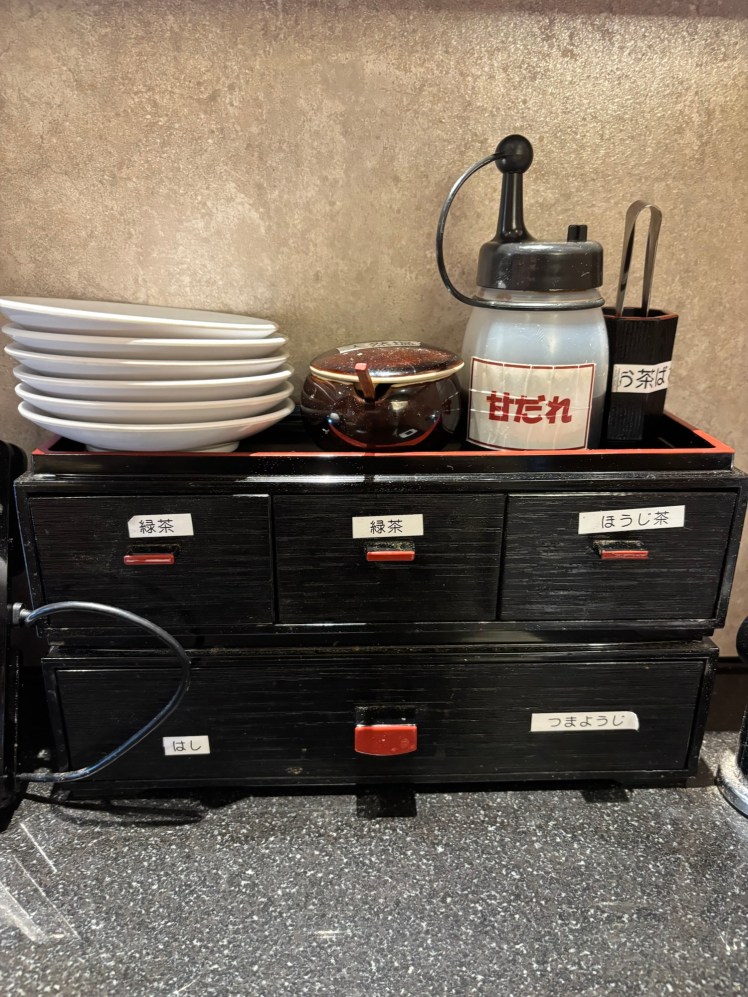
I drank and ate, and paid a total of 3,905 yen.
There are many different types of tea.
Total payment
amount: ¥3,905 Beer: ¥440 Sake: ¥440 Sushi: ¥3,025
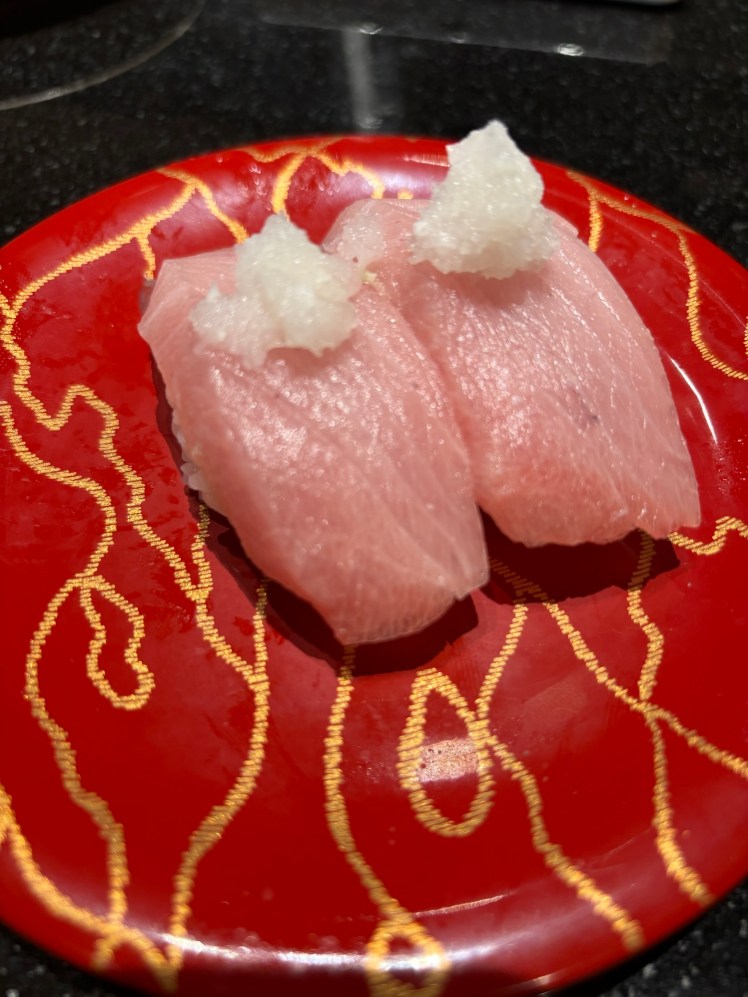
This is the best sushi made with winter yellowtail in its prime season. Rich in fat, incredibly juicy, and delicious. Limited-quantity sushi. First come, first served.
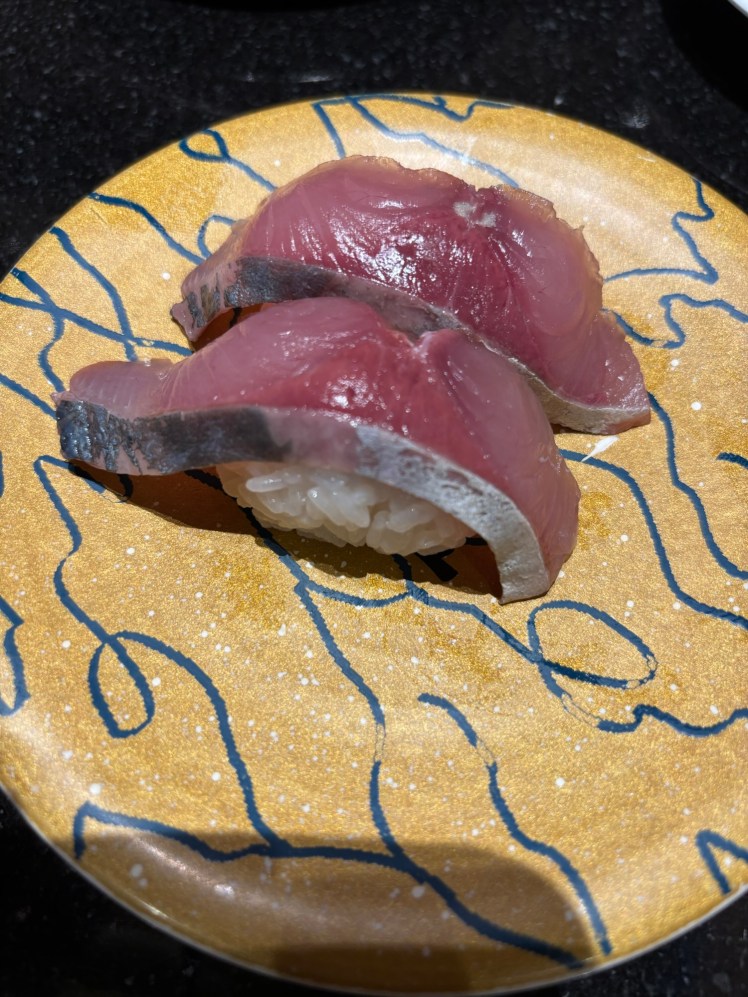
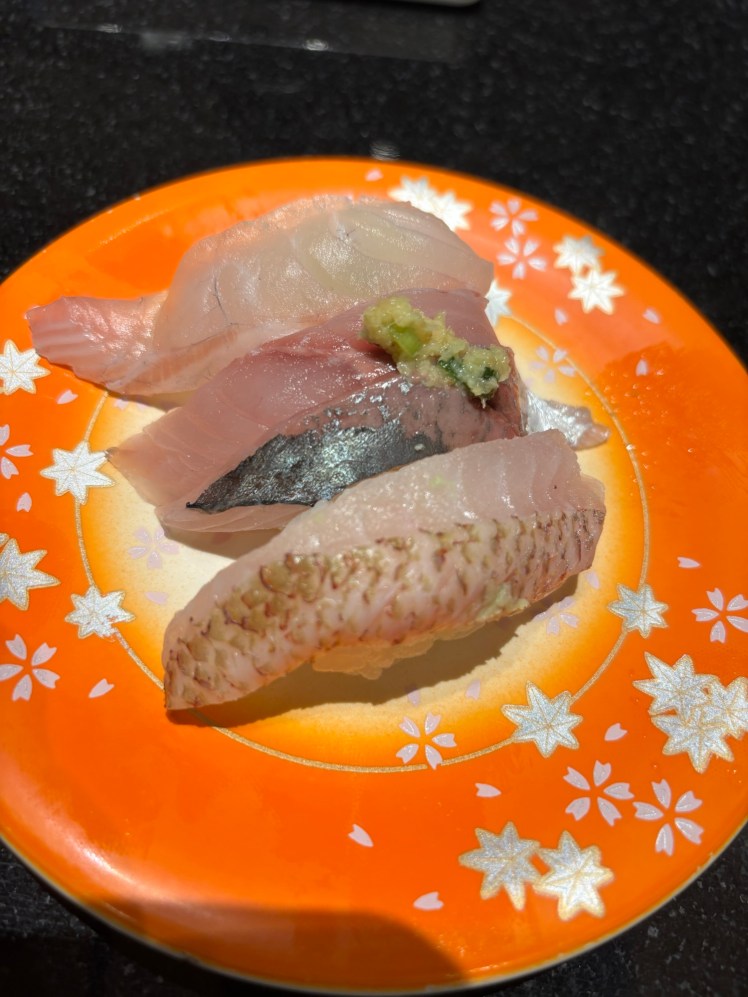
There are also local fish sets featuring sushi you can only truly savor in this region. While you can find similar options in Tokyo, the price difference is night and day.
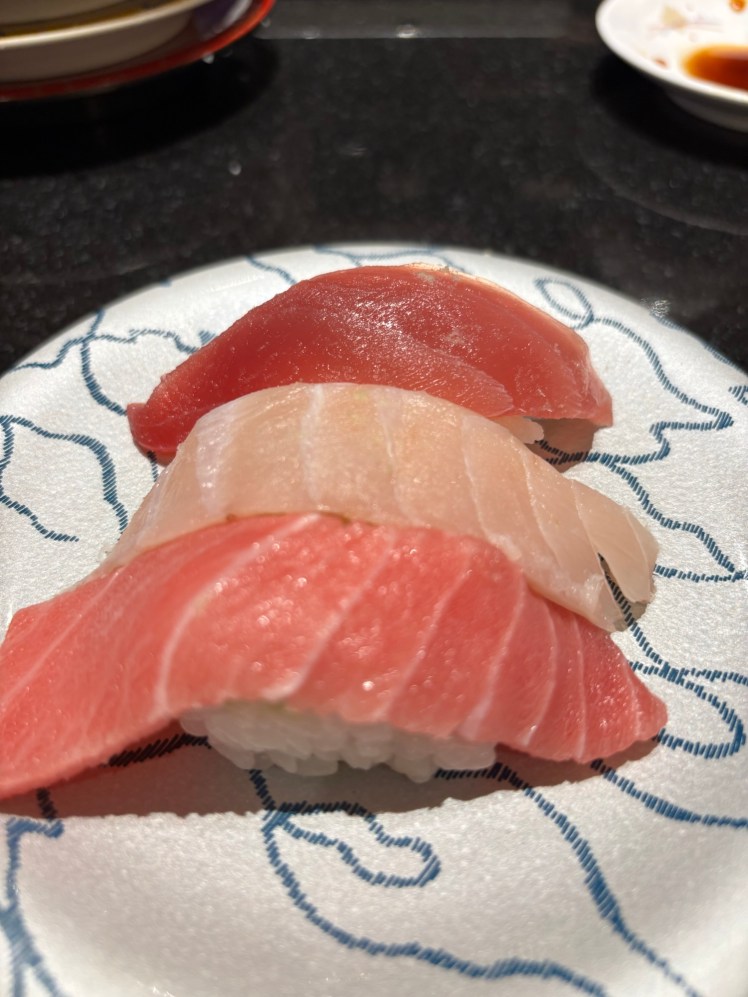
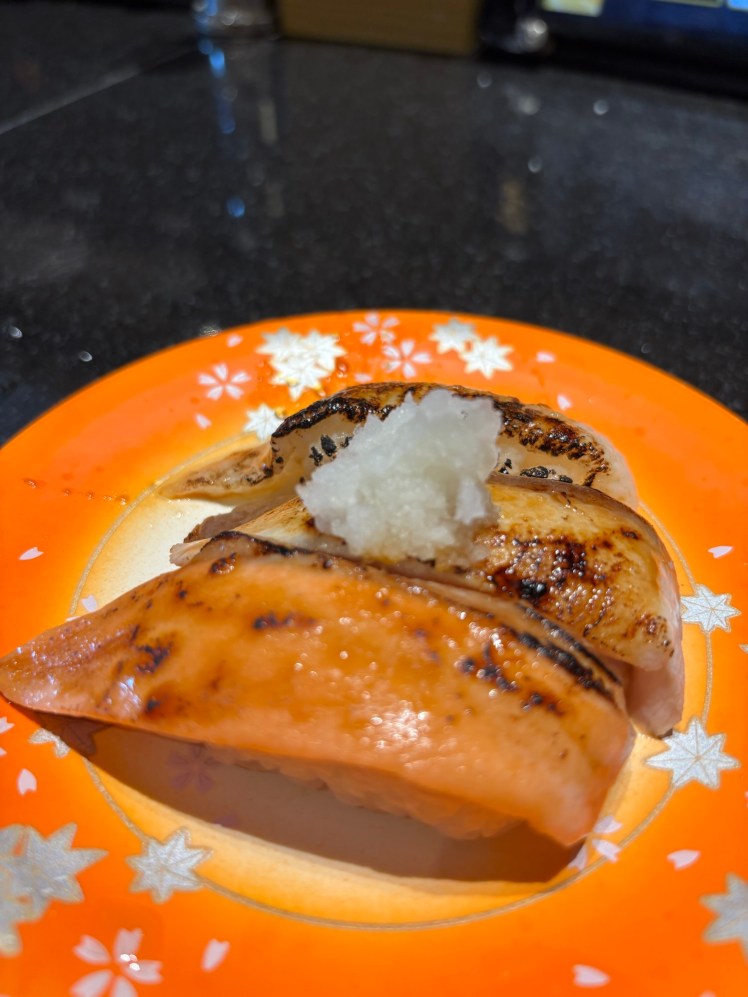
Both the tuna and the seared sushi are delicious. Fish from the Sea of Japan side develop rich, meaty flavor from the rough waves and winter fat.
This restaurant has an interesting setup where sushi travels to the next table via this conveyor belt.
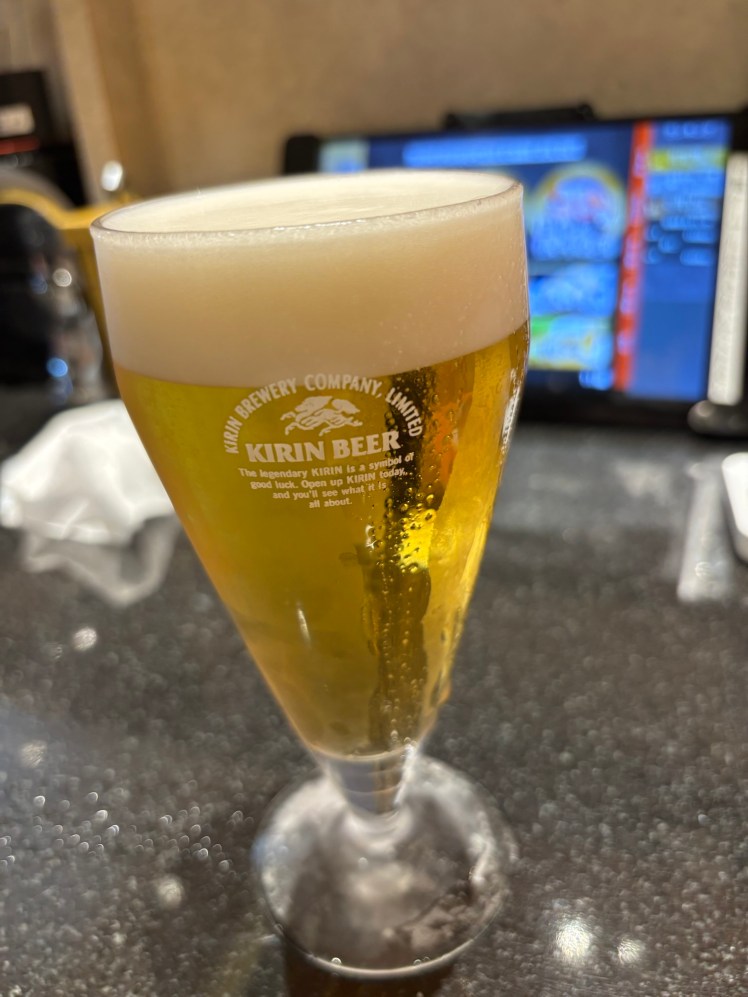
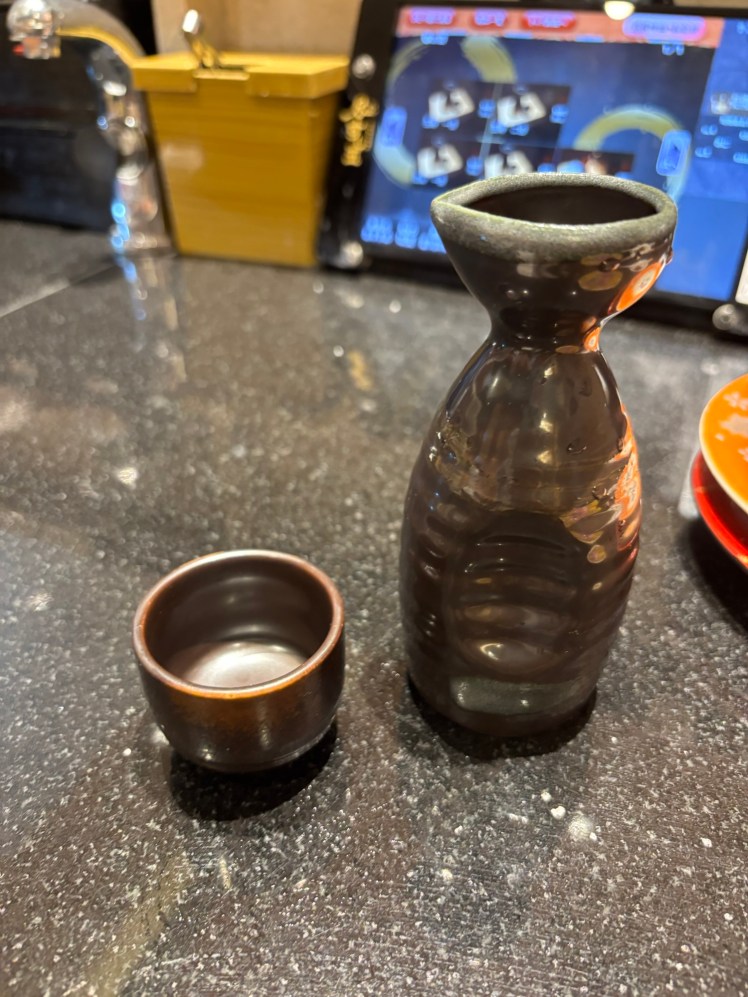
Sake is also a locally produced alcoholic beverage. While you can drink it in Tokyo, it’s not widely distributed.
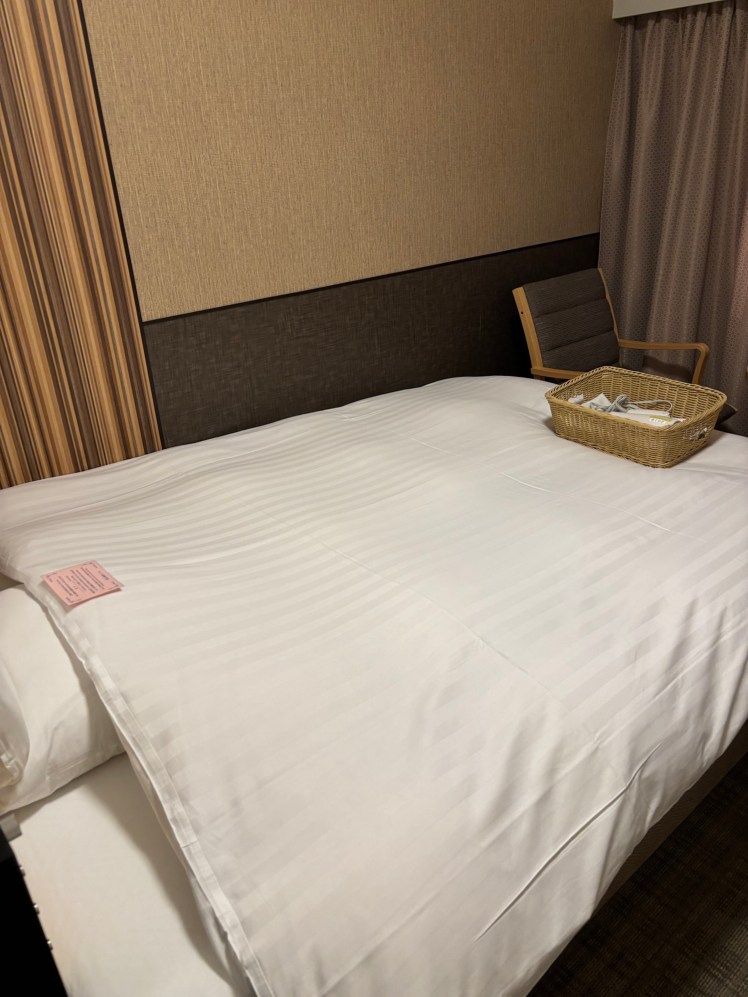
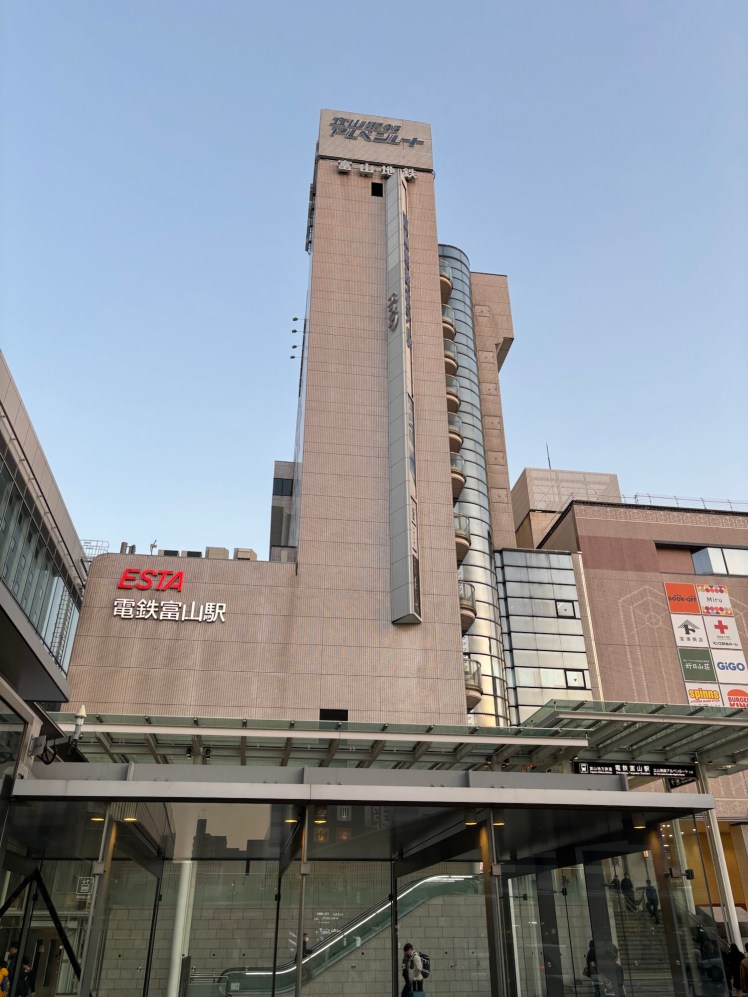
This time, I stayed at this hotel. It’s conveniently located less than 5 minutes from Toyama Station. For more details about the hotel, click here.
Store Information
📍〒939-8215 5-8 Kakeo Sakae-cho Toyama City, Toyama Prefecture






One thought on “Winter in Toyama Prefecture is overflowing with delicious sushi. I went to Sushitama Toyama Kakeo Main Store to savor Hokuriku sushi.”