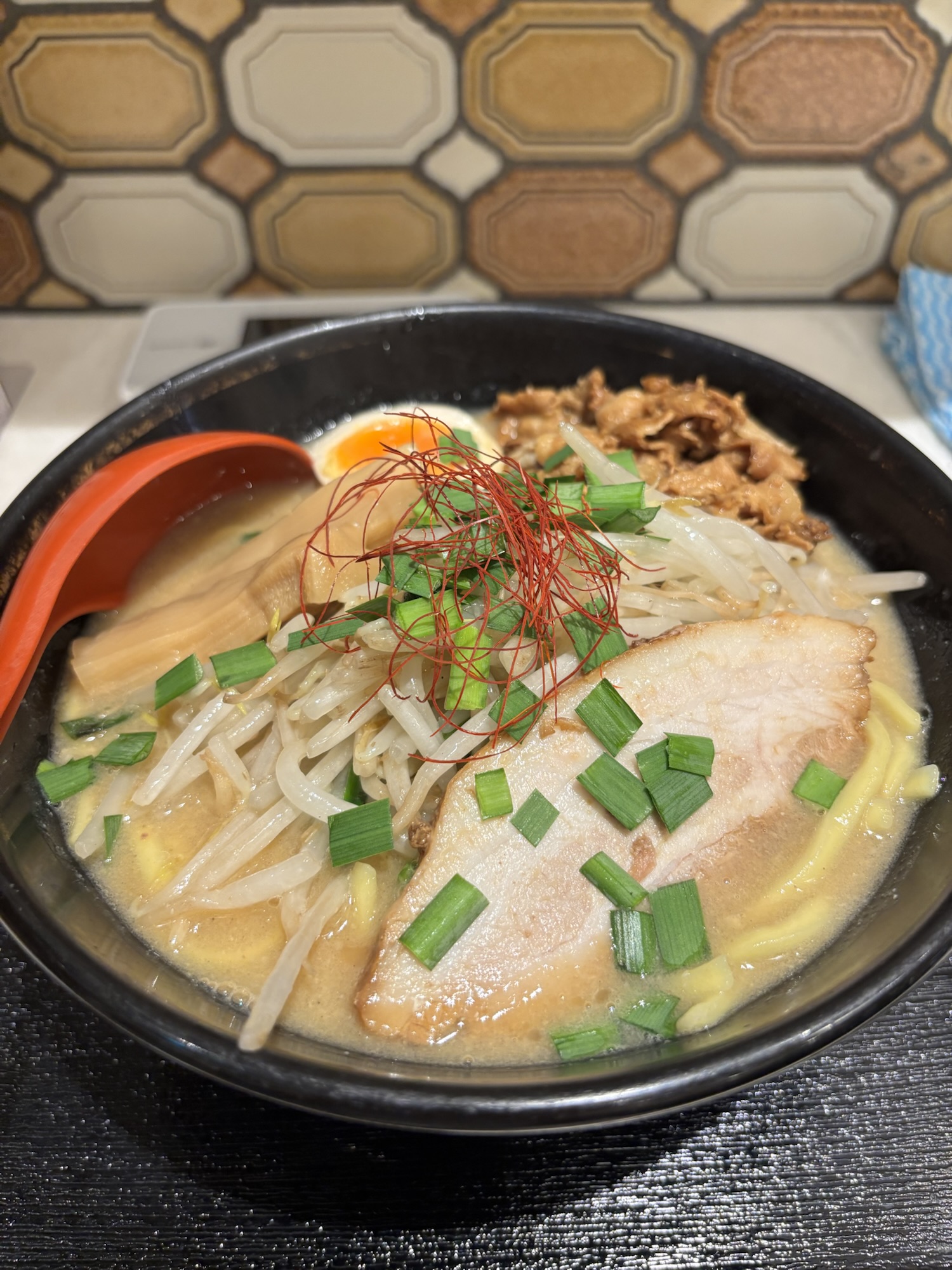
When you come to Japan, be sure to try it. “KIPPOSHI.”

Even I, as a Japanese person, rarely see blue ramen.

KIPPOSHI

The store was previously located in Shibuya, but it has since moved to the Hamamatsucho area of Tokyo.

KIPPOSHI
KIPPOSHI

Besides blue ramen with sea bream, scallops, and ginger, there are colorful ramen dishes in various flavors.

The restaurant isn’t very spacious, seating only about five or six people.

Instead of the standard ticket-purchasing style common in Japan, you order directly from the owner by looking at the menu at your seat.

KIPPOSHI
KIPPOSHI
KIPPOSHI
KIPPOSHI
KIPPOSHI

The shop’s atmosphere features a clean, white-based interior.
It seems like the shop is run by just the owner alone, with no other staff in sight. And the counter is mysteriously high—be sure to raise your hands high when receiving your ramen.

KIPPOSHI

This is very important. Payment is cash only. Credit cards and electronic money cannot be used.

Apparently, after looking into it, this ramen shop seems to be quite rare. Since it’s not a chain, it’s a special ramen known only to those in the know.

The blue paitan ramen I had was 1,500 yen—
a bit pricey, I guess.

📍〒105-0014 1-11-2 Shiba, Minato-ku, Tokyo

Monday
12:00 PM – 2:30 PM, 6:30 PM – 8:30 PM
Tuesday
12:00 PM – 2:30 PM, 6:00 PM – 8:30 PM
Wednesday
Closed
Thursday
12:00 PM – 2:30 PM, 6:00 PM – 8:30 PM
Friday
12:00 PM – 2:30 PM, 6:00 PM – 8:30 PM
Saturday
12:00 PM – 2:30 PM, 6:00 PM – 8:30 PM
Sunday
12:00 PM – 2:30 PM, 6:00 PM – 8:30 PM


Personally, I’d like to try all kinds of ramen, including blue ramen.

A unique hotel where you can read manga for free at the front desk.A convenient hotel near the restaurant district.”Hotel Nagano Avenue”

Hotel Nagano Avenue

It’s a bit of a distance from Nagano Station. If you have a lot of luggage, you might want to take a taxi.

Hotel Nagano Avenue

There is a large bath on the rooftop, and it is very comfortable.

↓↓Book the hotel featured in this article directly here↓↓

You don’t see this much in Japan either, but there’s a free manga reading corner on the first floor.
There’s a 7-Eleven right next to the hotel, which is very convenient. It’s less than a 5-minute walk away and comes in handy.

Inside the hotel

Hotel Nagano Avenue
Hotel Nagano Avenue

It’s an older-style hotel, so it doesn’t feel luxurious, but it has a very old-fashioned Japanese feel that’s very relaxing. The room is simple and uncluttered. It’s clean and perfectly adequate for sleeping.

Hotel Nagano Avenue
Hotel Nagano Avenue

The best thing about this hotel is its prime location—it’s very close to the downtown area and within walking distance for dining. It’s perfect for relaxing in the evening: soak in the bath, grab some drinks from the convenience store, and unwind while reading manga.

A restaurant I visited nearby

Yataisushi
Shinshusoba

Nagano Station is about a 3-hour drive from Tokyo. It’s also very conveniently located, taking only about 2 hours by Shinkansen bullet train.

The Area Around Nagano Station and the Townscape I Saw

Nagano Station

The townscape is very beautiful and well-maintained, attracting people who move here from Tokyo. It also has nature, and is famous for soba noodles. However, being a basin, it gets extremely hot in midsummer and very cold in winter.

Found this article helpful?
You can tip this guide directly and support future updates.

📍〒380-0823 2-8-5 Minami-Chitose, Nagano City, Nagano Prefecture

Be sure to try miso ramen in Hokkaido and Nagano. It’s a mild ramen that isn’t greasy, among the ramen that Japanese people are proud of.

True Nagano natives don’t call it Nagano; they call it Shinshu. This is an old custom from people long ago, stemming from historical integration.

Miso Ramen Houshin

Miso Ramen

Nagano Prefecture is famous for its miso. Many mountainous regions specialize in products that skillfully utilize koji.

The traditional construction of an old folk house

The traditional construction of an old folk house. It has character.

The store has a pleasant atmosphere.

The traditional construction of an old folk house
Miso Ramen
Miso Ramen

Nagano Prefecture is a basin region with cold winters and humid summers, so its signature ramen features miso broth that warms you to the core. This ramen is extremely popular and delicious throughout Japan.

Review

It’s been a while since I visited Kōshin. What I ordered, of course! The fatty tuna meat noodles. Packed with gelatin, it was incredibly tender and delicious~. The soup has a thick layer of back fat floating on top, but it’s lighter than it looks and you can easily finish it all. It pairs perfectly with the noodles.

Retty

I’ve been meaning to try Kōshin for a while. I ordered the miso chashu noodles for 1000 yen. The medium-thick curly noodles cling to the soup nicely and are delicious. The chashu pork was melt-in-your-mouth tender and also very tasty. Maybe I’ll try the soy sauce version next time?

Retty

Found this article helpful?
You can tip this guide directly and support future updates.

📍〒380-0826 1398 Minami-Nagano Nagano City, Nagano Prefecture


Monday
11:30 AM – 2:00 PM, 5:30 PM – 9:00 PM
Tuesday
Closed
Wednesday
11:30 AM – 2:00 PM, 5:30 PM – 9:00 PM
Thursday
11:30 AM – 2:00 PM, 5:30 PM – 9:00 PM
Friday
11:30 AM – 2:00 PM, 5:30 PM – 10:00 PM
Saturday
11:30 AM – 2:00 PM, 5:30 PM – 10:00 PM
Sunday
11:30 AM – 2:00 PM, 5:30 PM – 8:00 PM
The hotel I stayed at is here.

A relatively light Jiro-style ramen in Ueno. However, while light, the noodle portion is Jiro-style.”FUJIN NO BUTA”

Everyone’s favorite Jiro-style ramen. This time I went to “Fūjin no Buta.” It’s a shop standing all by itself just a few minutes’ walk from Ueno Station.

Jiro-kei Ramen
“FUJIN NO BUTA”

Jiro-kei FUJIN NO BUTA
FUJIN NO BUTA
Jiro-kei FUJIN NO BUTA
FUJIN NO BUTA
Jiro-kei FUJIN NO BUTA
FUJIN NO BUTA

Even Japanese people would consider ¥900 for this amount quite cheap.
Jiro-style ramen is so addictive that just seeing this photo makes my mouth water.

Jiro-kei FUJIN NO BUTA
FUJIN NO BUTA

What’s amazing is that all the toppings are free. Let me explain the photo.
Top left: Ramen, garlic, approximately 300g of vegetables. Center middle: Added fat. Top right: Increased vegetables, approximately 450g of vegetables. Bottom left and right: Added more fat. Bottom left and right: Further increased fat.

Jiro-kei FUJIN NO BUTA
FUJIN NO BUTA
Jiro-kei FUJIN NO BUTA
FUJIN NO BUTA
FUJIN NO BUTA

The interior isn’t particularly spacious, with counter seating for about 10 people.

Jiro-kei FUJIN NO BUTA
FUJIN NO BUTA

The ordering method is unique too—you select your signboard order by pressing buttons on this machine. What’s more, there’s only one type of ramen available. Payment is cash only.

Jiro-kei FUJIN NO BUTA
FUJIN NO BUTA
FUJIN NO BUTA
Jiro-kei FUJIN NO BUTA
FUJIN NO BUTA
FUJIN NO BUTA

The Dance of Deliciousness has begun.

Jiro-kei FUJIN NO BUTA
FUJIN NO BUTA
Jiro-kei FUJIN NO BUTA
FUJIN NO BUTA

Somehow I managed to finish it all.

The feeling of fullness lasted until late at night.

Japanese Consumer Reviews

Review:
Fūjin no Buta, a Jiro-inspired ramen shop just a few minutes’ walk from Ueno Station. Since it’s only open for weekday lunches, I timed my first visit accordingly. This time, I chose the 200g noodle option. Compared to typical Jiro-style ramen, the broth was non-emulsified with a clean finish, making the oil feel less heavy. It was impressively easy to finish without feeling overwhelmed. The noodles weren’t overly thick, had just the right chewiness, and paired well with the broth for a balanced experience. The pork, which gives the shop its name, was thick-cut and simmered until tender enough to pull apart with chopsticks, delivering a robust umami flavor. The ability to select toppings in advance at the ticket machine is also a plus, making ordering stress-free even for those unsure about ordering verbally. This shop is highly recommended for everyone from first-time Jiro-style ramen eaters to those seeking a bowl that isn’t too heavy.

Retty

Review:
A shop that used to be a ramen restaurant reopened after an extremely long hiatus as a Jiro-style ramen place. Jiro-style ramen places put pressure on you with their ordering system, and every branch has lines of young people about half my age, so I never could bring myself to go even though I wanted to. But when I peeked inside around 1 PM today, there were only two people inside, so I went in without hesitation. Ordering is done at a ticket machine that asks for your choices in sequence, making it easy for first-timers or women to visit. Today I chose: Regular noodles (200g), Half vegetables (150g), A little garlic, Regular oil, and a seasoned boiled egg as a topping.
Cash only payment: 1,050 yen.
Handed my ticket to a Southeast Asian-looking female staff member, which is rare for Jiro-style places. Waited about 5 minutes before my bowl arrived!Visually, it’s a classic Jiro-style bowl despite the half-portion veggies. Since the veggies were half-portion, I flipped the bowl upside down before digging in. The noodles here weren’t the typical thick, firm Jiro-style noodles, but rather medium-thick, flat noodles with a bit of bite. I actually preferred these noodles, though die-hard Jiro fans might find them lacking.The chashu looked ordinary from above, but it was actually a chunk about 3cm thick.And it was incredibly tender. The noodles were 200g, and with half the vegetables at 150g, it was a substantial amount that left me full! The farewell greeting from the staff as I left was incredibly warm, so I’ll definitely be back!

Retty

Found this article helpful?
You can tip this guide directly and support future updates.

Store Information

📍4-3-1 Higashi-Ueno, Taito-ku, Tokyo

Business hours:

Closed on Saturdays. Open from 11:00 AM to 5:00 PM.

ニアミーエアポート

A staple “Iekei ramen” shop in Tokyo. Adjust your condition to the ramen.

The taste is on the salty side, but it’s the ultimate reward after working up a sweat.If you’re Japanese and love ramen, my recommendations are spot-on. Born and raised in Tokyo, I’m recommending the real deal—standard ramen. In other words, world-class.

This shop is a typical ramen restaurant, yet it’s already clear they make beautiful ramen.

You can even get free rice refills and serve yourself!
In other words, whether you want a large or small portion is entirely up to you.

Plus, you can add garlic, chili bean paste, ginger, and seasonings for free in any amount you like.

For Japanese people, it’s a given that seasonings like pepper can be adjusted for free.

You can enjoy various ramen dishes for around 1,000 yen or more.

Japan’s ticket vending machines accept various electronic money options, so it’s best to learn how to use them beforehand. Please note that cards are often not accepted at these machines. In Japan, Suica, an electronic money service provided by JR, is widely accepted, so we recommend registering for it.

📍Iwasaki Building 3-36 Hongo, Bunkyo-ku, Tokyo 113-0033

Found this article helpful?
You can tip this guide directly and support future updates.

Discover the best wagyu yakiniku restaurant near Shinagawa, Tokyo. Visitor guide, photos, prices & booking tips.

This is a place I want to keep to myself—a hidden gem I don’t want too many people to know about. 
Shinagawa Station. A major station where bullet trains stop.

There lies an area of narrow eateries that seems to have been there forever, uncharacteristically urban.

Along the way

Why is the yakiniku so delicious around here? Because there’s a slaughterhouse right next door, so they can get fresh beef.

A somewhat pricier yakiniku restaurant in Japan

The interior has the cozy atmosphere of an old-fashioned Japanese family-run shop.

It was so delicious I ended up dancing with delight.

Iburi-ya Yakiniku Restaurant

📍〒108-0075 2-2-4 Konan, Minato-ku, Tokyo

Travelers, check out Google!
Follow my food Instagram!
All-around food, please follow me